Rautavaara: String Quartet 1 & 2
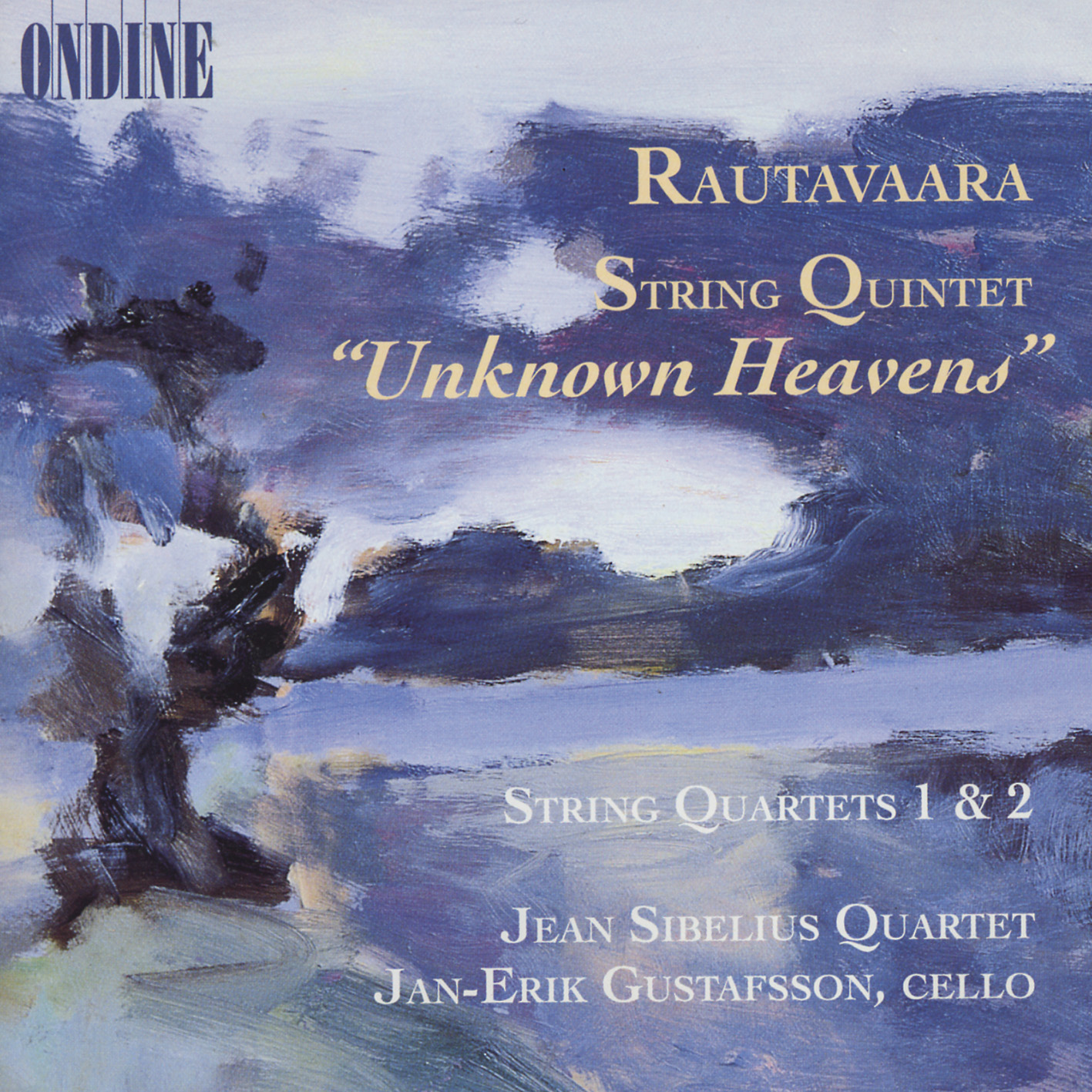
I began intently listening to the Ondine recordings of Finnish composer Einojuhani Rautavaara in February of 2026 and now am finally wrapping up in early August of the same year. I didn't expect much from the chamber genre, as I just have heard so much from the composer, yet he still has some surprises in store.
The early String Quartet no. 1 comes from the early 1950s, student years for the composer, a time in which he fleshed out a Neo-Romantic, Nationalistic style. Even in later works where Rautavaara was influenced by Finnish material, never did he sound as overtly Nationalistic as he does here.
The First String Quartet is a wee piece of music too, coming in at a mere eleven minutes across three movements. The harmonies are largely modal and the melodies startlingly folk-like, both presented in a clear, direct manner. None of the floating, lush textures exist here, ones which made Rautavaara famous and beloved. Instead, intense rhythmic qualities inhabit the outer movements, while the inner movement is solidly melodious. This is an easy work to like, for it is direct in its tonal musical language, and loving in its tribute to musical Finland.
What a difference six years make! Now in the late 1950s, Rautavaara has embraced his own brand of serialism in his String Quartet no. 2. This music is more reminiscent of the composer's Symphonies 2 & 4, tough works filled with dodecaphonic style. Still, if one were going to taste the harsh serialist techniques of the 20th Century, Rautavaara might be the composer to begin with, for he stayed true to a certain tonality no matter how angular or dissonant the modernist techniques led him into.
Rautavaara tries very hard to remain lyrical and melodic in his 12-tone period, a style the composer would shrug off in order to find his own avenue of composition. The harshness of this style is lessened because of these qualities, making it a little more approachable than others of its ilk.
This 1998 recording followed on the heels of the premiere performance of Rautavaara's String Quintet 'Unknown Heavens'. To have this later work on the program is a boon, for the listener can hear how the composer has assimilated all of his previous styles into his own sound. As of 1998, Rautavaara hadn't yet come to the stunning popularity the late 2000s afforded him, but you can hear him approaching that populous musical fingerprint here.
Largely meditative and lyrical, that lush writing style is in full bloom here. The final movement allows for some more impetuously rhythmic writing, but the composer prefers the intimate and Romantic in Unknown Heavens. One can hear Rautavaara's beloved flitting angels musically in the background too, perhaps the impetus for the work's subtitle.
I rather enjoy the playing by the Jean Sibelius Quartet here. They are passionate about this music, and present it in a lovely, yet sturdy fashion. The Ondine sonics are as good as any, easily overcoming the dry sonic quality found with the Voces Intimae Quartet on BIS.

Works
String Quartet 1 (11.12)
String Quartet 2 (24.51)
String Quintet 'Unknown Heavens' (25.28)
Ensembles
Jean Sibelius Quartet
Yoshiko Arai-Kimanen, violin
Jukka Pohjola, violin
Matti Hirvikangas, viola
Seppo Kimanen, cello
Jan-Erik Gustafsson, cello (Heavens)
Label: Ondine
Year: 1998
Total Timing: 61.55
I doubt I will come to love Rautavaara's Second String Quartet, but that is all there is I don't enjoy here. Even then, one can find glimpses of the composer we all know and love.
The rest is excellent and in fine sound too!

Find more Rautavaara recordings HERE!
Comments
Post a Comment