Atterberg: Symphony 1 & 2
Prelude
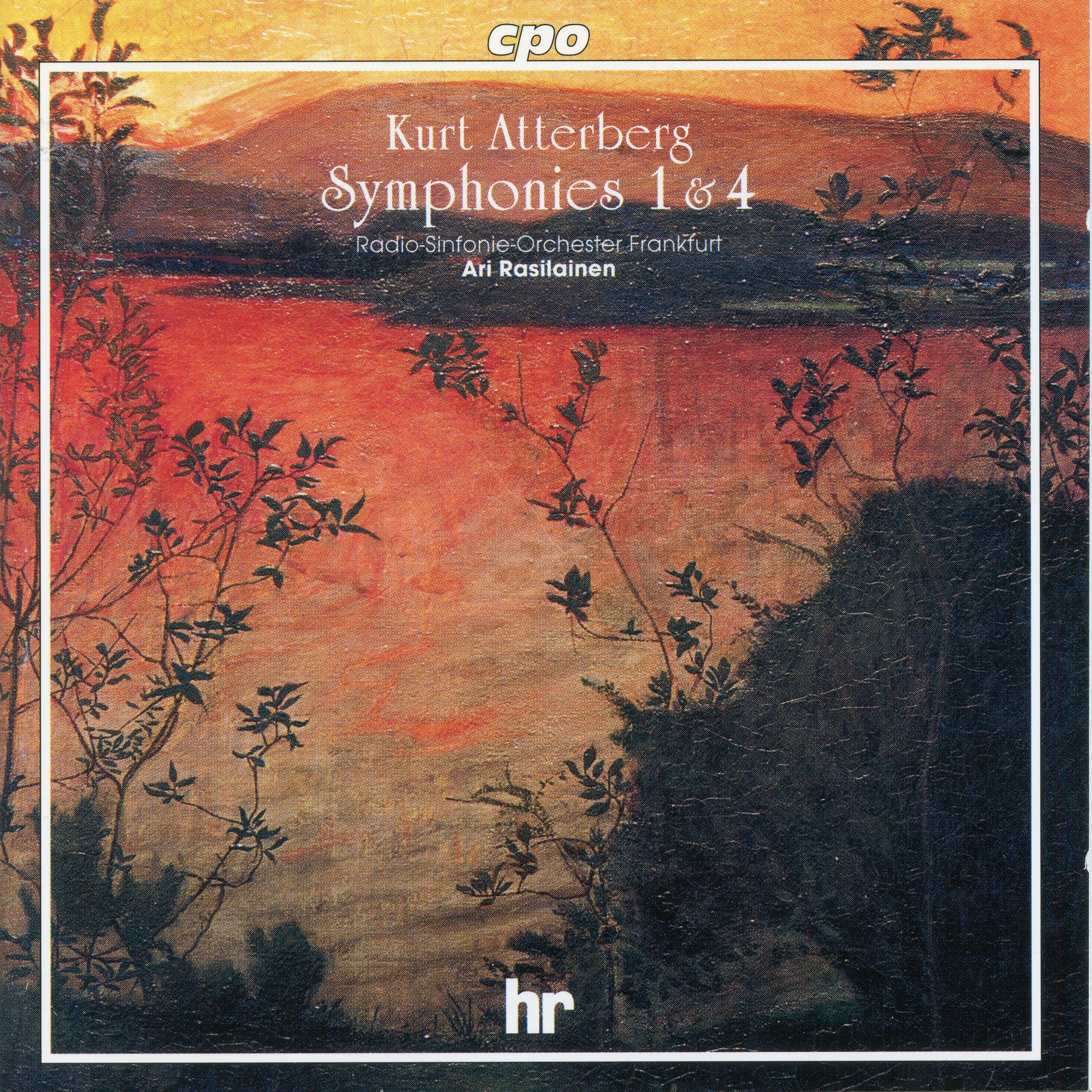
In this first Works Series entry of Kurt Atterberg's symphonies, I will be listening to Symphony no. 1 & 2 from CPO's 5CD set released in 2004. While the box set pairs an early symphony with a later one on each disc, I will be listening to Atterberg's symphonies chronologically instead, breaking up the original programming.

If you haven't experienced the symphonies of Swedish composer Kurt Atterberg before, be prepared for epic Romanticism. I will try not to use the term cinematic too often, but that is often the word which comes first to mind.
When speaking of Atterberg, his style bears some late-Romanticism remnants, perhaps with some thoughts of Bruckner, as well as previous Swedish composers Wilhelm Stenhammar and Hugo Alfvén. However, if I am going to make comparisons, it would be Atterberg as a successor to Antonín Dvořák. While I don't find these first two symphonies especially Nationalistic, Atterberg's adherence to symphonic structure reminds me most of Dvořák, not to mention the big-boned, strong-willed thematic devices that run through these symphonies.
As I mentioned when listening to Alfvén's First Symphony, as well as the First Symphony from Sibelius, I believe it smart of composers new to the symphonic genre to begin in a minor mode. There is a certain dramatic quality inherent in minor keys which aid in bringing listeners closer to the music from the start. Sure, Atterberg's Symphony no. 1 in B minor has plenty of swathes of Major-keyed areas, however the contrasts are generally aided by the composer's choice of minor as the home key.
Atterberg makes a bold opening statement backed by brass. There is a certain cinematic swashbuckling element which I notice foremost every time this musical idea returns. It doesn't take long for the composer to pare back his music for more delicate woodwind musings, brooding on their own, more pastoral theme. The music flies by on these themes, not often the case for many composers whose movements often go beyond 10-to-20 minutes in length.
What catches me immediately in this first movement is Atterberg's use of brass, where the sonics not only highlight the heroism of horns, trumpets, and trombones separately and as an section, but the tuba is heard magnificently at the depths of this orchestra. Often, the lowest brass instrument is left as a muddy fundamental rather than a discernible effort, greatly appreciated here.
I would also like to mention the composer's use of low winds, where in this first movement, his penchant for bass clarinet, as well as a short utterance by a contrabassoon, is an unusual musical character, but obviously one Atterberg enjoys the color of, as they often appear later on as well.
There are three phases to the second movement, at least that is the journey the music allowed me to tag along with as I listened. The beginning sounds pastoral to my ears, with many woodwind features as well as a firm harp presence as well. I enjoy Atterberg's use of solo string instruments here too, an element which will continue into the third movement.
A big soaring tune marks the next phase for me as a listener, backed by the entire orchestra in tutti. This is offset by a more melancholic solo for English Horn, among others, although this is all wrapped from the same chamber-like pastoral ideas from earlier on, just with some darker waves thrown in. The next big climax reminds me an awful lot of Rachmaninov, with the music bearing sweeping strings and overlaid horn. The last phase runs out of that last climax, sounding noble and wanting desperately to turn in for the night, highlighted by muted strings at the end.
The third movement is marked by a terrific tune, set in a swirling Scherzo. The melody sounds out just at the edge of recognizably, as if drafted from a folksong, nursery tune, or sea shanty. As a Scherzo, I am reminded of Berlioz, Mendelssohn, and Dukas, with maybe some of the more outgoing aspects from Bruckner. Again, the term swashbuckling comes to mind, plus the addition of celesta gives a wink towards fairy music.
Atterberg does not seem to want to contrast his Scherzo with a Trio in this movement, thus the dramatic nature continues throughout its seven minutes with little pause. The use of solo strings and combinations of winds is an absolute delight here, allowing for many wind solos and a notable timpani role. The movement teases the listener by dying away at the very end, only to thrust a devilish tag at the very conclusion of the movement.
A tender string duet opens the last movement, one which begins rather intimately, and then extends into shared wind solos with harp in the background. It takes until about four minutes in for the horns to sound out heroically, in another swashbuckling theme (sorry for the overuse of the term), one which reminds me some of Janáček. A syncopated, leaping string theme follows to contrast, where the brass are rather ready to sound out punchily in the transitional and developmental material. Like the first movement, Atterberg uses these themes most effectively throughout to build tension and excitement towards the conclusion.
Well, if you want an easily digestible symphony for your ears, this is it. As far as first symphonies go, Atterberg is very confident in handling the wide-ranging colors of the orchestra, as well as his masterful craftsmanship regarding scaffolding and architecture across the whole work. If he is this good to begin with in the genre, the rest of his symphonies will be an absolute pleasure.
I will talk more about the specific performances and recorded attributes following a briefer play-by-play of the Second Symphony below.

In my household, we are ardent horn lovers. Thus to have a opening horn solo in the first movement of Atterberg's Symphony no. 2 in F Major was a major winner in my home. The setting, though, is rather pastoral rather than heroic, although that latter adjective will arrive later on in the form of a dramatic brass chorale.
I love how Atterberg switches modally between major and minor, often unexpectedly, but more often colorfully if nothing else. A rather Richard Strauss-ian string line leaps about imitatively at some point as well, where I now realize my host of composing comparisons are probably rather confusing for the Atterberg initiate. To add to the mix, the rather ardently forested elements of this first movement brought to mind Joachim Raff as well (!). Sorry, I couldn't help myself...
If find it odd how Atterberg uses the horn alone to end the first movement and picks up with the very same note in the very same instrument to begin the second movement. I assume such a choice is to tie them together, by why not just let the music run attacca into the next without stop? A broad tune in the vein of Wagner opens the middle movement, and as much as I enjoyed the swashbuckling dramatics of the First Symphony, he does equally well in luscious Major keys as well.
This movement inexorably builds to a precipice, one which is majestic and thrilling as it is heartfelt in turns. While Atterberg has used piano as a texture before, it is heard stronger here, and I think it to be mightily effective too. There is a strange moment where the piano doubles the horns, but that is the only time I didn't think the composer utilized its effect well.
In addition to a broad Romanticism present, Atterberg bandies between that and a livelier Scherzo, melding the slow movement with a dance movement wrapped up all in one. He certainly isn't the first to do so, but I think it works effectively enough here, especially when the Scherzo become ominously incessant, timpani and all.
The second movement was originally conceived as a concluding movement to this Second Symphony, something I can't un-hear in this work. Quite frankly, I would have been just as happy with a two-movement symphony, since the third movement simply gives more of the same, even if I am happy with that specific state of affairs from Atterberg. In this case, more is more, and who wouldn't want that here? The only problem I can see, is that Atterberg's symphonies can become very unctuous, making for overly divine listening, like a large piece from a too-sweet, heavily frosted cake. After Atterberg laying it on very thick at the end of the second movement, this third movement almost becomes too much.
That said, Atterberg makes the third and last movement a little more menacing than what has come before, allowing some variety to make its way into the conclusion. Still, listen to those heroic horns and trumpets which wail on the main theme, a wonderful moment, as well as the more positive secondary theme in the strings afterwards. A fine work!
Surprisingly, there is no shortage of recordings covering Kurt Atterberg's symphonies. Stig Westerberg recorded them both on the Sterling and Swedish Society labels, while more recently Neeme Järvi covered these two on Chandos in Gothenberg. To give an idea of differences, Järvi comes in 5-to-10 minutes faster than both Westerberg and this CPO set in each work.
As to Ari Rasilainen and the Frankfurt Radio Symphony Orchestra, the CPO sonics capture them with great detail. The Frankfurt band is one I have admired, mainly from Eliahu Inbal in his cycles of Bruckner and Mahler symphonies. Rasilainen leads grandiose, weighty affairs, where Westerberg and his Swedish orchestras could be less thick or imperious at times, and some may appreciate the differences. Personally, I enjoy hearing Atterberg no matter how it is presented; decisions as to which recordings will most likely depend on cost, availability, and whether you want a hasty, heavy, or varied approach to his symphonies.
Work Series
From Atterberg Symphonies on CPO
Works
Symphony 1 in B minor, op. 3 (40.47)
Symphony 2 in F Major, op. 6 (41.00)
Performers
Frankfurt Radio Symphony Orchestra
Ari Rasilainen, conductor
Label: CPO
Year: 1999-2002; 2004 (set)
Comments
Post a Comment