Gillis: Symphony 5 & 6
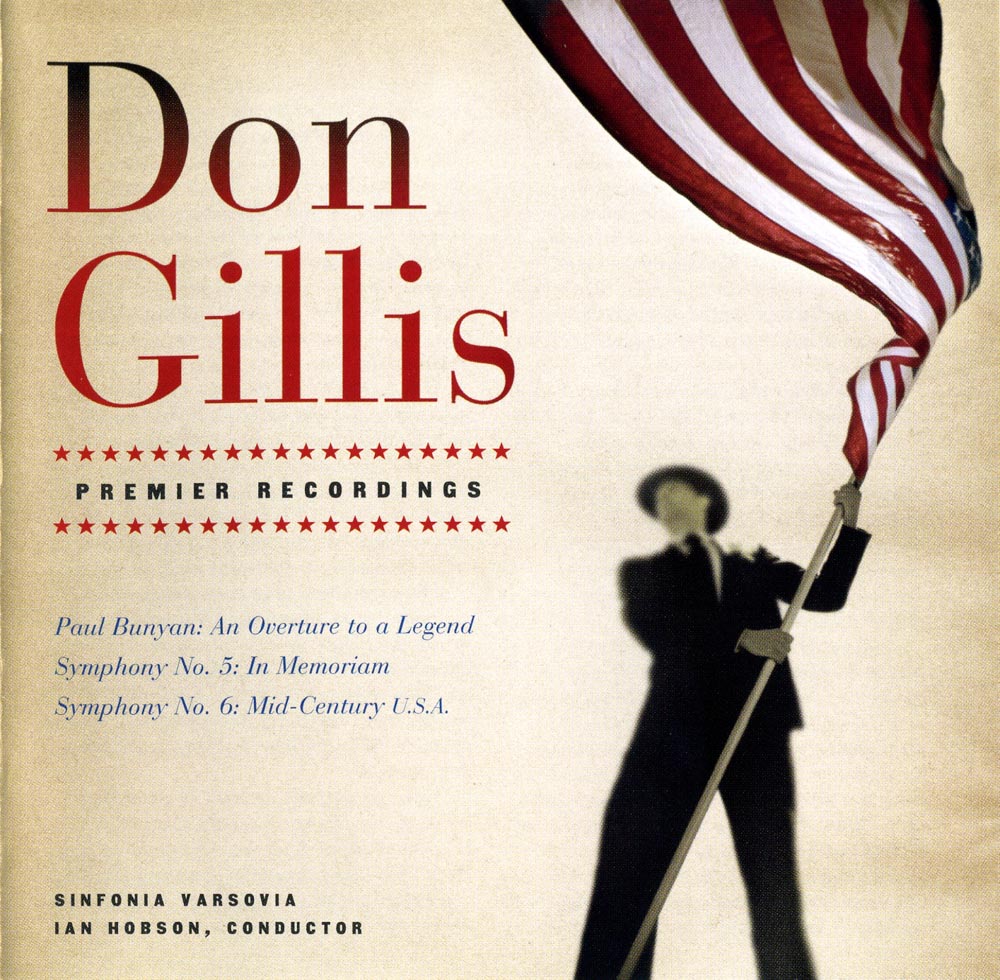
Despite the occasional aggressive orchestral outburst, the first movement from Symphony no. 5 by U.S. composer Don Gillis is largely solemn and gentle. It is almost as if Gillis is returning to the plain-spoken virtues of his early symphonies. Of course, the subtitle 'In Memoriam' and the post-WWII date of the symphony informs much of the nature of this three-movement piece, yet Gillis is never without wholesome and folksy comfort in his music.
If the first movement was demarcated by its gentleness and solemnity with occasional shaft of light, the second movement feels similar, yet much more personal. The timpani, brass, and harp at the ope insinuate an actual proceeding of funereal processions amidst intimate emotions. As Gillis comes to terms with loss through his music, who are we to decide how he copes musically? It is as if we are being let into a private moment.
The beginning of the third movement finds Gillis back to lighter moods, pulling out delightful themes, a variety of percussion, and snatches of rhythmic mischievousness. It doesn't take long for the composer to pull back on the fun however, with horn and wind meditations breaking up the merriment. Only in the final moments does Gillis transfer the gentle horn calls into the opening material for a grand conclusion.
As is the case with the symphonies of Don Gillis, nothing here is musically excruciating or painful. Rather, the composer searches out respite tonally in his own musical language. Because he has such a positive spirit, it is almost as if Gillis is ashamed of his brand of Americana in this symphony, where he can never shake his preferences and style to express his feelings musically.
'Mid-Century U.S.A.' is the moniker for Gillis' Symphony no. 6, one which searches out similarly to the Fifth Symphony in the first movement, but with a wider orchestral color palette. Eventually, the horse hooves come out for some Old West tomfoolery, bringing out the sounds of Americana Gillis is known for, amongst some plaintive orchestral musings which the opening movement ends upon.
A driving Scherzo inhabits the second movement, one with a minor-mode surliness, enhanced by the edginess of the brass playing here. While Gillis never pulls back the forward-moving drive, he does pare back the orchestration to feature a wide array of wind solos, while the underlining rhythms gallop ahead without stop in a telegraph fashion.
The only bit of jazziness on this recording's program occurs in the Sixth Symphony's third movement, where a bluesy mood pervades. The use of low winds and brass help inhabit this particular soundworld, which tries to pick up into something lighter and militaristic, as if wanting to evoke the previous Scherzo and opening movement once more.
I can't say the musical hijinks of the final movement are a surprise, yet this is the first uninterrupted bit of outgoing humor to be taken from these two symphonies. Gillis does so lightly at first, with pizzicato strings and triangle, but eventually takes stronger musical strides. Again, it is the winds and percussion which make the most of Gillis' light textures, which the strings and brass build upon as the composer works his way to an ultimate musical peroration.
As a bit of extra music, the short Paul Bunyan Overture is provided. The only other composer I know who has tackled the U.S. folk legend for orchestra is Benjamin Britten, so it is good to hear how a native interprets the material. The overture is certainly quixotic; up one moment and down the other, as if Gillis is not sure where exactly to go. Certainly, there is not the rough galumphing one might expect of the giant lumberjack and his Blue Ox Babe. Maybe not a fast favorite, but greatly enjoyable nonetheless.
I am consistently impressed by how the Poland-based Sinfonia Varsovia takes to Gillis' brand of Americana. Certainly, Ian Hobson has them playing in top-notch fashion, with no lack of rhythmic vitality, although in this recording, it is the lyrical moments which are most important. Impressive playing all around!

Works
Symphony 5 'In Memoriam' (31.42)
Symphony 6 'Mid-Century USA' (27.31)
Paul Bunyan Overture (6.50)
Soloist
Ian Hobson, piano
Performers
Sinfonia Varsovia
Ian Hobson, conductor
Label: Albany
Year: 2005
Total Timing: 66.05
As was the case with his earliest symphonies, I feel both Symphony 5 & 6 are almost too long for their own good. Gillis needs to get in and get out for total satisfaction and success.
One can't complain about the performances though, and surveying his symphonies numerically is an insightful journey with Don Gillis and these performers. Especially when the composer's personal emotional insights are dragged out for all to hear.

Find more Gillis recordings HERE!
Comments
Post a Comment