Bloch: Symphony in C-sharp minor
What follows that first-movement intro is music of great conflict, with an occasional moment of respite, including a notable section for solo violin and harp and a hushed, uncertain close to the movement. If I am reminded of Gustav Mahler, it is the musical journey Bloch sets me upon, one made up of many musical twists and turns.
As regular readers will know, I am no lover of late-Romanticism; yet here, Bloch isn't wrapped up in confounding, unintelligible chromaticism as he is in creating bright, vivid colors in big, broad strokes. There is no guesswork in following the music in Bloch's very first symphony. Instead, the composer lays everything out for the listener to easily follow, even though the work is set across an hour in length, with this first movement taking up a large chunk of the runtime.
There is a rocking woodsiness to the second movement, one which captures a certain German spirit with the presence of horns at the opening astride a slow, unusual oom-pah in the bass line, the horns reminding me of Mendelssohn, even if Bloch's musical language is much more elaborated harmonically. A contrasting section of wind flourishes and chamber strings evoke a nature scene, one full of bird calls and musical whimsy. This is further contrasted with a heroic scene for brass, thus far making this Andante movement a progression of impressive musical portraits. Each thematic area returns in one form or another, again making for easy structures for the listener to grasp on to across its eleven minutes.
A brass fanfare with percussion opens the Scherzo third movement, which leads into and announces the Scherzo proper, one that seems to sound out as a cinematically swashbuckling, sea-spray sort of atmosphere with plenty of triumphant musical gestures. A songful episode breaks up the dramatics, a portion given over to many sequenced wind solos, some plaintively pastoral and others lighthearted. Again, Bloch employs small amounts of solo strings, creating some well-appreciated textural variety for the listener here and there across his symphony.
There is more complexity to Bloch's fourth movement, where he begins with a fugue of sorts, made up of leaping, angular intervals. I daresay, there is an acidity to Bloch's fugue theme, reminding me some of Shostakovich. Where a fugue could imply a drying up of the slathered late-Romanticisms found across the work thus far, Bloch makes it work for his musical language, eventually breaking out into a great march of sorts.
The last three movements of Bloch's Symphony in C-sharp minor last over 30 minutes and, kudos to both the composer and these performers, I was never once bored, confused, or impatient. Sure, the 50+-minute symphony is probably overlong, but there is enough contrast to maintain my attention throughout. So too, especially in the middle movements, if there wasn't necessarily a feeling of humor or levity, Bloch at least never weighs down the symphony without utmost seriousness. Best yet, I found myself rather enthusiastic over the whole affair, a great surprise for this listener. I could see some finding the symphony overcooked, but I found it overblown in all the right ways.
No, this isn't the only recording of the Symphony in C-sharp minor. An earlier one from Stephen Gunzenhauser on Marco Polo, a more recent on BIS from Sweden have covered the late-Romantic symphony, plus a historic performance from the St. Louis Philharmonic. I could see many warming to the BIS recording's more cohesive take, but I find I am bored by the directing there.
At 54 minutes, Israeli conductor Dalia Atlas leads the longest performance on Naxos, but only by a minute or so. Certainly, nothing ever sounded overly ruminative or stodgy, although the music did sound new to the London Symphony Orchestra, with the smallest of blips here and there. Otherwise, they are impressively imposing in the work, Atlas an obvious champion of Bloch's music.
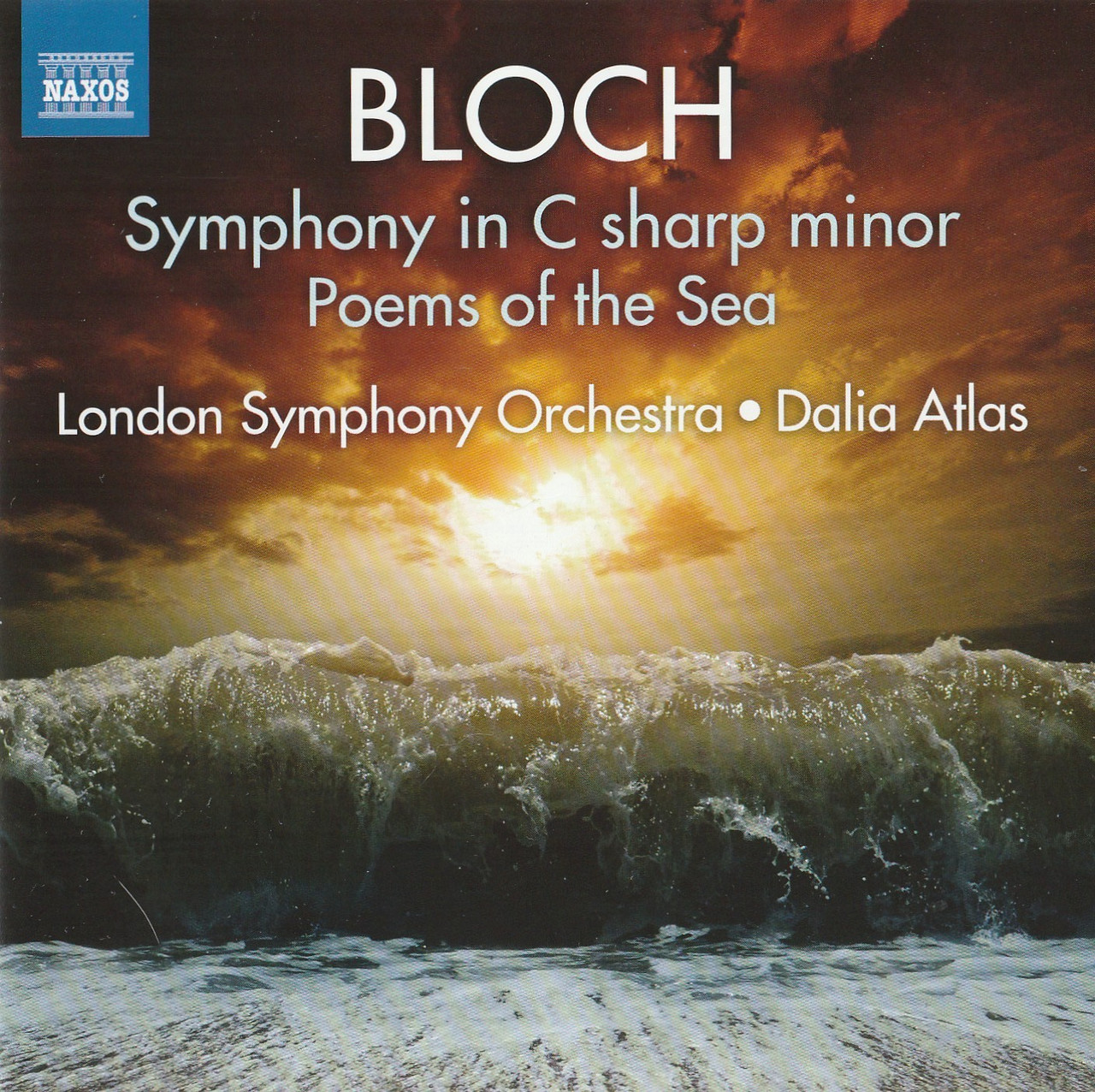
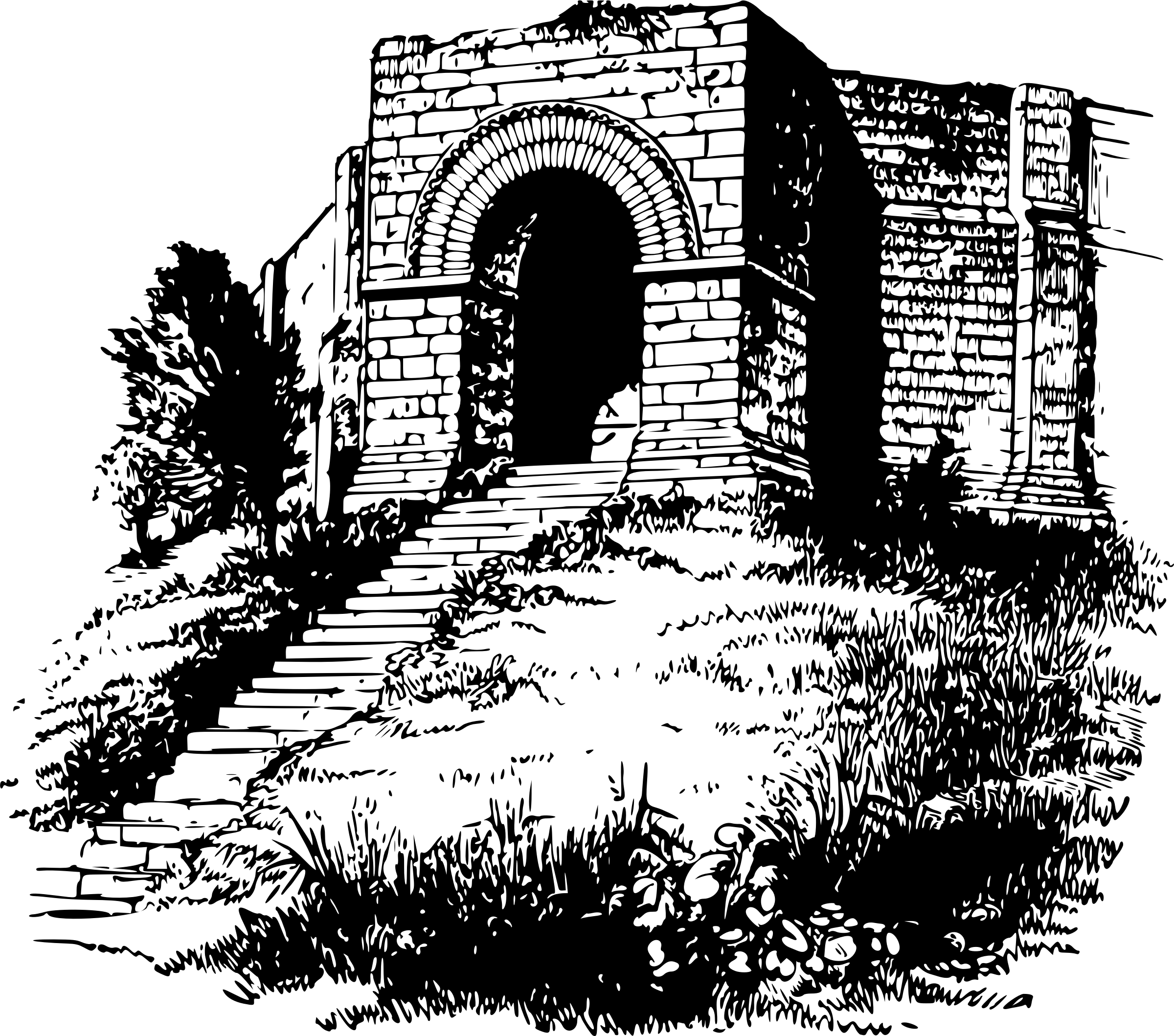
I especially enjoy the engineering from Naxos, particularly the solid bass tone coming from instruments such as the tuba, double basses, bass clarinet, and contrabassoon, all of which are given a depth of sound which is remarkable to my ears. Balances across the ensemble are ideal, with the various orchestral colors flowing affably to my ears. As an aside, Naxos made two covers for this same recording. I own the one at the top of this blog post, but for some reason there is a second cover image, which I included at the very bottom.
For those who don't enjoy the overblown nature of the symphony, you might find more in the Poems of the Sea, a three-movement suite for orchestra. One certainly hears the unpredictability of sea waves in the first movement, as well as the adventure and hard work serving at sea in the third movement. A plaintive sea shanty makes up the center of the suite, with an oboe giving the piece a certain flair of the Isles.
Personally, this music sounds a little hollow in comparison, perhaps coming from its solo piano origins. Each movement is rather brief as well, a factor also might lead me to such feelings. Otherwise, Poems of the Sea is perfectly charming in its own right, with musical language from Ernest Bloch being marvelously approachable in both works.
If the motto of The Oozy Keep is 'music is at its best when it finds you unprepared for its greatness', that is the effect this recording had upon me. Consider me completely taken.

Works
Symphony in C-sharp minor (54.38)
Poems of the Sea (13.35)
Performers
London Symphony Orchestra
Dalia Atlas, conductor
Label: Naxos
Year: 2013
Total Timing: 68.26
Symphony in C-sharp minor (54.38)
Poems of the Sea (13.35)
Performers
London Symphony Orchestra
Dalia Atlas, conductor
Label: Naxos
Year: 2013
Total Timing: 68.26
I could see some finding Bloch's Symphony in C-sharp minor as simply too much, but it worked its magic firmly upon me.
Best of all, Bloch's late-Romantic symphony is vivid and easy to follow, not wholly unlike Mahler. No, the LSO is not perfect here, but nothing to destroy Bloch's vision.
Conductor Dalia Atlas has set down many of Bloch's orchestral works on record, thus I am enthusiastic to explore more, even if the composer's musical language matures in a different direction than what is on display here.
Find more Bloch recordings HERE!

Comments
Post a Comment