Gillis: Symphony 8 & 9
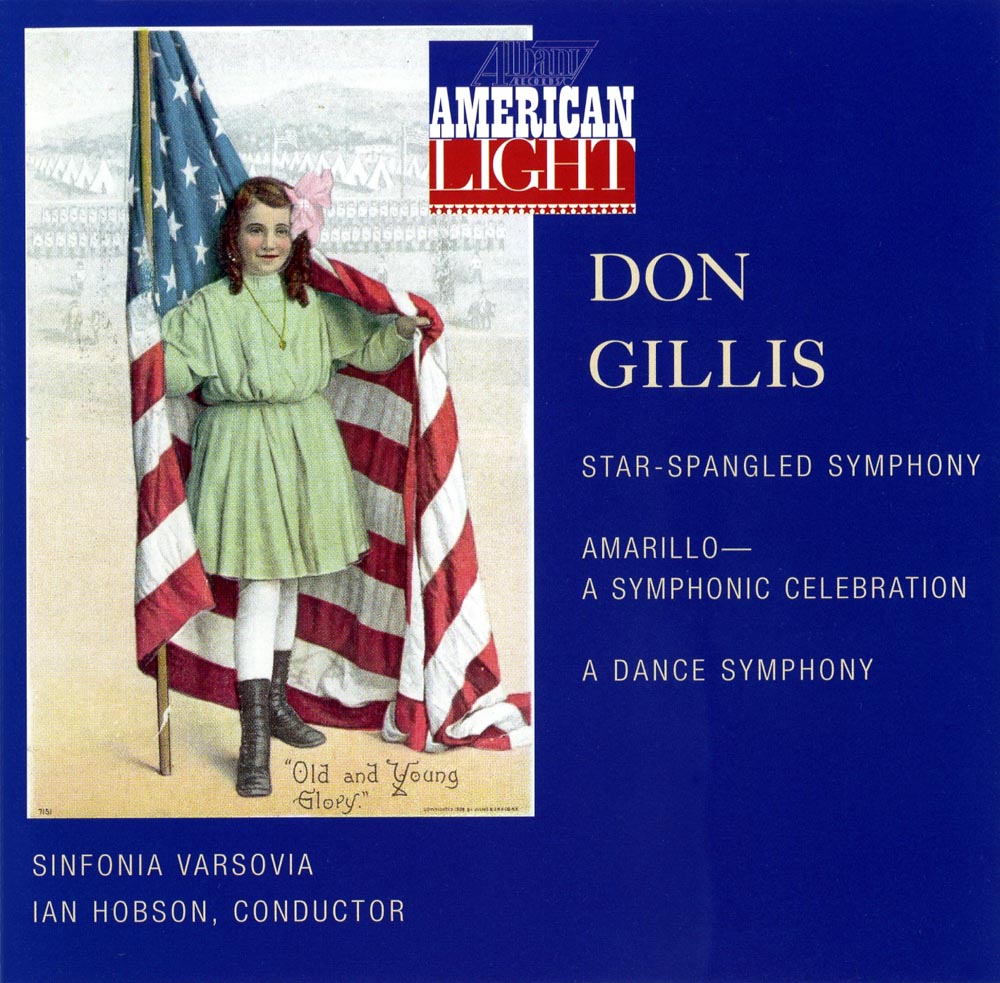
While this recording of U.S. composer Don Gillis' Eighth and Ninth Symphonies was the first of a complete series to come from the Sinfonia Varsovia under the direction of Ian Hobson, I have instead been listening to the composer's symphonies in number order. Thus, this recording is my last of his ten symphonies, having covered his Symphony X earlier on.
I mention this only because the first movement 'Juke Box Jive' of Symphony no. 8, 'A Dance Symphony', has become rather generic sounding coming from Gillis. It contains a sort-of jazz-era big band sound the composer enjoyed, full of tricksy rhythms and no lack of vitality. If I had stumbled upon this music when it was originally issued, with only one prior release of Don Gillis' symphonies on Albany Records, I would have been mightily enthusiastic. As it is, I continue to enjoy his brand of light Americana, even if I have come to acknowledge a certain musical blueprint from Gillis in his symphonies.
The second movement 'Deep Blues' offers something more, with a heavily swung blues feel opposite light musical twinklings here and there. A 'Waltz (of sorts)' picks up a musical playground taunt as its main thematic idea, showing no dearth of wit and humor from the composer. Both of these inner short movements, plus the fourth-movement 'Low-Down Hoedown' offer some variety from Gillis' typical colors and musical settings, even if they sound awfully familiar to his previous symphonic iterations.
Symphony no. 9, 'Star-Spangled Symphony', continues much in the same vein as the Eighth Symphony, with another rhythmically persnickety opening movement, depicting mid-Century U.S. 'Production Lines', although to my ears, this sound like Gillis in a typically upbeat mood. I do greatly enjoy the wealth of percussion and chipper woodwinds on offer in these orchestrations, providing a whole lot of color for the listener throughout.
Most impressive so far is the longer 'Prayer and Hymn for a Solemn Occasion' slow-tempoed second movement. Here, Gillis channels a musical sincerity which sometimes pops up in his Americana pieces. Woodwind chorales aside harp contrast with strings in strange harmonic motion, as if the music is reaching out for something much older and more mysterious than The Great Plains or The Old West. Eventually, Gillis settles into familiar territory, as if summoning a cowboy ballad or Salt-of-the-Earth spirituality and devotion.
'Bobby Socks' and 'Fourth of July Celebration' end the Ninth Symphony in a typically energetic fashion. The plucked strings of the former remind me of Leroy Anderson, an apt comparison I think, while the cacophony of street parades found during the U.S. Independence Day are vividly portrayed for the conclusion. All of these titled symphonic movements are ably depicted by the Sinfonia Varsovia, who seem to have the full measure of Gillis' Americana in their hands. Ian Hobson too must have some enthusiasm for this music, for these works come off with great vitality and life.
Like Tulsa and The Alamo, Gillis' symphonic poem Amarillo is almost more impressive than the symphonies it is paired with. I really enjoy the stacked / sustained brass ideas which return throughout the piece, ones which appear opposite noble evocations of musical collegiate academia. The contrasting sections make the 18-minute tone poem flow past fairly well, including an area of precious sweetness, a musical setting quite atypical for Gillis, plus a snatch of Sousa, plenty of jazzy settings, and rambunctious Old West sounds.

Works
Symphony 8 'Dance Symphony' (19.30)
Symphony 9 'Star-Spangled Symphony' (28.25)
Amarillo: A Symphonic Celebration (18.31)
Performers
Sinfonia Varsovia
Ian Hobson, conductor
Label: Albany
Year: 2003
Total Timing: 66.32
This would be yet another recording which offers listeners a chance to explore the mature sound of Don Gillis.
Sure, Gillis has made these symphonic sounds before, but they are just so gosh-darn charming regardless!

Find more Gillis recordings HERE!
Comments
Post a Comment