Liszt: Orchestral Bits 'n Bobs
For this entry of my Bits 'n Bobs series, I look at the ancillary orchestral music from Franz Liszt. I have since found more Bits 'n Bobs for orchestra from Liszt, so I will most likely pair them with random concertante pieces later on.
Really, if one wanted to scour the most out of the way numbers from Liszt for orchestra, you could really go on and on, as a lot of his keyboard music was ported over to orchestra. For now, I will just cover what sounds interesting to me.

Rákóczi March
Festmarsch zur Goethe-Jubiläumsfeier
Admittedly, most of Liszt's marches for orchestra are actually concert overtures. They might have some march-like attributes as bookends, but there can be many contrasting sections and episodes which wander far away from anything bringing the military to mind.
The Festive March for the Goethe Centenary is one such piece. A burly entrance, complete with brass and percussion, fulfills the march named in the title. The main theme stated in the strings is unusual for its flatted-third, giving an unusual exoticism to the piece. The music then wanders for some 10 minutes in and out of contrasting tempos and music.
The Rákóczi March on the other hand really tries to stay true to its march status throughout its runtime. Certainly, a wonderfully recurring trumpet solo and a passel of percussion maintains the military spirit.
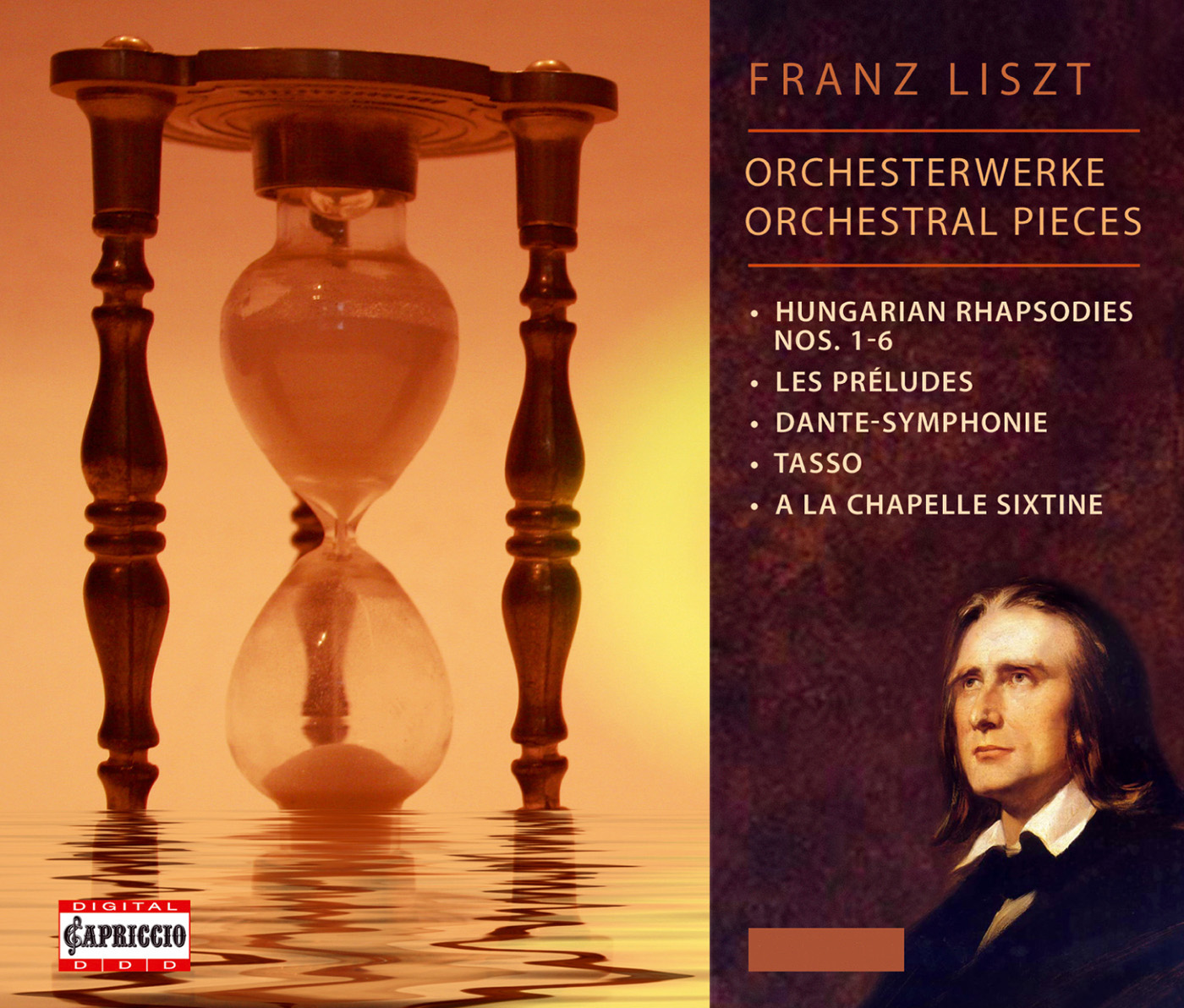
Best of all, the Hungarian National Philharmonic Orchestra is alive and vivid throughout. Tempos are spry and the ensemble is full of life and vitality, allowing the important instruments to punch out with glee. Plus, these works are never directed to be any deeper than what they are. If the playing across this 4CD set consistently sounds like these two short pieces, I might just have to take a further dip.

Hungarian March to the Assault
While I am familiar with the other Battle Music featured on this Erich Kunzel album with the Cincinnati Symphony Orchestra, Liszt's Hungarian March to the Assault is new to me.
This one is rather short, coming in between 4-to-5 minutes in length. This march is special as it includes a cimbalom in the central contrasting portion. This is a Hungarian instrument similar to the hammered dulcimer, making for a rather odd texture in this burly, festive music. Indeed it reminds me of Zoltán Kodály in full folk mode, and it is a delightful variance in Liszt.
Any recording from Erich Kunzel is going to be a lot of fun, and indeed, this is a treat. Telarc's sonics provide a depth and impact to the percussion rarely matched on any other classical-music label. Of course, in comparison to the Hungarian National Philharmonic Orchestra on Capriccio above, the Cincinnati Symphony Orchestra is squeaky clean and spic and span in its ensemble.
Künstlerfestzug zur Schillerfeier
The World-Wide Web translates this work to Artist's Processional for a Schiller Festival, thus this piece shares some similarities to the Goethe one above, mainly for its occasional status. Schiller of course was a famous author and poet, thus the comparison to Goethe goes even further.
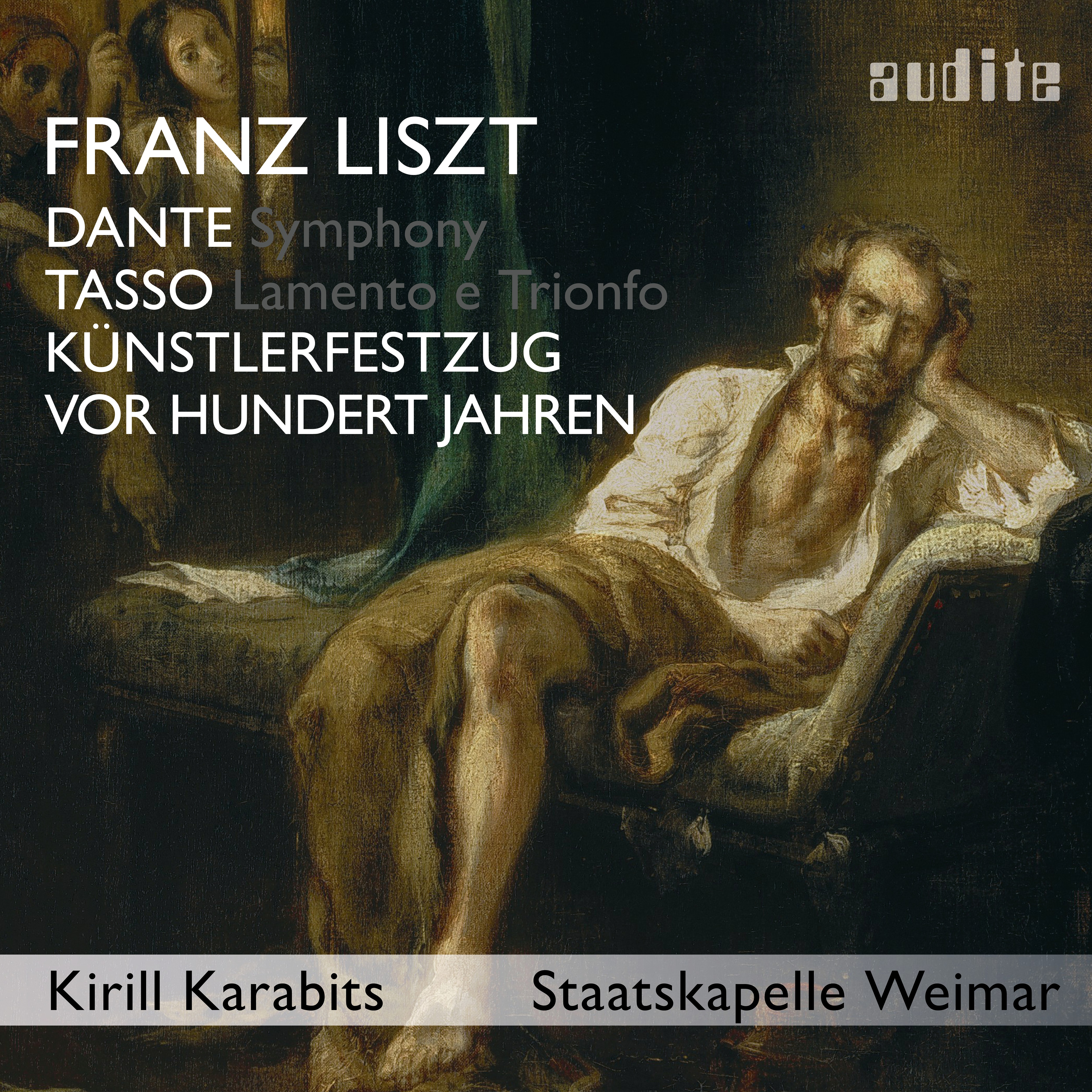
More importantly, Kirill Karabits leads Franz Liszt's own orchestra, the Staatskapelle Weimar. Karabits leads a sophisticated reading of Liszt, one which might not get the home fires burning, but one which offers more musical insight amidst less overt spectacle.
Some of this might be due to Liszt's 10-minute orchestral work, based off of an earlier piano work. To my ears, this music is very concert bound. While there are many brass perorations and percussive impacts across the runtime, the music seems designed to please and entertain, a change from the marches covered above. That, and the lovely horn solo with harp whisks me away every time I hear its winning lyricism.
I am not displeased with this performance though. I would be curious to hear the rest of Kirill Karabits' Liszt, for there are another three or four volumes of the composer's orchestral on Audite.

Trois Odes Funebre:
I. Les Morte
As with many of the pieces I have covered above, the Three Funeral Odes can be found in many variations, including for solo piano, organ solo, and violin with piano.
The orchestral version is most interesting, for the score calls for an ad libitum male chorus. I was originally going to listen to Martin Haselböck's Alpha Classics recording, however he chose to omit the chorus, so I turned to Karl-Anton Rickenbacher next.
Rickenbacher is a Swiss conductor with a lot of German credits to his name. I have found him a reliable, dutiful orchestral leader, often in repertoire not completely familiar to me. Thus, I was delighted to see Rickenbacher had covered Liszt's Three Funeral Odes, although I will only be listening to the First Ode: Les Morte.
The male chorus adds a lot to the music, providing an ethereal, other-worldly quality which comes and goes in its 10 minutes. While a funeral ode might infer something contemplative and devotional, the orchestral contributions in this first ode are rather brassy and firm. The voices present the major-keyed portions, where the instruments are allowed to dig into humanity's struggles.
I would be curious to hear how other recordings balance the voices to the orchestra, but other than that, this was a really fine recording of this First Ode. Suffice to say, I will probably explore the others at some point from Rickenbacher.

Trois Odes Funebre:
III. Le triomphe funèbre du Tasse
The Triumphant Funeral of Tasso serves as an epilogue to Liszt's famous symphonic poem Tasso: Lament and Triumph, as well as a finale to the Three Funeral Odes.
If I didn't expect such a robust setting from Liszt in the first ode, this one is a full-on symphonic poem from the composer. Whatever demons Liszt was working through in this triptych, he seems to have come to some sort of acceptance, for such things shine through in this music.
Of all of the works in this Bit's 'n Bobs segment, the Third Ode swells and surges with Romanticism, sweeping strings, endless melodies, solo instrument diversions and all. I suppose it shows Liszt staying true to himself through musical means.
I wasn't overly persuaded by the BBC Scottish Symphony Orchestra under Ilan Volkov, but that may be more due to the piecemeal way I listened to the totality of these Three Funeral Odes. Such feelings could also be the result of a return of Liszt's formal, gangling orchestral writing, something I may not have been prepared for in this set. The Hyperion sound is excellent otherwise, and Volkov also uses male chorus in the First Ode, which I did sneak a listen of.

Trois Odes Funebre:
II. La Notte
Vexilla Regis Prodeunt
I took the Three Funeral Odes out of order, mainly because I listened to an extra piece from Liszt off of this album and wished to speak of it separately.
La Notte, or The Night (After Michaelangelo) is the moody piece I have been expecting from Liszt, one which is somewhat frightening in its orchestration, yet also rather insular. The music also moves in serpentine chromaticisms, never allowing personal temperament to ever get too fired up. It is an interesting dichotomy from Liszt.
Let me say outright, that I do not enjoy the period-instrument practice on display in this recording from the Vienna Academy Orchestra. The lack of vibrato in a Romantic such as Franz Liszt is anathema to me. Even the winds don't employ vibrato, although I like their tone much more than the metallic sound of the strings always scratching underneath them. Moreso, there are some atrocious tuning issues which rear up, usually amongst the strings, but sometimes between the strings and winds. Yuck!
While La Notte didn't do much for me from this group, I also initially listened to their Les Morts without male chorus, Liszt's First Ode. I was impressed by their punchiness and occasional aggressive musical tactics, which of course La Notte doesn't really bear.
However, this rough musical attitude shows its face in Vexilla Regis Prodeunt, an orchestrated version of a piano piece, which itself comes from a collection of character pieces. One forgets what a devoted church musician Liszt was, where his fame has grown out of his piano performance in modern times. One can certainly hear the hymn attributes running across Liszt's orchestral interpolation.
I really enjoy Martin Haselböck's Salt-of-the-Earth performance of this music, letting the Vienna Academy Orchestra snarl their way through the menacing march which underscores much of this Medieval-sounding hymn. While one could imagine this music having pipe-organ origins, Liszt takes quite a few liberties with his own piece in transitioning the keyboard music over to orchestra. All to the better methinks.
It just goes to show, even if I don't like a particular musical approach, such as historically-informed performance practice on period instruments, performers can still make major contributions to the music in order to win over the listener. This is an excellent example of how it can go both ways.
Summary
I am not always hot on the orchestral music of Liszt, so I didn't know how I would feel regarding his lesser-known pieces for orchestra. On the whole, I believe I enjoyed myself, even if his music still carries some of the longueurs from his symphonic poems and symphonies, aspects which can drive me nuts, but far less so. These shorter pieces, generally 10-12 minutes each if that is considered short, have enough personality to win the day, I think.
I was really taken with the punchy, colorful playing by the Hungarian National Philharmonic Orchestra, and the period-instrument ensemble directed by Martin Haselböck gives a winning Vexilla Regis, maybe my favorite work on this program I listed above. The rest lay somewhere in between, although I always encourage listeners to search out Erich Kunzel on Telarc, a fine conductor often overlooked due to his Pops Orchestra background.
Bits 'n Bobs
Festmarsch zur Goethe-Jubiläumfeier, S115 (9.22)
Rákóczi-Marsch, S117 (10.41)
Hungarian National Philharmonic Orchestra
Hartmut Haenchen, conductor
Capriccio; 2011
Hungarian March to the Assault, S119
Cincinnati Symphony Orchestra
Erich Kunzel, conductor
Telarc; 1984
(4.39)
Künstlerfestzug zur Schillerfeier, S114
Staatskapelle Weimar
Kirill Karabits, conductor
Audite; 2020
(10.58)
Troi Odes Funebre, S112:
I. Les Morts
Berlin Radio Choir
Berlin Radio Symphony Orchestra
Karl Anton Rickenbacher, conductor
Koch; 1996
(10.49)
Troi Odes Funebre, S112:
III. Le triomphe funèbre du Tasse
BBC Scottish Symphony Orchestra
Ilan Volkov, conductor
Hyperion; 2011
(12.23)
Troi Odes Funebre, S112:
II. La Notte (11.20)
Vexilla Regis (6.06)
Vienna Academy Orchestra
Martin Haselböck, conductor
Alpha; 2015
Comments
Post a Comment