Liszt: Symphonic Poems 9 - 12
Prelude
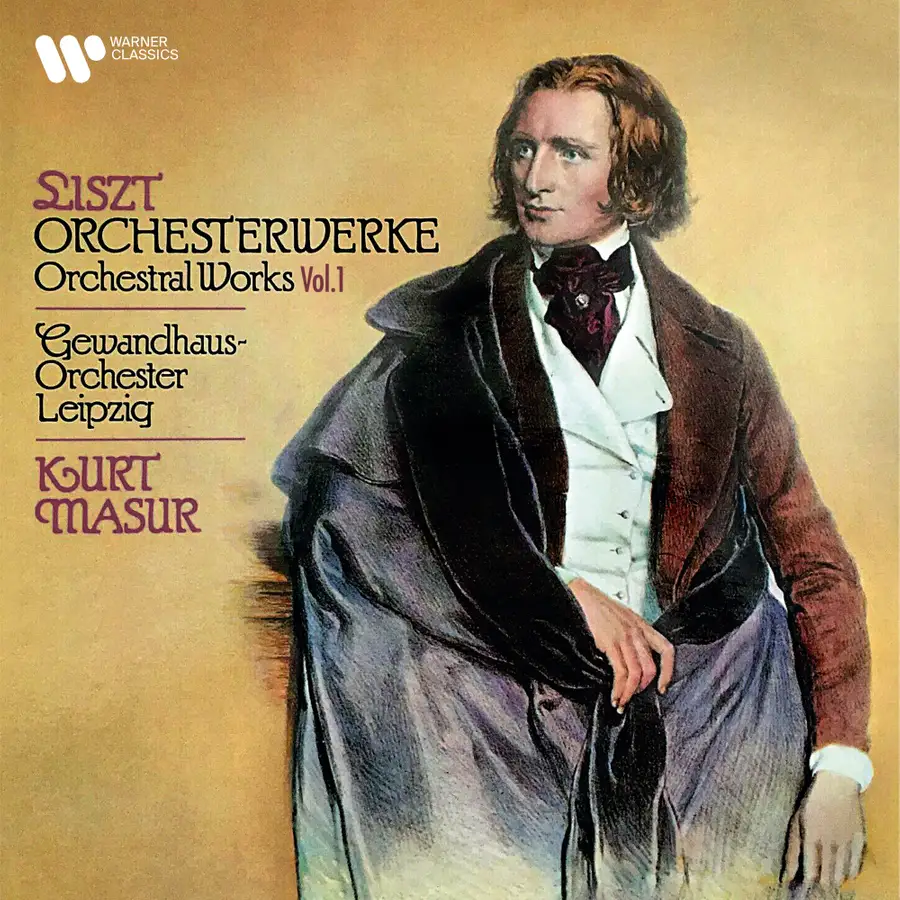
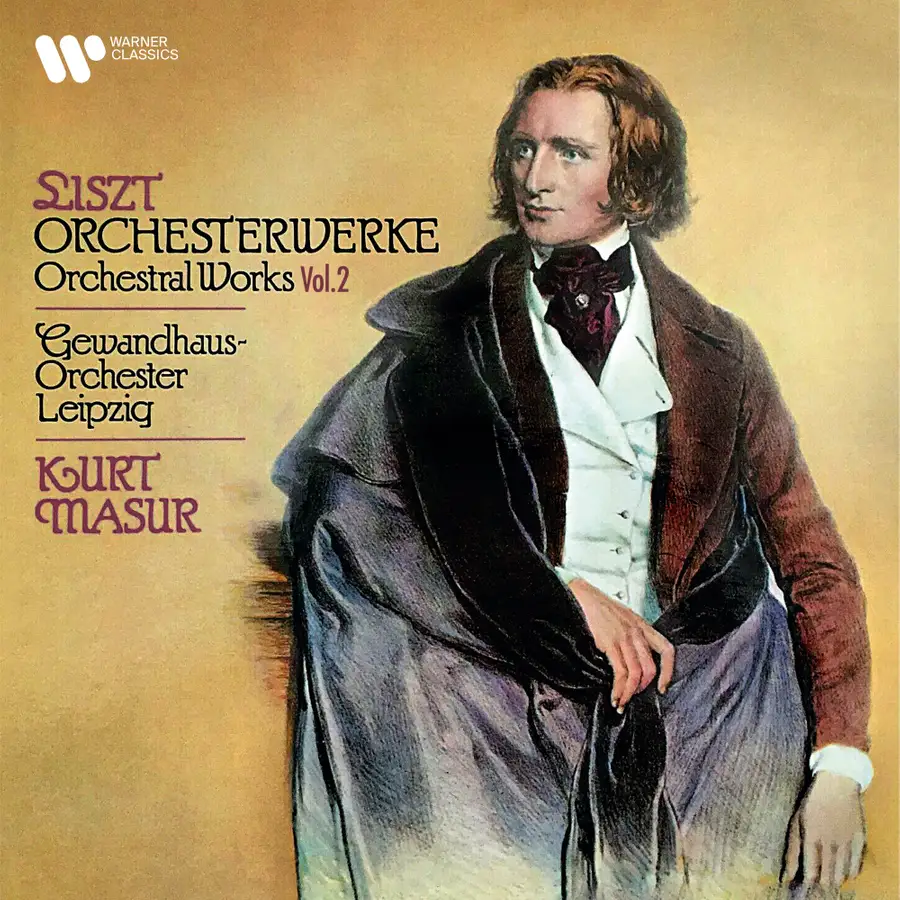
For this third Works Series entry of Franz Liszt's symphonic poems, I will be covering the composer's late efforts into the genre of tone poems: Hungaria, Hamlet, Hunnenschlacht, and Die Ideale. While I have inserted older cover art above and below, this blog post is actually my listening of the third volume (of seven) from EMI / Warner's 2011 box set of Liszt's orchestral and concertante music with Kurt Masur and the Gewandhaus Orchestra performing. Thoughtfully, this set arranges Liszt's symphonic poems in catalog order, so I will be covering them in that way as well.

Those who enjoy the Nationalistic side of Franz Liszt's music should have much to like in his Hungaria, since, as I understand it, it employs actual Hungarian modes. After a brief slow introduction, the Hungarian March proper begins, a musical motive to be used throughout the work.
As Hungaria is a solid 20 minutes, I was wondering how long Liszt could latch himself onto these few opening ideas; the answer is for quite a while. I was concerned that the composer arrived at a Major-keyed march, one of a victorious, heroic nature with cymbals and drums a-plenty, arriving before even the halfway mark of the piece's entire runtime. Suffice to say, Liszt has more triumphant marches to insert later on, but keeps coming back to the well.
That said, I kind-of liked this work. Its main Hungarian March is sneaky sounding in its skipping dotted rhythms, a setting I enjoy very much, perhaps because it is easy to identify, even when Liszt modifies the motivic material. The music is certainly militaristic, although as usual, Liszt breaks into solo instrument cadenzas and short point of chamber-like longueurs to contrast the extrovert din.
Whereas Hungaria has no obvious program other than being based on a previous work for piano, Hamlet's sources are obvious, although his impetus for composing this particular symphonic poem was apparently based on a specific stage performance of the Shakespeare play Liszt viewed.
I must admit that musical tributes to Shakespeare's Hamlet and Macbeth have become tired for this listener. There are just so many out there, both in Classical Music and in film scores. Composers portray through music intricate political mechanics, crisis of mental states, plenty character back-stabbings, where both plays are interpreted compositionally with heavy, dark drama.
While the music making in Hamlet is expectedly murky, Liszt really lays into silences and moodiness, never my favorite elements from the composer. Many quiet moments of pairs of instruments, or just a few sections from the ensemble, exist amidst the surlier material. Liszt manages to make the music hang together though, with a fair bit of creeping chromaticisms throughout.
One of the criticisms leveled at Liszt's orchestral music is that it can become garish and overblown. If there was one of the composer's 13 symphonic poems which seems most appropriate for such a description, it would probably be his Hunnenschlacht, or Battle of the Huns.
I am not sure how I became so familiar with this work, but its melodies are overly familiar to me. One element which stands out in this work, aside from its outgoing horse-riding and battle music, is the presence of pipe organ. It enters prayerfully away from the orchestra at first, and afterwards bolsters the ensemble for a grand finale, with the organ having the final word in the music.
Personally, I would rather hear something called The Battle of the Huns being overplayed by its performers than underplayed, so if it need be called garish, so be it. Masur certainly provides a wild ride.
Die Ideale is the only symphonic poem where portions of poetry are interspersed throughout Liszt's score to provide further direction for the music. This makes the work a bit episodic in form, but seems true to the composer's definition of what a programmatic symphonic poem should be.
The music to Die Ideale is overwrought in a Romantic way, with syrupy strings commenting on the desolation of the artist, the praising of love and independence of thought, both idealizations of Romantic Era concepts from Liszt and his composer brethren. The music of this work encapsulates what my mind's eye imagines what Liszt's Romanticisms are defined as, where the addition of poetic verse inserted throughout the piece seems on the nose.
The fact the work comes at the end of Liszt's cataloguing of his symphonic poem is no surprise to me, although it is not last chronologically. There is enough variety to sustain my listening across Die Ideale's 26 minutes, but boy is it a long haul for the listener.
While I am not quite done with Liszt's symphonic poems by Vol. 3, there is one more to go after all - plus his symphonies, I came to this set from Masur to try and nail down how I feel regarding Liszt's orchestral music. I am not convinced, yet I am not off-put by his music either. In other words, I can take it or leave it. Liszt's music neither offends nor does it consistently sway the cockles of my heart. But then again, I was never one for late-Romanticism, of which I consider Liszt a progenitor of said genre.
If I am going to enjoy Liszt's symphonic poems though, I would rather take it from Kurt Masur's no-nonsense, forward-moving approach. I do wish the sonics were better, for after a while, the brightness becomes fatiguing, although the Gewandhaus Orchestra is fully invested in these performances. Plus, Warner stuffed these volumes with a lot of music!
Work Series
Vol. 3 from Liszt Orchestral Works on Warner
Works
Hungaria, S 103 (20.48)
Hamlet, S 104 (14.24)
Hunnenschlacht, S 105 (15.08)
Die Ideale, S 106 (25.56)
Performers
Gewandhaus Orchestra
Kurt Masur, conductor
Label: EMI / Warner
Year: 1977-80; 2011
Total Timing: 75.59
Comments
Post a Comment