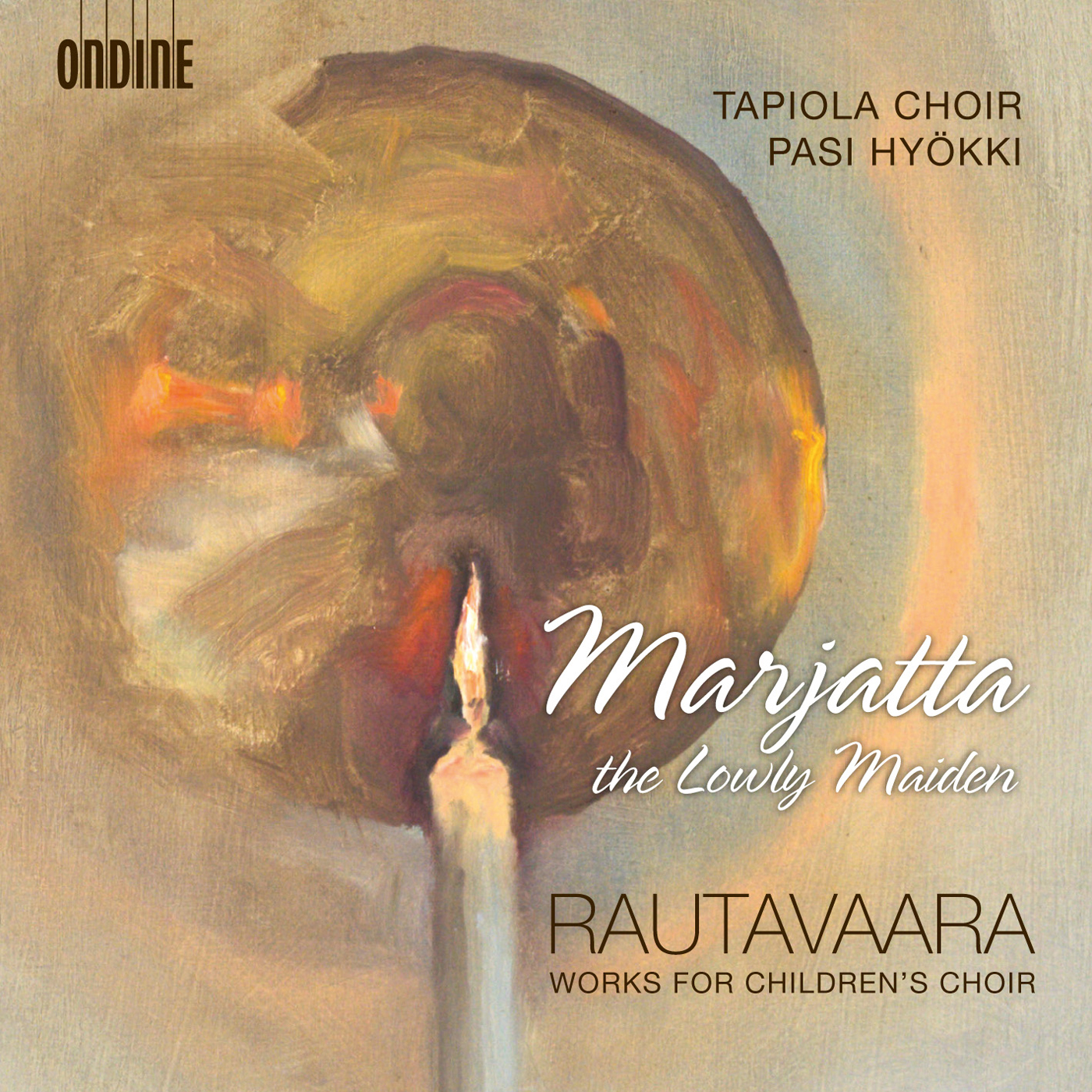
Rautavaara: Works for Children's Choir
I was a boy chorister in my youth, singing the soprano 2 part in our ensemble since I had an ear for close harmonies. I most cherish my experience for exposing me to music composed by the likes of Benjamin Britten, as well as easier-listening fare by John Rutter. Once the voice changed, instead of employing lay clerks, the boys simply graduated to tenor and bass, so I continued beyond my chorister years.
I mention this because as an adult, I have never had much of an ear for boy or youth choirs on recordings, greatly preferring adult choruses. While I know many enjoy the pure beauty of choristers, I find they can lack power of voice in order to maintain their pale-voiced beauty. I have since come to find some cathedral choirs I greatly respect on recordings, but I generally don't go out of my way to hear them.
This is all a long prelude to the recording at hand, a 70-minute program of music from Finnish composer Einojuhani Rautavaara specifically written for youth choirs. As with Vaughan Williams, Benjamin Britten, and others from the 20th Century, Rautavaara does not cater to the ability of age nor their amateur status. Rather, he composes complex creations for the performers, and sophisticated works for listeners. Most of the pieces come from the 1970s, with a few exceptions, allowing just a touch of modernity to reaching this music.
The meatiest work is the Christmas mystery Marjatta, the Lowly Maiden, where Rautavaara makes allusions from the biblical Holy Birth to the folk tale of Marjatta from The Kalevala, a Finnish mythology. The various scenes Rautavaara sets are set through unusual means, created be the voices of the choir. A sheep pasture, a natural spring, a wealthy house, etc are all given special, aleatoric sounds to give life to the setting. There is also some narration, here uttered by a wide variety of voices, adult and child, male and female, tying a worldly message to the 25-minute piece. Solos, both vocal and instrumental, depict the characters and aid in the largely a cappella scene setting as well, with a meandering solo flute commenting upon most of the scenes of music.
This is interesting and unexpected music, both well received by this listener. I am reminded some of Rautavaara's more adult focused True & False Unicorn, mainly through the unexpected aspects of the production. There is another recording of Marjatta, by this very same youth choir on BIS, but from 40 years earlier. A single male narrator is used in that version, plus it moves a little quicker, although the recorded sound isn't as lusciously wrapped as this later Ondine production.
The other large work is Rautavaara's Children's Mass, the only piece on the program which comes with orchestra. However, the choir sings a cappella while the orchestra comments between the choral movements. The orchestral commentary is crusty and modern, while the choral offerings are more buoyant, neither overly uplifting in lieu of an austere atmosphere. The two ensembles do come together at the very end, an appropriate conclusion to the work.
The rest are a mix of short numbers, folk song tinged pieces as well as choral songs featuring texts in Finnish, Spanish, and German. The Suite de Lorca will be most familiar to choral aficionados, while the multi-song Wenn sich die Welt auftut was new to me. I rather took to the strange choir Waltz, and the singers make the folk songs sound Salt of the Earth in tone. Even in these shorter pieces, the music requires great vocal independence and awareness of balance, where the close aural perspective from Ondine makes such things tough for these performers.
That said, the Tapiola Choir handles this difficult music handily, although I will admit the recording from 40 years ago elicits a more consistently cohesive sound out of the group, with this newer recording's ensemble struggling to keep their split, upper-part ranges precise. Director Pasi Hyökki pushes the lower voices into gruff timbres occasionally, offering a more rustic, earthy tone in certain songs, but generally this is fine music making in tough music, with the recording capturing the ensemble closely. As with most of Ondine's Rautavaara releases, much of this music can't be found anywhere else on record. The music is certainly as interesting as all of the label's others, but will depend on whether or not you enjoy singing from children's choirs.

Works
Marjatta, the Lowly Maiden (25.05)
Children's Mass (14.26)
Wenn sich die Welt auftut (10.30)
Suite de Lorca (6.43)
Carpenter's Song (3.32)
Waltz of the Innocents (2.52)
Love Never Dies (2.48)
Lorulei (2.37)
Ensembles
Tapiola Choir
Tapiola Youth Symphony Orchestra (Mass)
Pasi Hyökki, conductor
Label: Ondine
Year: 2011
Total Timing: 69.28
Marjatta, the Lowly Maiden (25.05)
Children's Mass (14.26)
Wenn sich die Welt auftut (10.30)
Suite de Lorca (6.43)
Carpenter's Song (3.32)
Waltz of the Innocents (2.52)
Love Never Dies (2.48)
Lorulei (2.37)
Ensembles
Tapiola Choir
Tapiola Youth Symphony Orchestra (Mass)
Pasi Hyökki, conductor
Label: Ondine
Year: 2011
Total Timing: 69.28
I am glad to have explored this recording, for Rautavaara shows no barriers in his remarkable ability, regardless for whom he composes. His music is all high quality.
The Ondine sound is lush and attractive, and the Tapiola Choir handles everything the composer throws at them; which is a lot for these young people.

Comments
Post a Comment