Rautavaara: Secular Choral Works
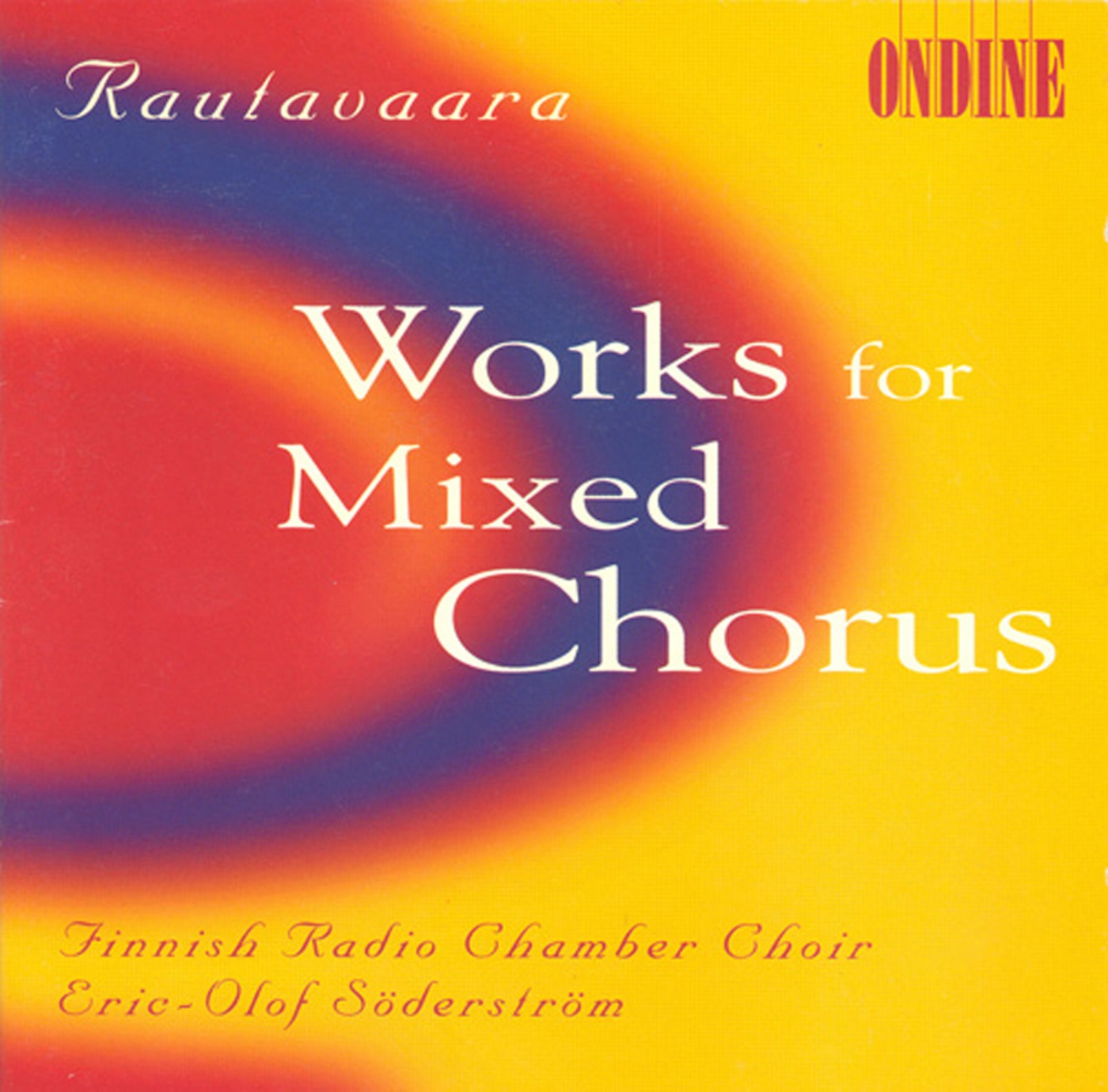
If I have been, by and large, surprised by the quality and approachability of Rautavaara's a cappella sacred choral music, I am less certain regarding the Finnish composer's secular choral music, also set a cappella.
I sense the music here is much more experimental, requiring the chorus the use of avant-garde and extended vocal techniques. Two of the multi-movement pieces are for speech chorus, which sounds to me like group sprechstimme. These two, Praktisch Deutsch and Ludus Verbalis, add a bit of levity to the program as well, so perhaps their appearance here is not entirely unwarranted. The performers are certainly characterful!
Aside from Rautavaara's typically slow, slightly off-kilter harmonies; vocal glissandos, chords clusters, and sharp dissonance features in various pieces. Since the program is completely a cappella, I imagine this repertoire is terribly difficult, ably handled by the Finnish Radio Chamber Choir. Only the choice of vocal soloists, assumedly coming from within the choir, didn't strike me as very strong choices, particularly the soprano who appears in many of the songs.
The most famous number is probably Rautavaara's Suite de Lorca, a piece I hadn't heard for mixed chorus before, usually heard by children's or women's choirs. The differences are big enough for me to be surprised by the mixed chorus version, while retaining the spirit of the original.
I rather enjoyed the shorter songs, including the two marching tunes Lähtö and Morsian, reminding me some of Neo-Romantic US composer Samuel Barber. So too, the shorter Sommarnatten and Och Glädjen den Dansar sound as if influenced by folk music, and these should be the most approachable.
The longest pieces are also the most taxing, both for the performers and my ears. The nearly 17-minute Katedralen is rather astringent in its long runtime, although it gets better as it goes on. The extended choral techniques fit the cosmic subject of Nirvana Dharma nicely, complete with unusual flute solo, employing pitch bends and flutter tongues alongside the choir. The First Elegy is perhaps the best of this trio, showcasing the composing style of Rautavaara most adeptly.
For this Works Series, the only item I am listening to which does not come from the album pictured above and below, is Rautavaara's Halavan himmeän alla, taken from a later recording with the same ensemble, instead led by Timo Nuoranne. This piece was added to Vol. 3 of Ondine's Choral Works set in order to add other music to the other discs in the set. Of the longer, multi-movement works on the program, this is the one I enjoy most as a whole. There are some really heavenly choral moments in this one, and the later recording date finds the choral ensemble and Ondine sonics in much finer fettle as well.
I was surprised at what a difference this secular music made upon me compared to the sacred ones from Vol. 2 of Rautavaara's Choral Works on Ondine. The shorter pieces were my favorites, the spoken choral works mere oddities, and the longer numbers rather off-putting, not helped by the choice of soloists here. Those with more of an appetite for dissonance and the avant-garde might have a better time of it, but I will need to spend more time with this music for further appreciation.

Work Series
Vol. 3 from Rautavaara Choral Works on Ondine
Works
Lähtö (1.41)
Morsian (2.53)
Och Glädjen Den Dansar (2.54)
Sommarnatten (3.13)
Katedralen (16.50)
Praktisch Deutsch (6.11)
Suite de Lorca (5.31)
Ludus Verbalis (3.24)
Nirvana Dharma (8.30)
Die Erste Elegie (9.01)
Halavan Himmeän Alla (10.57)
Ensembles
Finnish Radio Chamber Choir
Eric-Olof Söderström, conductor
Timo Nuoranne, conductor (Halavan)
Label: Ondine
Year: 1995; 2012
Total Timing: 72.00
Vol. 3 from Rautavaara Choral Works on Ondine
Works
Lähtö (1.41)
Morsian (2.53)
Och Glädjen Den Dansar (2.54)
Sommarnatten (3.13)
Katedralen (16.50)
Praktisch Deutsch (6.11)
Suite de Lorca (5.31)
Ludus Verbalis (3.24)
Nirvana Dharma (8.30)
Die Erste Elegie (9.01)
Halavan Himmeän Alla (10.57)
Ensembles
Finnish Radio Chamber Choir
Eric-Olof Söderström, conductor
Timo Nuoranne, conductor (Halavan)
Label: Ondine
Year: 1995; 2012
Total Timing: 72.00

Comments
Post a Comment