Roussel: Symphony 4
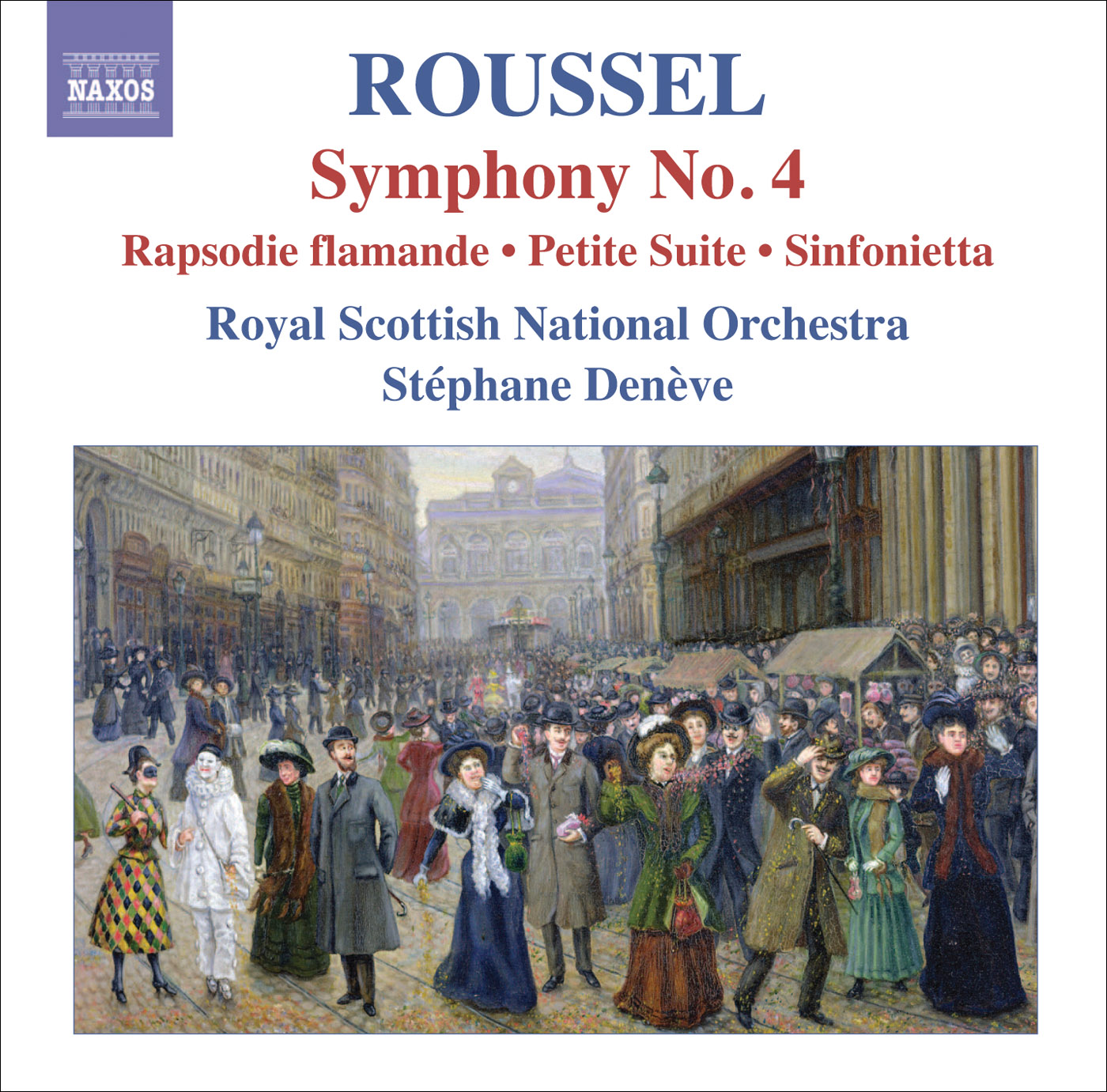
If Albert Roussel's Third Symphony introduced a more efficient Neo-Classicism, Symphony no. 4 in A Major continues the musical thread. Whereas Symphony no. 3 was filled to the brim with bounding athleticism, I detect a simmering of the gruff effects in this following work.
Still, I hear the angular leaping musical ideas from the previous symphony, presented at the very start of the Allegro proper. A slow introduction begins the symphony on an ambiguous footing before that, a harmonic feeling which will return in the long second movement. Despite some long, ambling chromaticisms, the slow movement finds Roussel at his most Romantic, an aspect of the composer which was never sheltered away when his musical style shifted, here bursting into two magnificent climaxes.
While there is a rather serious mood hovering over the first two movements, the last two movements are much lighter and friendlier in comparison. The third movement Scherzo is almost a toss-away considering how short it is timing wise, although the brass work is especially fine, and the fourth leaves the listener properly satisfied, lightly dancing its way to the final bars.
I can hear why most listeners prefer the Third Symphony over Roussel's Fourth. There is something about the earlier work which is contagious, something I don't necessarily detect here. Not for nothing, Symphony no. 4 in A Major remains a fine work, one, which at 20 minutes or so, should be better known.
Two pieces come from around the same time as the symphony - Roussel's Sinfonietta for strings and the Flemish Rhapsody. The Sinfonietta is very close in temperament and style to the Fourth Symphony, although the lack of winds and percussion sets the two apart well enough from one another. I wish the Royal Scottish National Orchestra strings were a little richer and fuller, especially in the trudging, pesante second movement. Instead, they opt for a lean approach, which I suppose appeals to the Neo-Classical bent of the music.
The Flemish Rhapsody is quite different from anything I have heard from Roussel thus far. While the piece begins almost as solitary and uncertain as did the symphony lined out above, maybe even reminiscent of the dour Second Symphony, eventually folk tunes are put through a merry rhapsody wringer. This is lively, eye-twinkling music, one which should be an instant crowd-pleaser once the gloomy overtures have passed.
The Concerto for Small Orchestra and Petite Suite both hail from around the time of Roussel's Suite in F Major. They are certainly just as plucky, yet also showing a brevity and concision from the composer's Neo-Classical phase. The Petite Suite is a little more exotic and picturesque perhaps, but it and the Concerto are definitely breezier musical affairs. Plus, Roussel's new penchant for bassoon activity factor colorfully into all of these works.
I am afraid I can't make many comparisons to this recording. The recorded sound is fine, if not with a slight preference towards the strings. If anything, I simply want a little more presence given to the harp, particularly since Roussel often scores it in a low register from time to time. Stéphane Denève has been a fine advocate of Roussel, providing an alert and punchy approach to his music.

Work Series
Vol. 4 from Roussel Symphonies on Naxos
Works
Symphony 4 in A Major, op. 53 (25.31)
Sinfonietta, op. 52 (9.40)
Rapsodie Flamande, op. 56 (9.58)
Concert pour petit Orchestre, op. 34 (13.12)
Petit Suite, op. 39 (13.00)
Performers
Royal Scottish National Orchestra
Stéphane Denève, conductor
Label: Naxos
Year: 2010
Total Timing: 69.08
Find more Roussel recordings HERE!
Comments
Post a Comment