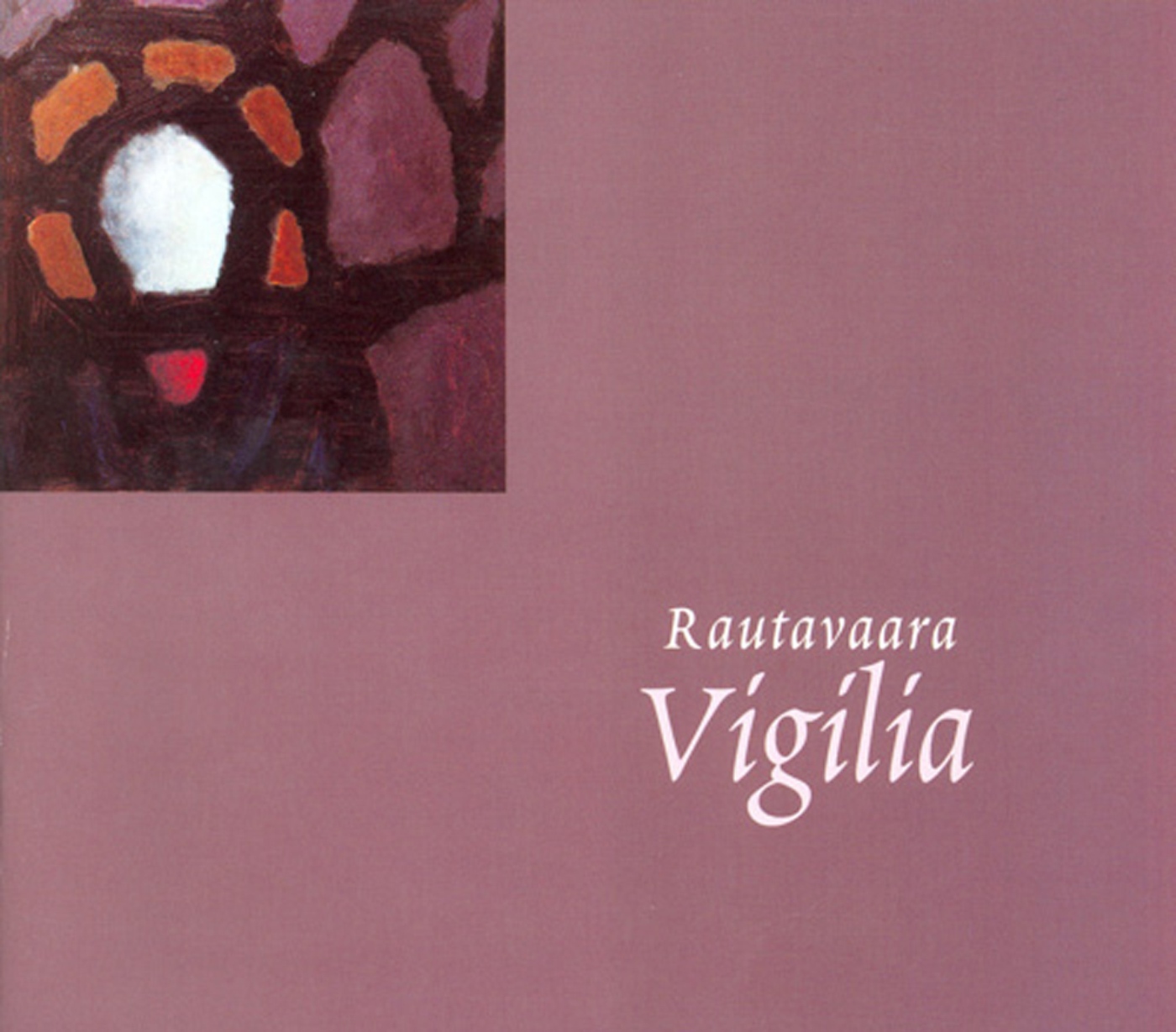
Rautavaara: Vigilia

Many will be familiar with the Vespers setting from Russian composer Sergei Rachmaninov of 1915. The a cappella choral work is a monument to the Russian Orthodox Church, with music full of devotion and soulfulness, notable for its cultural use of Basso Profundo. Really, I should use the term All-Night Vigil, for that Orthodox Church service includes the Vespers along with Matins, usually bearing a Magnificat in tow.
Some listeners might even be familiar with other Vespers settings by composers, such as Tchaikovsky or Bortniansky, maybe even Gretchaninov and Tchesnokov as well. Each are rather traditional sounding, and many come with various amounts of service chanting and responsorials. Even Rachmaninov's famous setting can come recorded with either just his music or the entire service music inserted between his music.
Fast forward to Einojuhani Rautavaara in Finland, circa 1972 - 1986. His Vigilia is an a cappella setting of the All-Night Vigil, yes with both Vespers and Matins, but with the Finnish Orthodox Church in mind. The devout spirituality remains between these works, and Rautavaara also showcases the Basso Profundo wonderfully. In 1986, he adapted the work for concert use, leaving me to believe it was originally much longer and involved.
If there is a general description of the music here, the composer keeps the voices flowing throughout. While I would use the term chant-like, that isn't quite right, despite a certain non-metrical flow typical of ancient plainchant. Perhaps mellifluous is a better word, where there is a feeling of an eternal gentle forward motion rather than anything musically static. Often, soloists are used in a call-and-response format with the choir, grounding the music in its religious atmosphere.
Where Rautavaara departs from the earlier incarnations of this service music is his later 20th-Century harmonies. Chord clusters, glissandos, and light chromaticism features frequently throughout the 64-minute work. Despite a modern sound palate, I don't find anything discursive nor repellent in any of this music. Quite frankly, I find this to be rather lush choral music with light tinges of modernism, not too far flung from something you could hear being written today.
The Finnish Radio Chamber Choir is terrific throughout. The five soloists are equally excellent, never overshadowing the purpose or mood of the music. While Jyrki Korhonen will get most of the attention as the basso profundo, really they all excel beyond any hopes, with a wonderful soprano duet at the beginning and end.
I sense director Timo Nuoranne moves the music purposefully forward, not wanting to unnecessarily dwell, coming in some 6 minutes quicker than the recording on BIS (with this same chorus!). My only issue with that BIS performance are the soloists simply don't live up to this Ondine recording, singers who are suave and nuanced here.
Best of all, Ondine captures these voices in Kerava Church ideally. The chorus is forward, yet Ondine captures the ambiance of the performing space as well. Altogether, this could be my very favorite of all Rautavaara's works in totalis. Exceptional!

Work Series
Vol. 1 from Rautavaara Choral Works on Ondine
Works
Vigilia
I. Vespers (29.35)
II. Matins (34.32)
Soloist
Pia Freund, soprano
Lilli Paasikivi, mezzo-soprano
Topi Lehtipuu, tenor
Petteri Salomaa, baritone
Jyrki Korhonen, bass
Ensembles
Finnish Radio Chamber Choir
Timo Nuoranne, conductor
Label: Ondine
Year: 1998; 2012
Total Timing: 64.14
Vol. 1 from Rautavaara Choral Works on Ondine
Works
Vigilia
I. Vespers (29.35)
II. Matins (34.32)
Soloist
Pia Freund, soprano
Lilli Paasikivi, mezzo-soprano
Topi Lehtipuu, tenor
Petteri Salomaa, baritone
Jyrki Korhonen, bass
Ensembles
Finnish Radio Chamber Choir
Timo Nuoranne, conductor
Label: Ondine
Year: 1998; 2012
Total Timing: 64.14
Find more Rautavaara recordings HERE!
Comments
Post a Comment