Rautavaara: Symphony 3 & 4
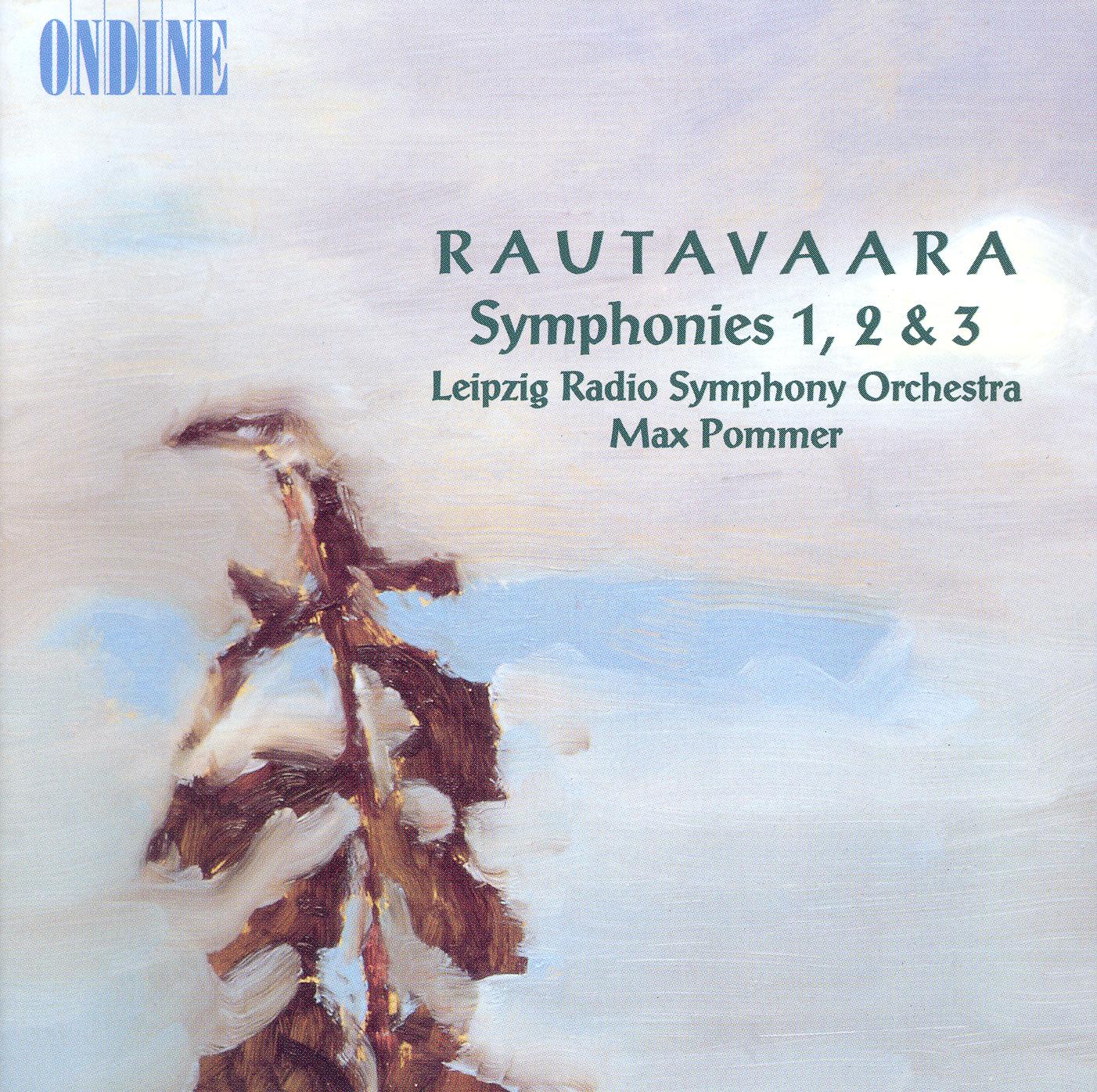
If I thought Einojuhani Rautavaara's first two symphonies were opposites of sorts, such a feeling continues into the next two symphonies as well. Similarly, I had mentioned a concern regarding Rautavaara moving from the 1950s of the first two symphonies into the 1960s with his following two.
Well, no such worry need be attached to Symphony no. 3. The very opening's cinematic Lawrence-of-Arabia-esque motions puts the listener into a complete tonal landscape. Granted, what immediately follows are an amalgam of bird calls, a confusing mix for the listener at the outset. These bird calls will be common occurrences in the subsequent movements of this symphony. What follows is Neo-Classical of sorts, yet Rautavaara's music is always filled with emotional qualities, an antithesis of Neo-Classicism, so perhaps such a description is off the mark.
Speaking of movements, I like how Rautavaara plays with his Third Symphony's structure. Sure, it is set in a traditional four movements, however the composer puts the first two movements into slow tempos while the final two movements are speedier. This certainly upends what is commonly arranged in a symphony.
I do enjoy the atmospheric second movement very much. Rautavaara seems to be playing as much with orchestral colors and slowly shifting harmonic movement as he is developing thematic material for the listener. Again, the bird calls return, this time in a duet with the timpani at the very end.
The third-movement Scherzo is even better, where insistent timpani pound out opposite lyrical winds and strings. That timpani is an eternal presence in this symphony, certainly linking the third movement to the fourth movement at the latter's opening bars. A trenchant march eventually appears, allowing the winds to play wildly against it. The brass has a fuller presence than the woodwinds here, robbing the music of some of Rautavaara's effects, yet casting a heavy pall over this final movement.
Which leads me to my only problem; the present performance. The orchestra is ragged sounding, with the brass particularly suffering from tuning issues. More irritating for this listener, though, is the billowy, blousy acoustic, where a lot of this symphony's music resides in a swampy acoustical soup. Someone could easily come along and trump this recording with their own, and I wouldn't be surprised in the least.
Thus, in 1999, Naxos did indeed make their own recording of the Third Symphony, as did Leif Segerstam in 2008. One wonders why Ondine didn't use Segerstam in their Rautavaara symphony cycle set I am currently listening through on Ondine, a set which came out one year later in 2009.
Oh well... I enjoyed this music, but the performance is lacking. I will be curious to listen to Segerstam's later recorded rendition.
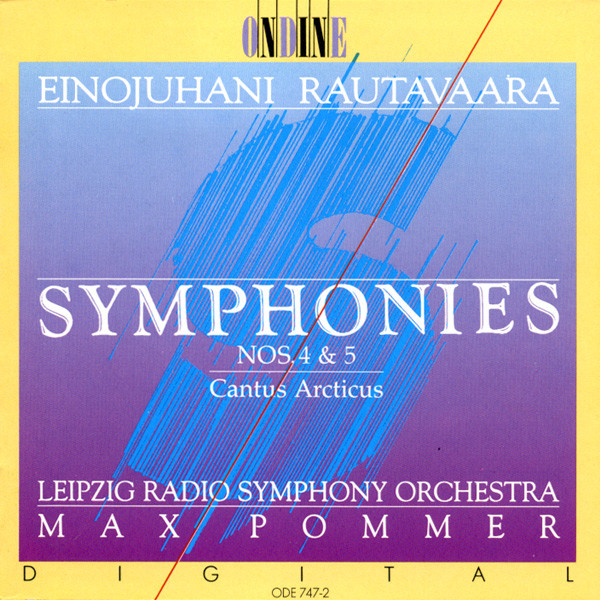
Symphony no. 4 is exactly what I was worried about going from Rautavaara's Symphony no. 2 from the 50s, venturing into the unknown of the 1960s. The music is what I like to refer to as a 'bleep-bloop' affair. A host of pointillistic blotches of instrumental color here and there sounded out in tiny squinks and squawks, prolonged over four movements, although the overall timing of the symphony is quite short.
The Fourth Symphony is Rautavaara fully leaning into atonal modernism. Apparently, the composer used serial techniques in Symphony no. 3 as well, but I didn't hear anything of the sort. I do like the expanded percussion, including piano. Their presence makes for rather colorful listening in music which can be tough for me.
The nickname 'Arabescata' refers to an earlier piece, yet another instance where the composer went back and replaced his music with something else. I guess Rautavaara was a tinkerer when it came to his composing oeuvre. In any case, the second movement has a few Latin subtitles, a nod to his use of mathematics in its composition.
I guess I won't delay any longer: this symphony is not for me. I would like to enjoy Symphony no. 4 more, but this sort of modernism has not made its way to my heart. I can appreciate many facets of this composition, and as much as it could be used as a soundtrack to The Planet of the Apes from the 60s, this work is not something I will want to visit often.
Work Series
Vol. 2 from Rautavaara Symphonies on Ondine
Works
Symphony 3 (32.22)
Symphony 4 (16.35)
Ensembles
Leipzig Radio Symphony Orchestra
Vol. 2 from Rautavaara Symphonies on Ondine
Works
Symphony 3 (32.22)
Symphony 4 (16.35)
Ensembles
Leipzig Radio Symphony Orchestra
Max Pommer, conductor
Label: Ondine
Year: 1989-90; 2009 (set)
Total Timing: 49.09
Label: Ondine
Year: 1989-90; 2009 (set)
Total Timing: 49.09
Find more Rautavaara recordings HERE!
Comments
Post a Comment