Walton: Orchestral Bits 'n Bobs

I thought I would explore William Walton's smaller offerings for orchestra in this week's Bits 'n Bobs segment. I actually don't own many of these pieces personally, although I have had them in the collection at times. I think the only recording I have held on to is in mono sound, but features the likes of Sir Adrian Boult and Malcolm Sargent at the podium.
Why I haven't added any of these smaller pieces back into my collection is beyond me, for they are lighter works from the composer, easily entertaining, and full of hustle and bustle. I daresay I can hear some of the composer's film music in these numbers, extremely approachable and attractive.

Capriccio Burlesco
Johannesburg Festival Overture
As a prelude to the recording pictured at the top, might I say that orchestras of today can play just about anything put in front of them, done so with the utmost technique and polish, not to mention remarkable talent.
Despite such a statement, you would never hear a modern-day orchestra play as it does on this recording, and it is a shame. The Royal Liverpool Philharmonic Orchestra under the direction of Sir Charles Groves throw themselves at this music with abandon, playing as if their lives depended on it. Nowadays, players could toss off these puff pieces from Sir William Walton in no time, but Groves and Liverpool play this music as if these were the greatest compositions in the world.
In these two numbers, Walton's music is full of rhythmic peculiarities, and if the Capriccio isn't full of tunes, Johannesburg makes up for it, alongside some crazy harmonic motion. These descriptions could equally apply to most of the pieces I am covering on this blog post too.
Again, I can't understate how thrilling this performance is. While I am only covering these two works on this recording, I am going to head back to these performances as soon as I can to hear the rest of the program.

Portsmouth Point
I always thought André Previn was an excellent conductor of Walton's music. In these older recordings with the London Symphony Orchestra, the music fizzes with excitement. I could easily tie this piece with the previous two above, although I think Portsmouth is a little more popular among the masses.
I have already covered the other works on this recording, found here (BLOG). I can assuredly recommend this whole program, including Constant Lambert's strange Rio Grande. The LSO commands in this music, even if it doesn't really need to.
Granada
Prologue and Fantasia
The First Shoot
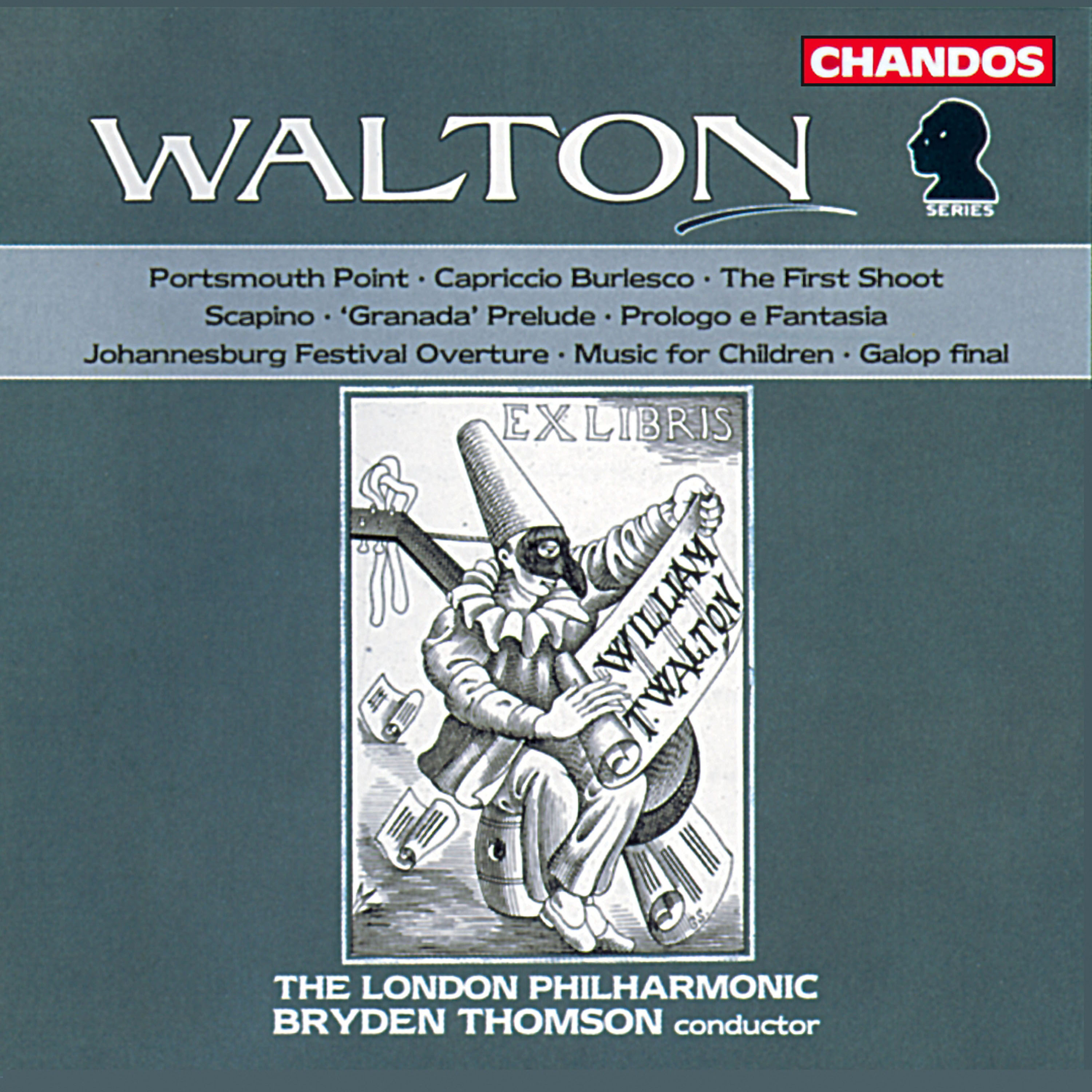
It isn't until halfway through the Grenada Prelude until I hear any hint of exoticism. Walton is not a composer I readily know for such things, so to hear them subtly is a notable effect from the composer. The Prologue and Fantasia is probably the most serious piece on this whole blog post. Nearly every other work is full of joyful spirits or witty timbres, but this one grumps along unsmiling.
The First Shoot is a ballet suite, set for the concert hall in five movements. Walton really digs into the jazz realm in certain places in the suite, and generally the music is light and affable throughout. Christopher Palmer arranged this one for orchestra; apparently the original is for brass band. It would be interesting to hear that version.
While my astonished comparisons to Groves and Previn stops here, Bryden Thomson is a firm hand in Walton's music, and his series with the London Philharmonic Orchestra is well worth seeking out.

Siesta
Even though it doesn't say so on the cover art, Hyperion places the short Siesta between Walton's first and second symphonies. Certainly, the piece would be a pleasant palate cleanser betwixt such serious works.
For all of its five minutes, I am not particularly reminded of a restful span of time, nor of any Spanish or Latin-American influences. Still, Walton's quirky rhythms and harmonies are enjoyable.

Scapino
US conductors haven't fared too well in Britain, with Litton, Slatkin,
and Falletta procuring short runs with orchestras across the Atlantic
recently. I remember Andrew Litton's William Walton recordings getting a fair bit of notice when they first came out, so I thought I would throw them a bone here.
I've never really come to terms with the subtitle A Comedy Overture of Scapino. Walton's writing is too serious for my tastes, although I notice wit a-plenty in its rhythms, as well as in some of the instrumental contributions on this go-around. Harrowing might best describe my feelings at the work's conclusion. I actually rather enjoyed this recording too, although I am more eager to go back to Sir Charles at the top for this one.

Orb and Sceptre
This coronation march from Sir William is probably the work I have heard most often from the composer. Orb and Sceptre is pompous in a traditional, thoroughly British-sounding fashion, although the middle portion seems unusually secular to my ears for some reason.
Of all the recordings I listened to for this Bits 'n Bobs post, David Hill's was my least favorite. The orchestra is a little too far removed, and I feel as if Hill could have done more with the music. When the pipe organ enters towards the end, however, it is nicely placed in this recording.
My guess is this recording would be great for the choral pieces, as Hill is excellent with vocal forces.
Bits 'n Bobs
Capriccio Burlesco
Johannesburg Festival Overture
Royal Liverpool Philharmonic Orchestra
Sir Charles Groves, conductor
EMI; 1969, 1990
Portsmouth Point
London Symphony Orchestra
André Previn, conductor
Warner; 1974
Grenada
Prologo e Fantasia
The First Shoot
London Philharmonic Orchestra
Bryden Thomson, conductor
Chandos; 1991
Siesta
BBC Scottish Symphony Orchestra
Martyn Brabbins, conductor
Hyperion; 2011
Scapino
Bournemouth Symphony Orchestra
Andrew Litton, conductor
Decca; 1995
Orb and Sceptre
Bournemouth Symphony Orchestra
David Hill, conductor
Argo; 1992
Find more Walton recordings HERE!
Comments
Post a Comment