Rautavaara: Orchestral Bits 'n Bobs
I thought it would be fitting to follow up my recent listen to Finnish composer Einojuhani Rautavaara's eight symphonies with more of his purely orchestral works. There is a lot of music here, thus I gave time to them across a larger time span.
I think you will find that, for the most part, I enjoyed the one-movement tone poems over the composer's multi-movement suites, so I will start with the former and move on to the latter. Personally, I would not suggest to those who are interested in Rautavaara's music to sit down and listen to a bunch of these pieces in one go, something I probably got to close to doing. While Rautavaara is good at varying his music, and often impressively so, he does have a signature sound which can get a little samey sounding without a palate cleanser.

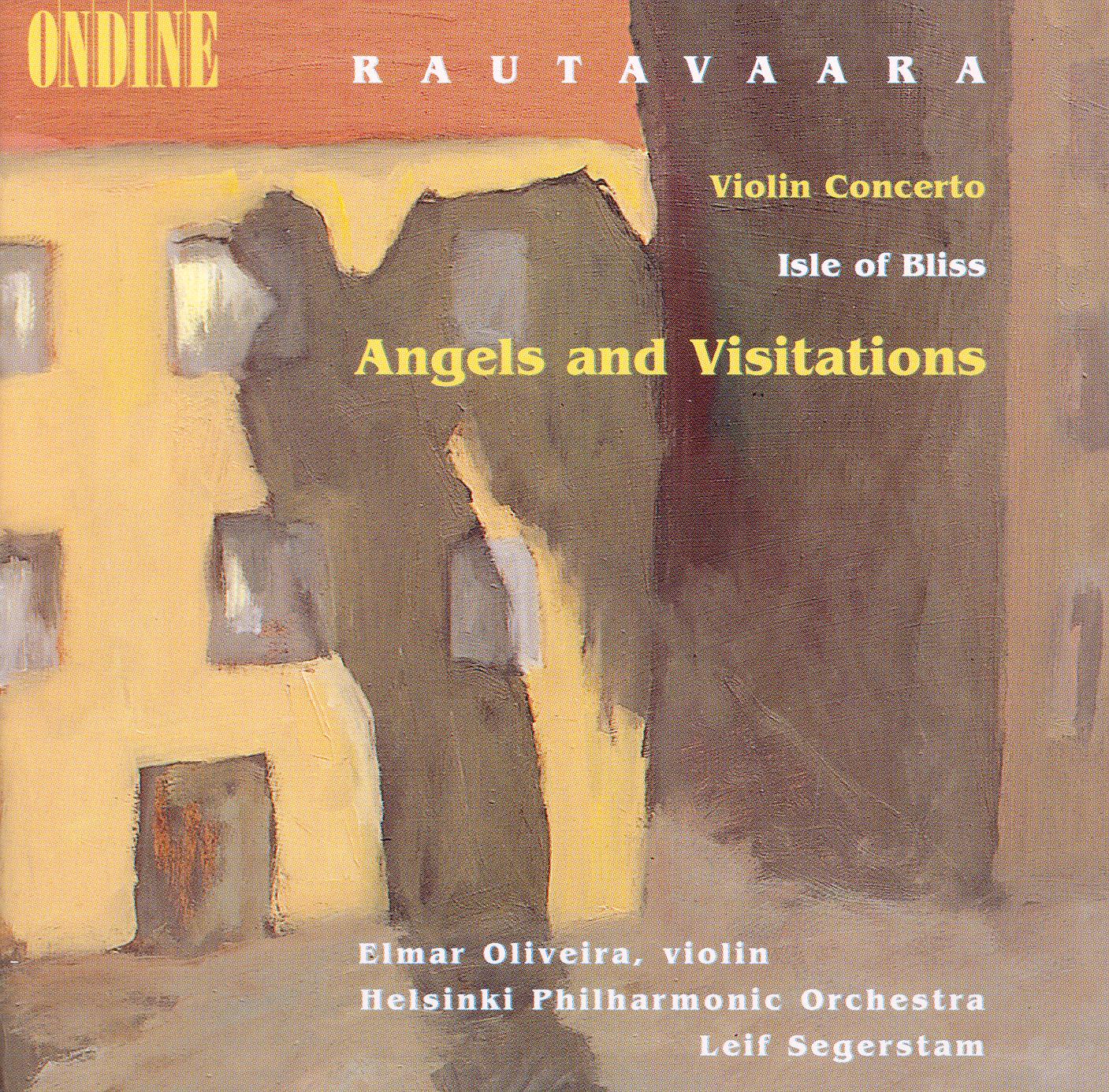
Angels and Visitations
Isle of Bliss
There are three, one-movement tone poems I really enjoyed from Rautavaara upon this investigation. Two of them appear on this recording, and one will show up on the next down the line.
Angels and Visitations moves akin to Rautavaara's 'Angel of Light' Symphony, with heavily divided strings moving in wisps of this and that. The second half of the 20-minute work is more brusque, with brass exhortations and percussion punctuation. Like the symphony, Rautavaara's musical depiction of angels might not be identified by you and me right away, but once you hear what the composer is going for, it is a wonderful attribute. Color me impressed!
Somehow, even though the composer moves his music in similar ways, Rautavaara's Isle of Bliss sounds more exotic to my ears. If I was reminded of Fantasy Island at the start and close, with the multitude of harp glissandos and unusual percussion, the large middle portion still maintains a certain humidity.
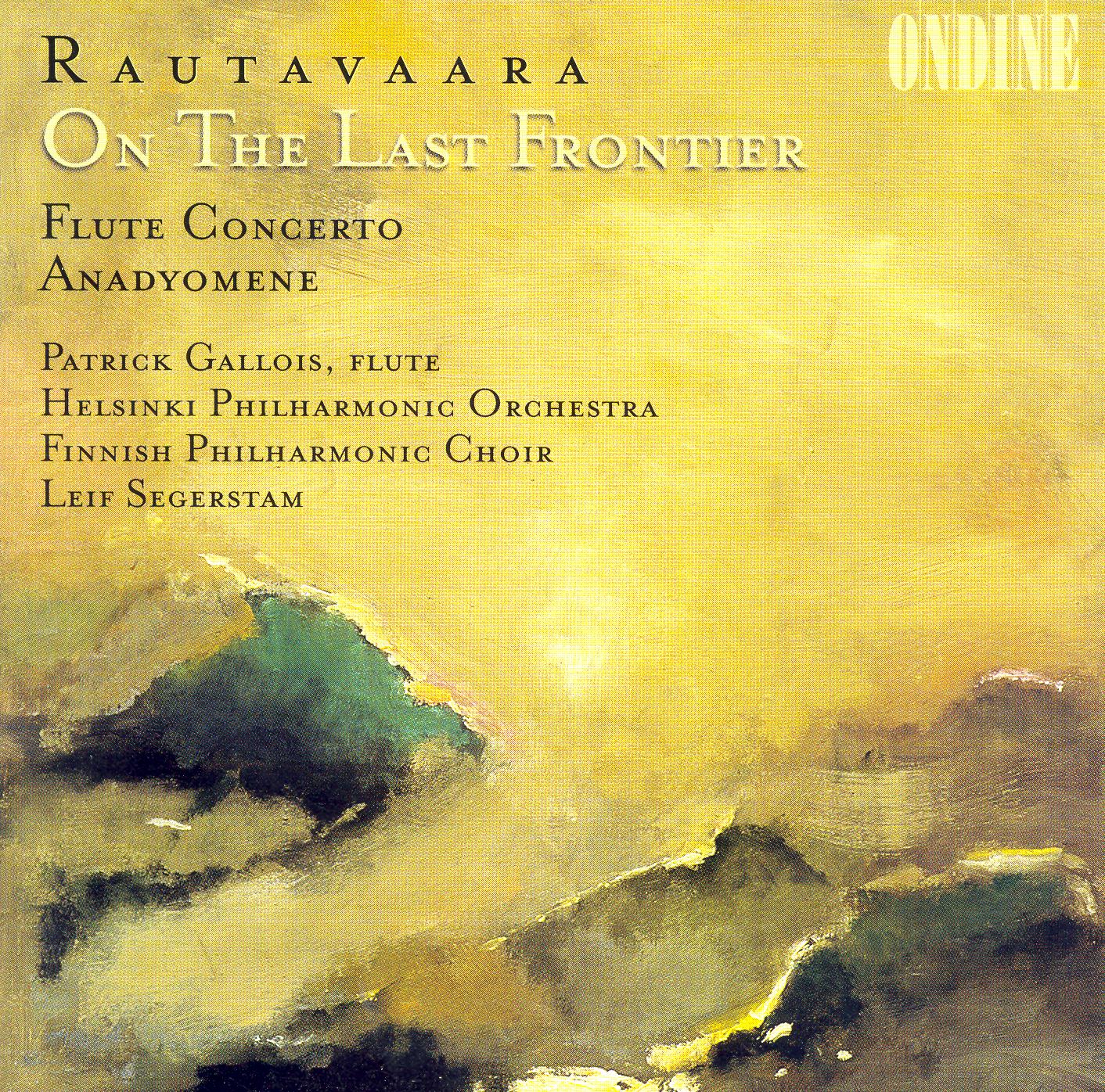
Anadyomene:
Adoration of Aphrodite
Essentially, Rautavaara creates a tone poem based around Aphrodite's mighty oyster shell rising from the sea, showcasing the Goddess's beauty, and returning to the sea once more. What comes off as a rather bland explanation in print becomes absolutely mesmerizing in music. And Rautavaara's mode of composition does the music justice in a way that Respighi's does not, although both are most enjoyable.
In this case, the listener is treated to a literal sci-fi / fantasy event visualized through music, where the sheer scale on display is transliterated to the listener aurally. What a work!
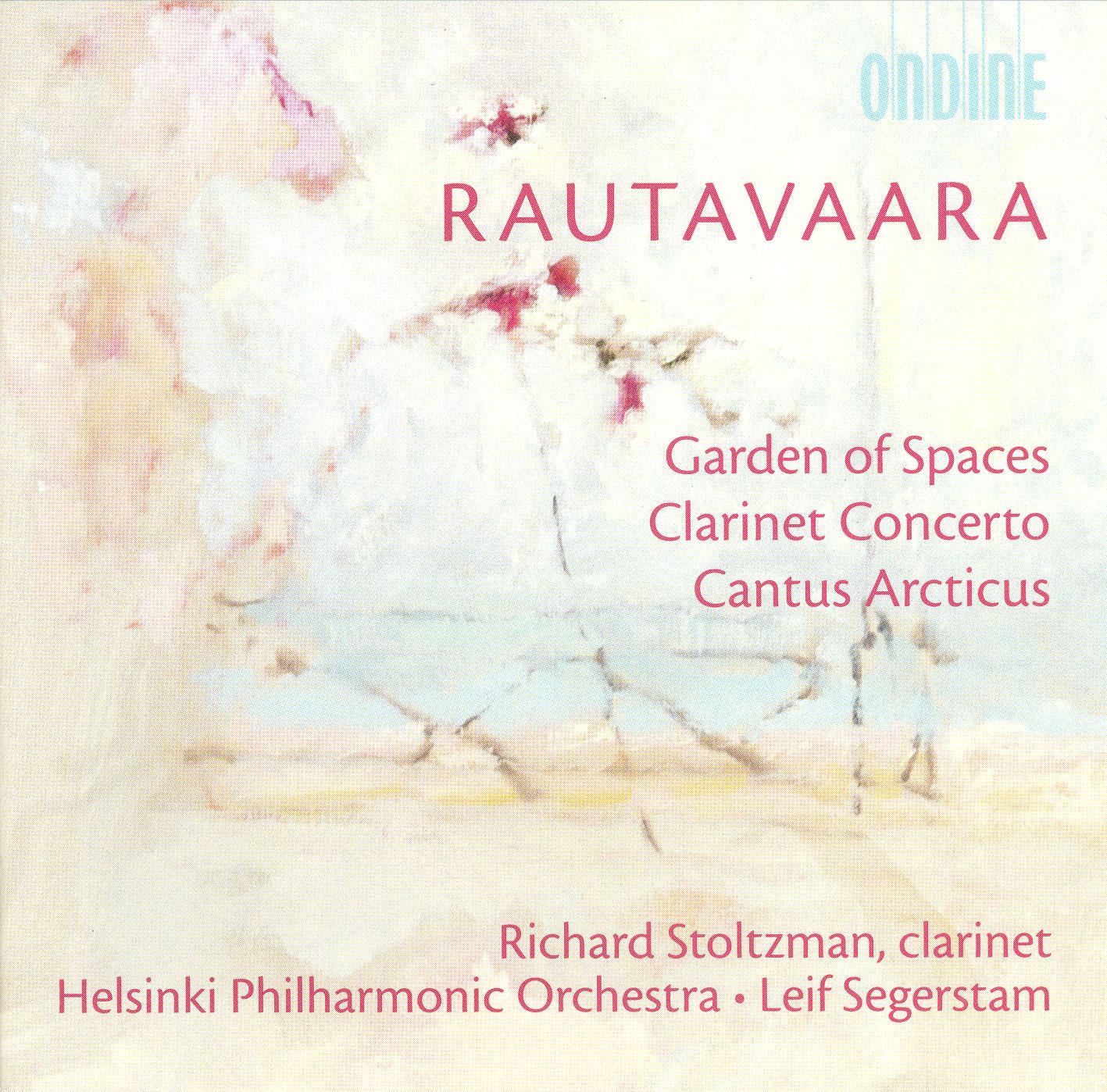
Garden of Spaces
Here is a work where the physical print music is more interesting than hearing the music itself. It is beautiful sounding music in itself, not an uncommon attribute in any of these pieces from this composer. But how Rautavaara puts the music together looks much more fascinating.
The composer uses aleatory, a term which simply means that when the music is performed, hearing one performance could sound greatly different than another of the exact same piece of music. In this case, Rautavaara gives explicit instructions on how and when instruments should enter and exit through a system of symbols and numbers, but leaving many of the musical decisions up to the conductor and musicians, rather than the printed music dictating concretely how the music should move through time.
And yet, I don't think this approach necessarily makes this music sound complex or remarkably different than other pieces from Rautavaara around the same time. I do enjoy the play on words in the title, though.
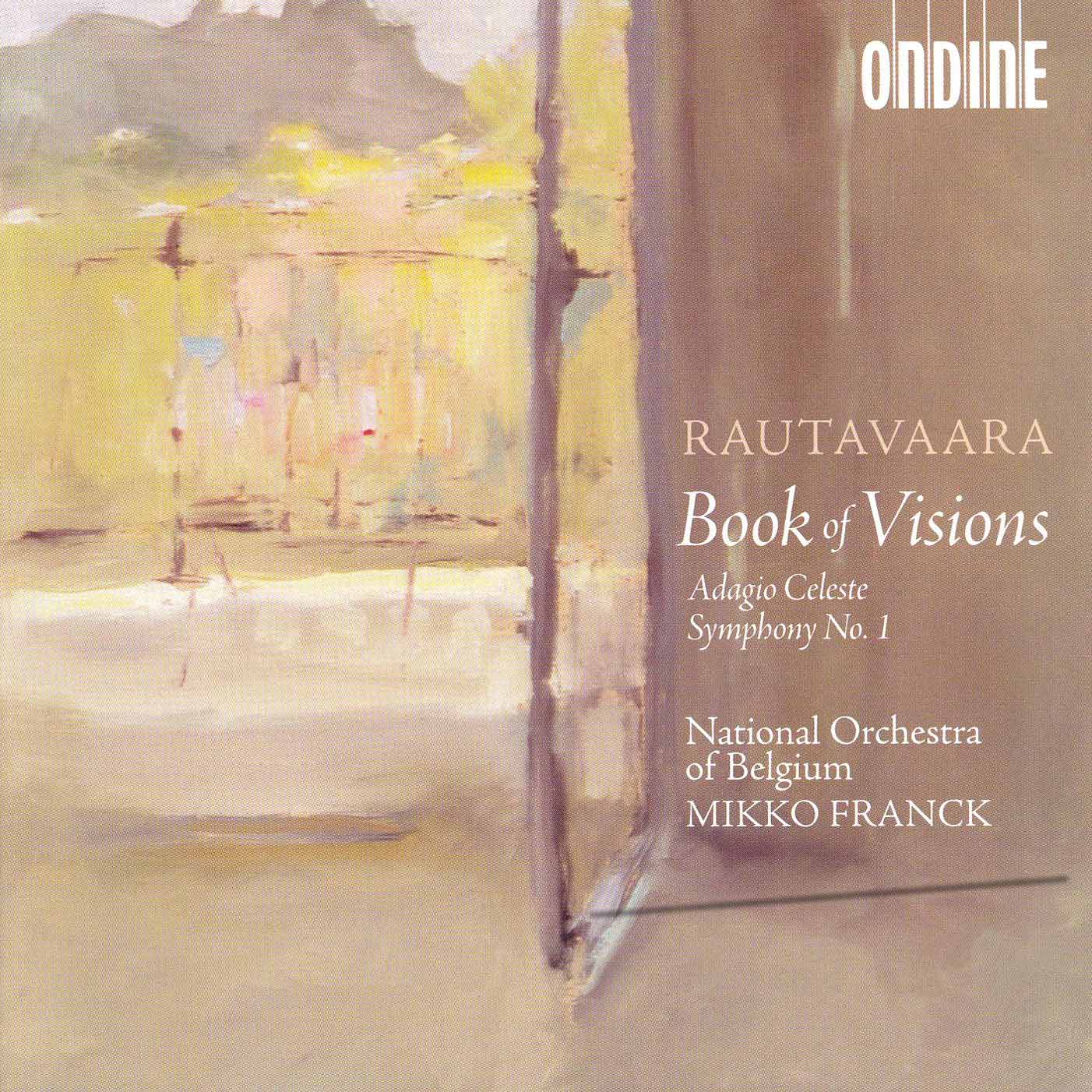
Adagio Celeste
Book of Visions
Don't get all hepped-up for a celesta, for there is none. Instead, here is a slow-moving string orchestra piece, showcasing the composer's penchant for shifting chords slowly, often just one note at a time. As was the case when I heard this same orchestra's Symphony no. 1 with Mikko Franck, the National Orchestra of Belgium is a lovely sounding group in Adagio Celeste.
The four movements of Book of Visions are each given a title, divided into a Tale of Night, Fire, Love, and Fate. At forty minutes, I daresay this piece is simply too long. On the other hand, this was the point where I believe I had listened to too much Rautavaara in one sitting, a mistake as mentioned above. I will definitely come back to this music, although like the composer's Fifth Symphony, it might be just too much music at once. Time will tell...
I do notice here, and in the next three multi-movement works, the close interval of a second is often used in the strings, an aspect I noticed Rautavaara used in his final two symphonies. This intervallic relationship creates the slightest bit of dissonance, but no fears, for the composer underlies this trait with deep, lush chords with a cinematically full bass line.
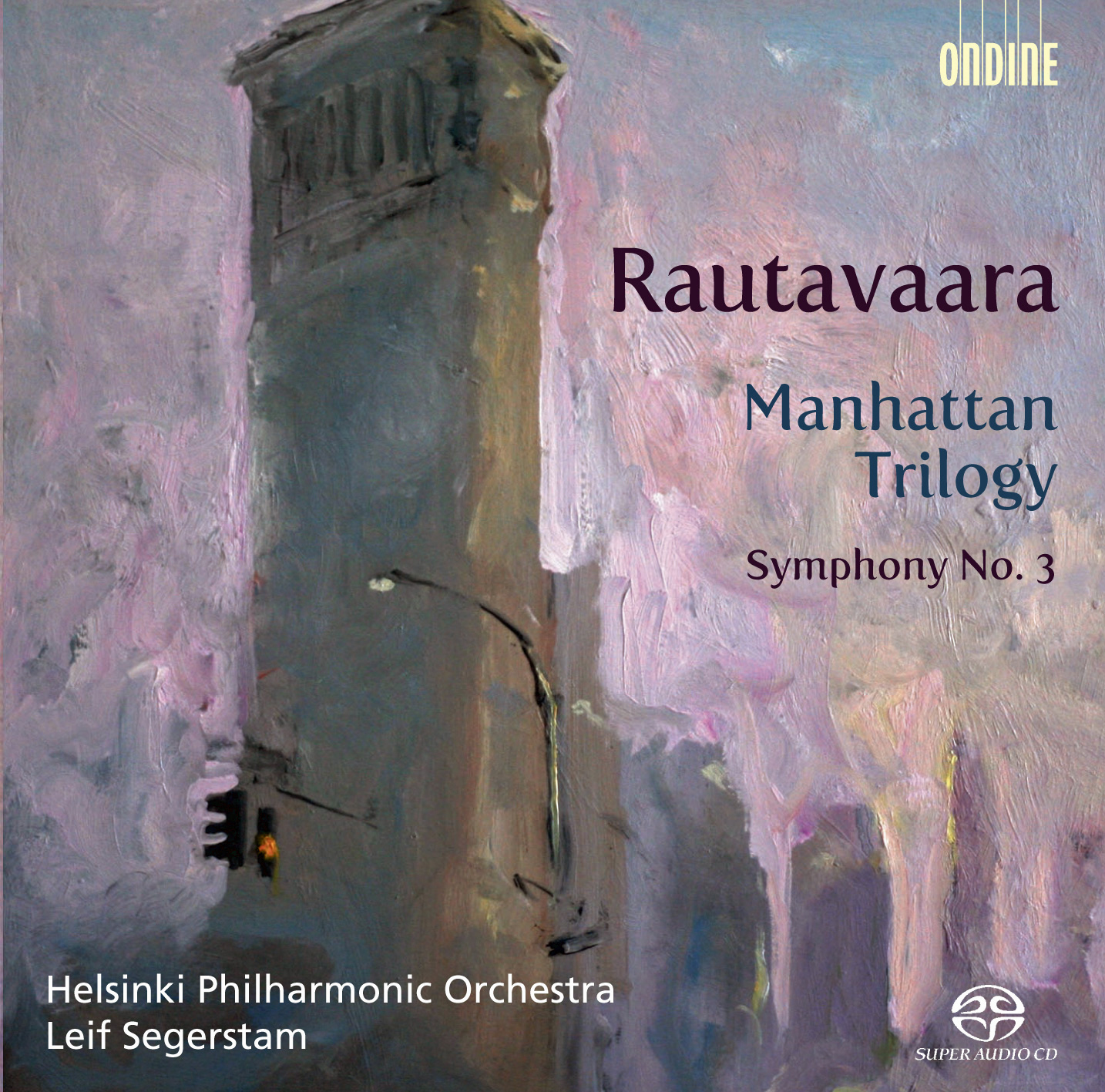
Manhattan Trilogy
Symphony no. 3
The Manhattan Trilogy worked better for me than the other multi-movement works, I think. I realized upon hearing the first movement, entitled Daydreams, how much I had been yearning for a melodic line from Rautavaara. Indeed, the composer tends to work in slow-moving vertical chords, so when horizontal melodic movement appeared, I was in heaven. I don't know if such things were held across the whole work, but the Nightmares movement was sufficiently dark, opposite the two shinier outer movements.
After I heard Rautavaara's Symphony no. 3 from Max Pommer and the Leipzig Radio Symphony Orchestra from Ondine's Rautavaara Symphonies box set (BLOG), that group's least convincing performance, I was determined to hear Segerstam in the same music, and did so shortly afterwards.
Well, suffice to say, the playing is much better in Helsinki's hands. What a shame Ondine didn't put Segerstam's performance in their Symphony box set in lieu of the earlier Pommer one. A missed opportunity, methinks...
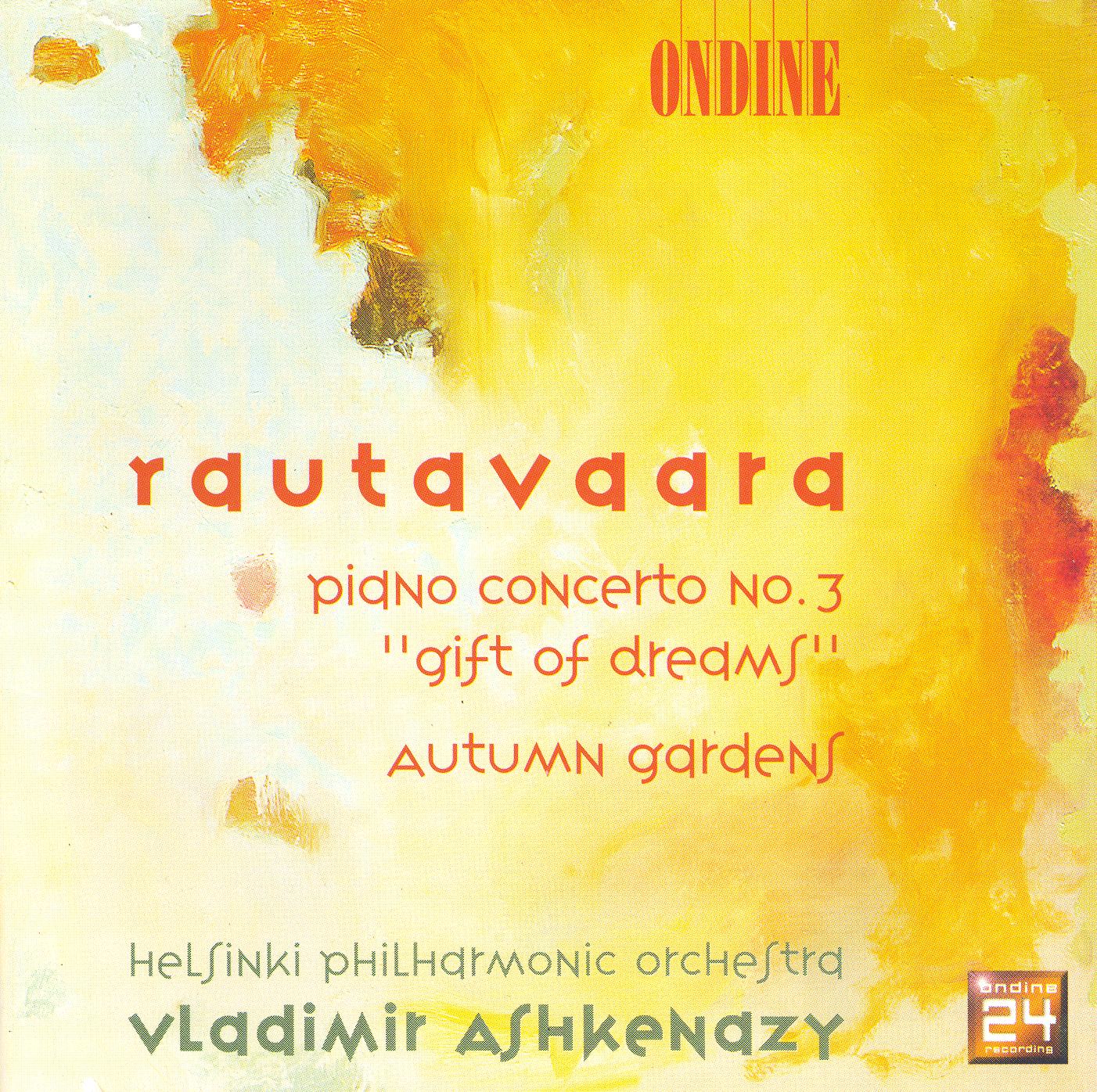
Autumn Gardens
After Ondine secured many recordings of the Helsinki Philharmonic Orchestra with Leif Segerstam conducting, I wonder what occasion arose to have Vladimir Ashkenazy lead this program with the same orchestra? Does the Russian pianist/conductor have a history with the composer or was Segerstam out sick and Ashkenazy happened to be in the area. Or was Ashkenazy tied to the soloist of the concerto, which I am saving for later.
Nonetheless, Ashkenazy puts in a fine performance here. I am taken most with the Poetico movement, perhaps not coincidentally the same word Rautavaara used for the middle movement of his First Symphony, another piece I really enjoyed?
However, this was another work where a certain sameness washed over this listener, the music moving in slow, satisfying blocks of cinematically atmospheric harmonies. It is at this point in my listening, where Rautavaara is beginning to remind me of Frederick Delius, another composer who liked to take his own sweet time to create atmospheric orchestral pictures, often quite beautiful, yet requiring patience on the part of the listener. Or maybe I simply should just distance myself more from the composer's music to get a fresh perspective, especially in Autumn Gardens and the Book of Visions.
I should mention I chose to stick with the Ondine label for my listening, but in a few cases, there are alternative recordings on Naxos and other places. On the other hand, Ondine remains the only place to find some of the other pieces, so there are decisions to be made when collecting recordings. With no doubts about it, though, the Helsinki Philharmonic Orchestra sounds beautiful in each of these works.
Bits 'n Bobs
Angels and Visitations
Isle of Bliss
Helsinki Philharmonic Orchestra
Leif Segerstam, conductor
Ondine; 1997
Anadyomene: Adoration of Aphrodite
Helsinki Philharmonic Orchestra
Leif Segerstam, conductor
Ondine; 1999
Garden of Spaces
Helsinki Philharmonic Orchestra
Leif Segerstam, conductor
Ondine; 2005
Adagio Celeste
Book of Visions
Belgium National Orchestra
Mikko Franck, conductor
Ondine; 2005
Manhattan Trilogy
Symphony 3
Helsinki Philharmonic Orchestra
Leif Segerstam, conductor
Ondine; 2008
Autumn Gardens
Helsinki Philharmonic Orchestra
Vladimir Ashkenazy, conductor
Ondine; 2000
Comments
Post a Comment