Sibelius: The Tempest
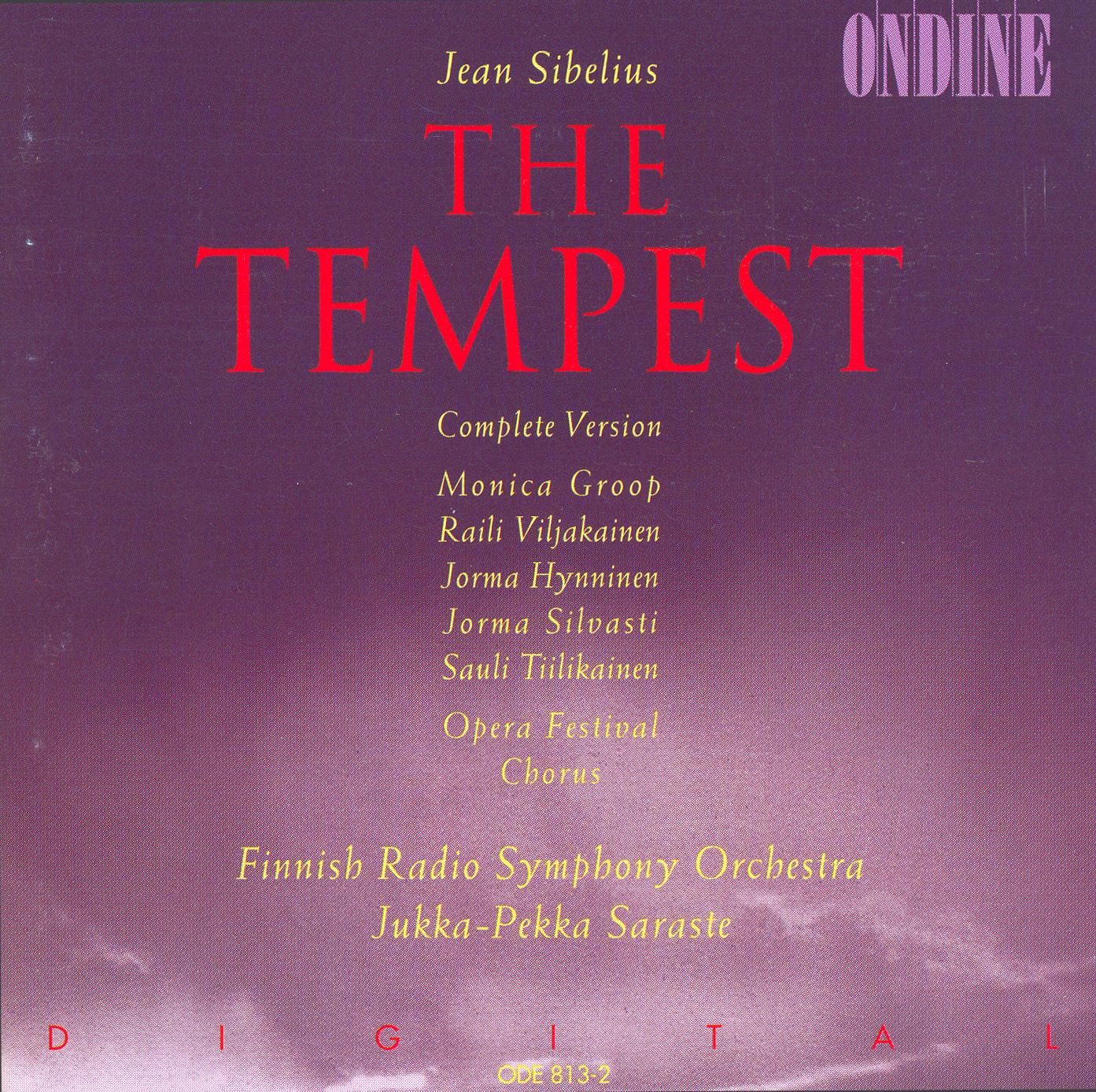
Personally, I was underwhelmed. The problem with incidental music in general are all of the little bits and bobs which don't really come together to form a whole. I found that to be much of the case here as well.
The Overture is well liked it seems, but even that one leaves me high and dry. Yes, lots of chromatic scales and sustaining winds to evoke a musical 'tempest', but at five minutes with no melody and the same thing across that time in various states of torrent, I found little to enjoy.
If you have only heard the Suites, here there are vocal solos, a bit of chorus, and 36 tracks of orchestral numbers. There is some delightfully colorful music here, plus I even hear nods to the Baroque and Renaissance of Shakespeare's time. When Caliban shows up, we even hear some exoticisms from Sibelius, further afield than his normal Finnish reaches.
On the other hand, there is a lot of repetition too. How many times can we hear Ariel enter and leave, each time using the same music cues again and again. As is usually the case with incidental settings, the music cues are brief, usually only 20 seconds to 3 minutes in length, with the overture and the central dance scene rising to 4 or 5 minutes. Again, not a lot to grasp onto before the music is over and moves on to something else.
I have no problem with the sound of the orchestra, although the winds are a bit behind the rest of the ensemble. The solo singers are each excellent, particularly baritone Jorma Hynninen's burly voice reaching into the upper part of his range with skill. The chorus gets fair little to do, but I enjoy their presence early on in the work, here labelled as the anonymous Opera Festival Chorus.
It should also be noted the singing is in the originally intended Danish language, not the Finnish dialect Vänskä used in his recording on BIS. That puts this recording on par with the one on Naxos with Okku Kamu leading Danish performers, although I think their version is abridged.
Many will enjoy the fact there is no speaking here, as can often be the case in incidental music. Personally, I think a little context might help the music along even if I don't understand Danish, but luckily the physical media includes not just the sung texts and translations, but also a detailed synopsis for every act of Shakespeare's play.
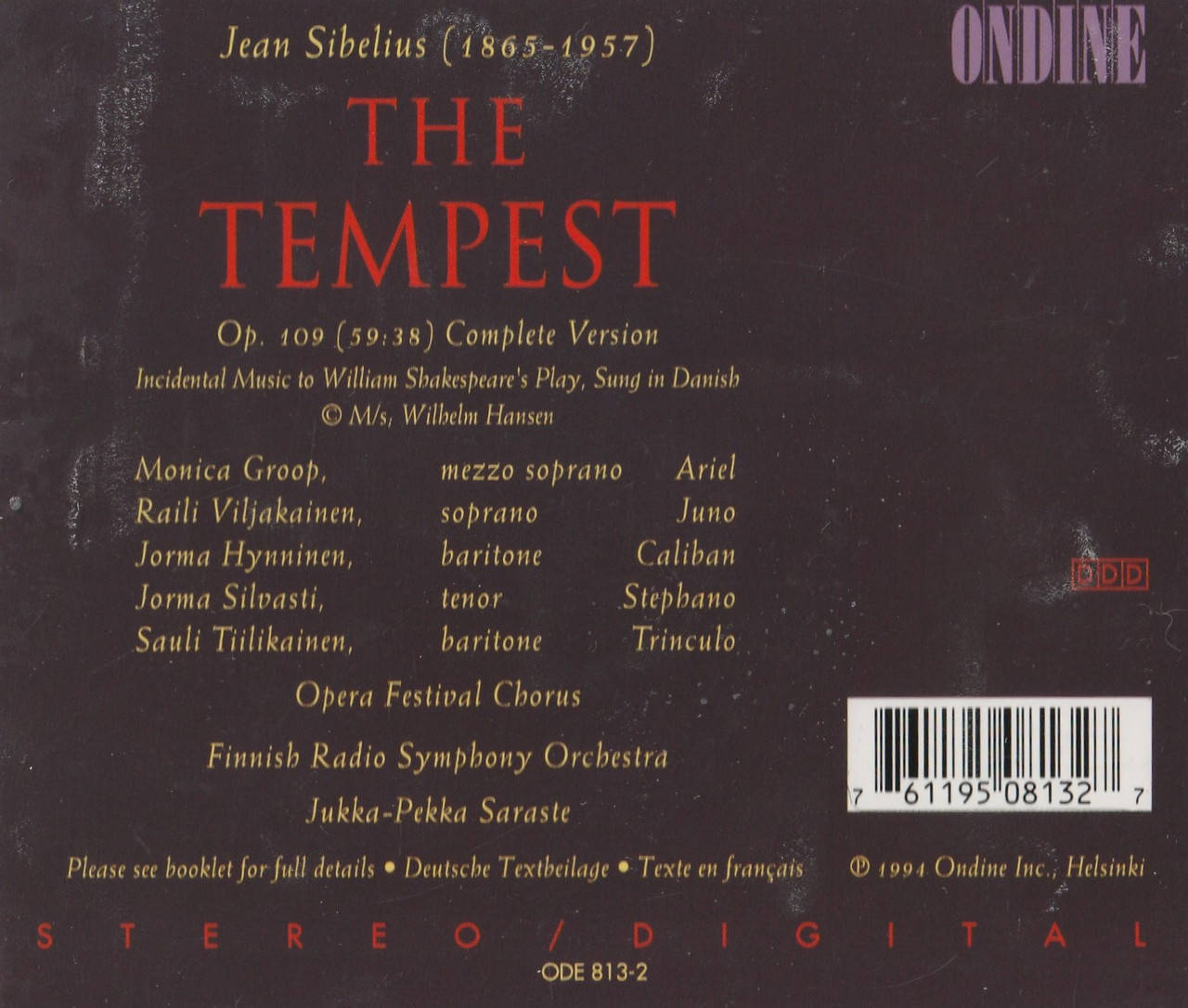
The Tempest
Soloists
Monica Groop, mezzo-soprano
Raili Viljakainen, soprano
Jorma Hynninen, baritone
Jorma Silvasti, tenor
Sauli Tiilikainen, baritone
Ensembles
Opera Festival Chorus
Finnish Radio Symphony Orchestra
Jukka-Pekka Saraste, conductor
Label: Ondine
Year: 1993
Total Timing: 59.38

No I do not find The Tempest a masterpiece. It does have lovely, colorful music, but they come and go in fits and starts.
I am not enamored by Saraste's approach either, which I think could use a little more variety aside from what is built in by Sibelius.
This doesn't give me high hopes as I further delve into the composer's incidental music yet to come. We'll see...
Find more Sibelius recordings HERE!
Comments
Post a Comment