Mozart: Symphony 15 - 18
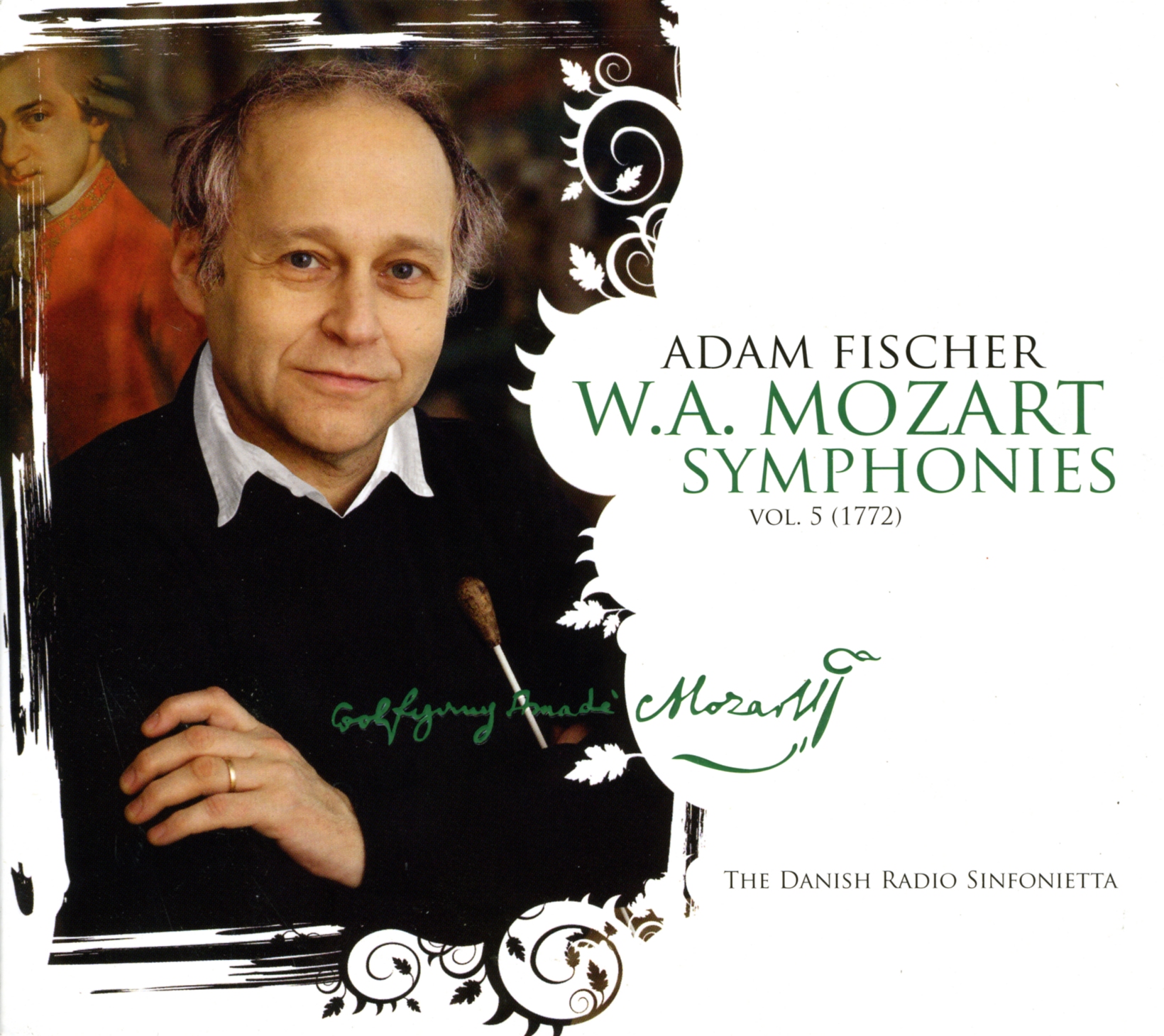
If nothing else, Volume 5 contains four properly numbered symphonies, with one Köchel catalog number for each. All this means is, as far as I know, these works are 'correctly' chronologically ordered, with no youthful works found later in history to throw in amidst the numbering system.
On the other hand, two of the symphonies are four-movement works while the other two are three-movement works, so there isn't consistency in form as of yet. Of course, Mozart is only 16 years old at this point, and it will be almost another decade before the composer breaks away from his father Leopold in Salzburg. Here in 1772, the young Mozart is finishing up his final trip to Italy.
There is also a scaling back in orchestration, with no use of trumpets or timpani in this grouping of symphonies, even in the C Major K. 128. That said, K. 130 has one trick up its sleeve yet in its use of instrumental color. Perhaps these aspects are due to requirements for specific orchestras.
For those looking for my generalized thoughts, skip to the bottom. Otherwise, I will do a movement-by-movement breakdown of each symphony for those who wish to listen along. I provided videos at the very bottom of this post of these same performers in the numbered symphonies to make it easier to follow along with my thoughts.
Symphony no. 15 in G Major, K. 124
Movement 1
Key: G Major
Meter: 3/4
Tempo: Allegro; Fischer:
 = 146
= 146Winds: oboe, horn

The material which begins the development section almost sounds like a new musical idea, something I remember happening once before from Mozart. Here this idea is given over to strings only, a lyrical portion with some dotted rhythms thrown in. This eventually gives way to a development of the opening thematic material in E minor and a short segue back to a complete recapitulation, a part of the Sonata-Allegro form which doesn't always occur in early Mozart.
Key: C Major
Meter: 2/4
Tempo: Andante; Fischer:
= 54Winds: flute, horn
I enjoy the delicate melody which opens the second movement, here played by muted strings. This is followed by a noble statement from the oboes and horns, making for a delightful melodic movement. Truly, I think Mozart could have made more of this theme, but as it is, I enjoy the gentle landscape.
The second half of the movement plays around with the opening motive before coming back to repeat the beginning music ad nauseam.
Movement 3
Key: G Major & D Major (Trio)
Meter: 3/4
Tempo: Menuetto; Fischer:
= 150Winds: oboe, horn
Ádám Fischer phrases this Minuet with much grace, rather than a heavy-footed swing. This certainly captures the general mood of this symphony as a whole, which does not come running out, guns a-blazing.
The Trio is more legato in comparison and is given to solo strings, notably without vibrato. Oddly, Fischer, upon going back to the Minuet, repeats all of the sections once again. I can't say I remember him doing this before, as the tradition, as far as I know it, is to not repeat the Minuet sections after the Trio has been played. Nothing upsetting, just a difference.
And don't think I didn't notice the odd sounding staccatos after the opening repeat of the first Minuet section... I don't think that one ever returned later on, however, listen to those accompanying instruments towards the end of the first repeat to spot this singular articulation choice.
Movement 4
Key: G Major
Meter: 2/4
Tempo: Presto; Fischer:
= 196Winds: oboe, horn
Three big G-Major chords open the final movement, a Rondo which moves swiftly and features furious string tremolos at the end of its main melody.
Despite smaller string moments between the loud ones, Fischer does not choose to use solo strings here as I would normally suspect. All to the good, as this is a rather brief movement.
K. 124 is a very understated piece, and I kind-of like that aspect of its music. One could get tired if all of Mozart's symphonies turned out this way, but on its own, this is very charming music.

Movement 1
Key: C Major
Meter: 3/4
Tempo: Allegro maestoso; Fischer:
= 142Winds: oboe, horn
What a surprise this first movement is! Mozart opens as if in a 9/8 time signature, but then switches over to duples a page later, finally finding the actual printed 3/4 meter. Fischer really relishes this change too, making the duples markedly heavier than the preceding triplets. Once in the duple section, Mozart doesn't stop there, surprisingly moving on to G minor at some point before concluding the exposition.I am actually glad for the remarkable switch to duples, for the triplet section wasn't particularly melodic, thus the striking contrast came at just about the right time.
The development section sees an abrupt leap to E-flat Major from G Major, yet another surprise for the listener. While the triplet/duple section does come back at the recapitulation, this last section ends up being much more chromatic upon its return, so the recapitulation sounds much more developmental.
Movement 2
Key: G Major
Meter: 2/4
Tempo: Andante grazioso; Fischer:
= 66Winds: none
In the strings-only second movement, Mozart has one instrumental section enter at a time. First the 1st violins, then the 2nds, and finally the violas and cellos, each taking the same melodic figure. On the restatement, Mozart reverses direction, having the violas and cellos begin the melodic material, followed by 2nd violins, and finally stated by 1st violins.
Harmonically speaking, Mozart keeps the key of G Major at arms length, never really settling into the key until a whopping 10 measures in. That is a long time to keep your listeners unsettled as to where the music is going.
The second part of this 'A' section apes the opening by having the 1st violins start a new melody, followed by 2nd violins, and in a new pattern, has the cellos enter on their own followed by violas. Never say Mozart was predictable. Furthermore, in the middle of the 'B' section, Mozart once again changes up the order. The second statement opens again with 1st violins, but followed by violas, then cello, and finally 2nd violins. What a world!
With all of these instrumental entrance distractions, I don't think I ever ended up too keen on the music itself. There is a little antiphonal send off between the 1st and 2nd violins at the final cadences of each section, which is fun, but texture can hardly make up for a less-than effective tune or motive. Here, I am not so sure this movement works for me, where my brain likes the transitional parts more than the main ones.
Movement 3
Key: C Major
Meter: 6/8
Tempo: Allegro; Fischer:
. = 108Winds: oboe, horn
A swinging 6/8 meter is the main character of this last movement, where Mozart makes more of the lengthy middle section than he does the opening idea. I do like how the composer uses the oboes and horns to segue bringing the main melody back, plus Fischer has the horns blat out some more on the final statement.
Not a favorite symphony of mine on the whole, but there are a whole lot of inner musical techniques at work in this music which I can appreciate. Kudos to a young Mozart for being able to entertain on a deeper level while the surface glides along merrily.
Symphony 17 in G Major, K. 129
Movement 1
Key: G Major
Meter: Common time
Tempo: Allegro; Fischer:
= 156Winds: oboe, horn
The little Scotch Snap decorations really make this music sound chromatic and dissonant at times. Perhaps the Danish National Chamber Orchestra are really leaning into the embellishment figurations. Mozart makes these rhythms a continuous thematic device throughout this first movement, so my thoughts are drawn to them at every turn.The second thematic area in the exposition also uses these same rhythmic figures, even handing them off to the bass line as well, but the textures are not as heavy so these effects really stand out to the listener. If this were Haydn, someone would have surely nicknamed this symphony as 'Chickens' or some such thing.
And if an exposition of chicken pecking t'weren't enough, the development has the entire ensemble leaning into this idea, with no unsubtle attacks. If anything distracts me from the above statements, there are some lovely oboe scales adding color to the orchestral sound.
Movement 2
Key: C Major
Meter: 2/4
Tempo: Andante; Fischer:
= 64Winds: oboe, horn
If I thought Mozart underutilized his lovely melody in the second movement of K. 124, he makes up for it here. I love this tune and the harmonic motion underneath, where Mozart wrings the melody for all it is worth. Better yet, Mozart realizes his motive not only works well with strings alone on its first statement, but gets even more out of it with oboes and horns at a higher dynamic temperature on the reiteration following.
The 'B' section uses a similar 'one-instrumental-section-entering-at-a-time', similar to the second movement of K. 128. Here though, these individual entrances are merely used as a complement and transition to wend back to the main melodic attraction. The little Coda at the very end even hints at the initial melody, and most effectively too, I might add.
Fischer adroitly paces this Andante so as to not make this music overly saccharine as well.
Movement 3
Key: G Major
Meter: 3/8
Tempo: Allegro; Fischer:
. = 108Winds: oboe, horn
The final movement is a rollicking romp we haven't really come across yet in this set of symphonies. The trading of some downward-moving scales among the 1st and 2nd violins is a little bit of tit for tat musical fun.
As opposed to earlier, Fischer does allow solo strings to feature in the smaller string moments opposite the full ensemble. He has the string players add a little grace note at the top of the melody to make the music a little more folksy sounding, as well as having them leap onto some semiquavers and tremolos furiously within the same area.
Without a Minuet and Trio movement in K. 128 and K. 129, these little textural performance additions from Fischer are most welcome for this listener.
Symphony 18 in F Major, K. 130
Movement 1
Key: F Major
Meter: Common Time
Tempo: Allegro; Fischer:
= 160Winds: flute, horn (4)
Most notable in K. 130 is the change in orchestration. Not only does Mozart swap out oboes for flutes, he adds another pair of horns for a count of four total. Oddly, this change in additional brass sounds extremely subtle on this recording, where on the other hand, the flutes are always a strong presence. This could be due to the flute's higher tessitura or their stronger vibrato compared to all of the other instrumentalists.The first movement is another example of Mozart starting small, with only two string voices being used, only to have the full ensemble enter upon the restatement. As long as he doesn't use the technique too often, this is an appreciated change-up in orchestral texture. Also, the composer's opening melody is mostly made up of the same repeated note, with only the first note jumping away. Strange how something so simple can be so effective.
The key of F Major feels nice here too, with this volume of symphonies featuring mostly bright-sounding sharp keys. Something about the sonorities of a flat key ease the mind after a string of sharp-keyed symphonies.
Yes, the second expositional theme sounds a little like clucking again, but Mozart doesn't make this sound a centerpiece of the movement, so the tiny trills don't bother me as much. If anything, the trills create a witty texture compared to the opening, and contrast the little minor-keyed divergences. Upon further listening though, the main theme of the movement does indeed sound a tiny bit hen-pecked too, so perhaps Mozart is fully in his 'Chicken' phase.
Movement 2
Key: B-flat Major
Meter: 3/8
Tempo: Andantino grazioso; Fischer:
. = 40Winds: flute, horn (4)
Does anyone find this melody a bit awkward in structure? Something about the broken phrasing and leaping sigh motives makes the theme somewhat unstable to my ears. The movement does have a nice rocking feel, although Mozart breaks up the beat with what sounds like rare hemiola figures.
In Volume 5, I really notice Fischer and the Danish ensemble taking piano dynamics to new lows, sometimes backing away towards the edge of hearing. I haven't mentioned this element until now, but there have been multiple occasions across these works where I have been surprised by how quiet the orchestra actually attempts to play at times.
Movement 3
Key: F Major & C Major (Trio)
Meter: 3/4
Tempo: Menuetto; Fischer:
= 146Winds: flute, horn (4)
An ever moving half-step interval in the violas undulates throughout the Minuet regardless of the harmonic motion. The 2nd violins take this figure over for some of the second half of the Minuet, and it even continues across the bar into the opening of the Trio. I really appreciate Mozart adding these unusual features into his music, here making a lilting Minuet take on a dizzy harmonic question mark.
The Trio contains curiosities as well, even without the half-step violas. Something about the presence of flutes amidst solo strings and a harmonic jaunt to a far-flung B-flat Major chord (in C Major) give a Medieval / Renaissance personality to the Trio.
Affably, Fischer transitions back to the Minuet without a glaring change in ensemble or texture. Perhaps both Mozart and Fischer are making these Minuet movements pieces of a symphonic whole rather than a nod to the antique dance.
Movement 4
Key: F Major
Meter: Common time
Tempo: Allegro molto; Fischer:
= 96Winds: flute, horn (4)
This is a rather lengthy fourth movement compared to what we normally see. Most of this extra time is spent on the exposition and recapitulation.
The ensemble motion here is a little unusual, I think. There is both inward and outward scalular motion among the sections, where if the the higher pitched instruments move higher, the lower instruments move lower or vice versa. This is a good musical technique to add to Mozart's bag of tricks.
There are some furious string tremolo chords which are reminiscent of flutter tonguing, although it would be most interesting to see a string player flutter their tongues while playing tremolos. I think I have a new goal in life!
Can I mention all of the pauses Fischer adds into the sections of this music. Perhaps he is using a new edition, but the starts and stops sound like invisible fermatas to me, taking the music out of their propelled motion and resting lengths. I will have to do some comparisons to see if it is just Fischer and the Danes making these choices, or if it is a tradition in these places.
No, chicken-isms haven't escaped my notice here, but the grace notes are far fewer and less dense than some of the others in this volume. Fischer even takes some of these moments at near sub-aural dynamics.
Final Thoughts
While I wasn't completely captured by all the music here, there is a lot going on in Mozart's musical development. In many cases, these are small things which easily catch my attention, either through Fischer's pointed performance gestures, or simply as an attribute in absolute music.
These minutiae are almost taking my mind away from the symphonies as a whole, so I hope I can get my head back in the game again in Volume 6. Yet, I appreciate Mozart taking some chances in his symphonic creations. No, my heart wasn't melted away by all of these movements, but I don't think it needs to be at every musical turn either.
Mozart uses more tempo directions than normal, methinks. Two appearances of grazioso and a maestoso are added to the normal Andante and Allegro designations. Of course, along with one printing of con sordino, perhaps these are editor interpolations into the scores.
I sensed less intervention from Ádám Fischer and the Danish National Chamber Orchestra too. If anything, this group has gone the more subtle route in this volume of symphonies, rather than viciously poking and prodding at the music here and there. While I tried to point out little variances from the orchestra, I know I failed to mention some of them, so small were those moments. On the other hand, the shift to exaggerated softer dynamics is most evident in this volume.
These symphonies are certainly transitional works, so the imbalance of melody, harmony, texture, orchestration, and structure are all having their ups and downs. Plus, don't get me started on chickens!

Work Series
Vol. 5 from Symphonies on Da Capo
Works
Symphony 15 in G Major, K. 124 (14.15)
Symphony 16 in C Major, K. 128 (11.56)
Symphony 17 in G Major, K. 129 (14.27)
Symphony 18 in F Major, K. 130 (17.29)
Performers
Danish National Chamber Orchestra
Ádám Fischer, conductor
Label: Da Capo
Year: 2013
Total Timing: 58.45
Comments
Post a Comment