A Hymn of Epiphany

A Hymn of Epiphany

The actual Day of Epiphany revolves around the Three Wise Men, their summoning to King Herod, and their eventual arrival at Bethlehem. While the carol We Three Kings is often associated with Advent and Christmas, the actual tale is told after Christmas on the Day of Epiphany, which parallels their arrival after His Birth.
The rest of Epiphany is given over to discovering what Jesus is all about. Most churchgoers enter church after Christmas on the First Sunday after Epiphany, which usually comments on the Baptism of Jesus. Miracles, such as the Cana Wedding Feast, contribute to discovering what Jesus has in store for humanity. Thus, light and the color white are often associated with Epiphany.
With the great diversity of topics during Epiphany, one which can last many weeks, finding a hymn can be difficult. For this first time, I am going to stick with the actual Feast Day of Epiphany which rarely falls on a Sunday. While connections to the Three Wise Men would intimate We Three Kings, I am going to choose As With Gladness Men of Old.
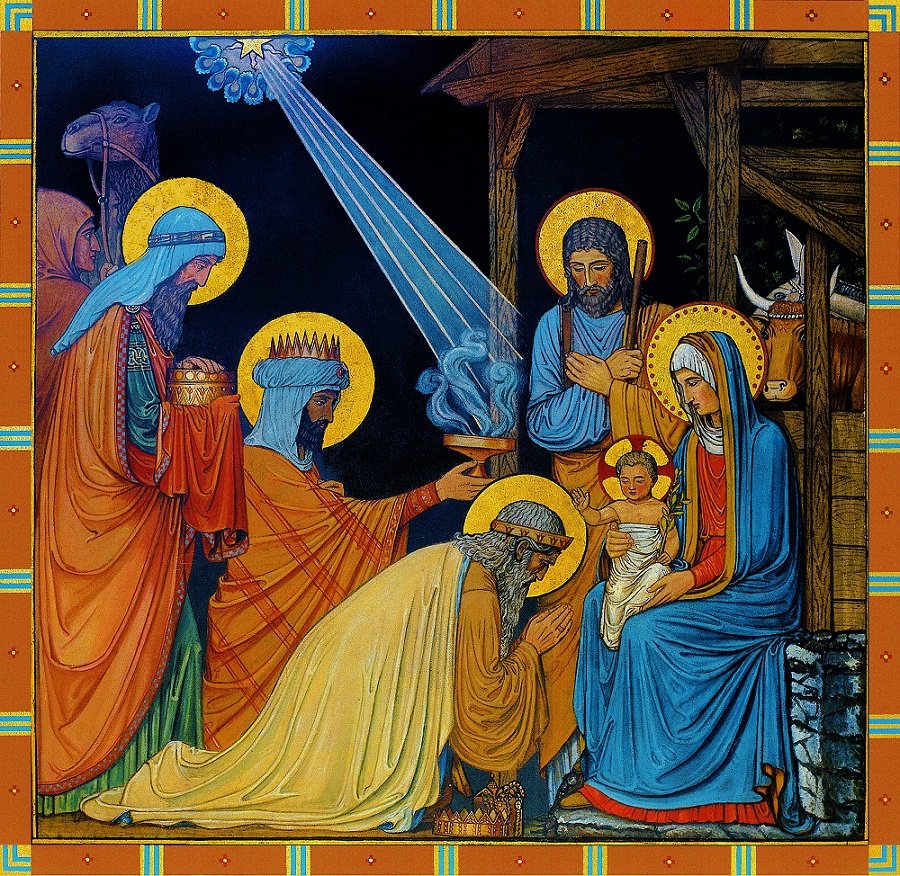
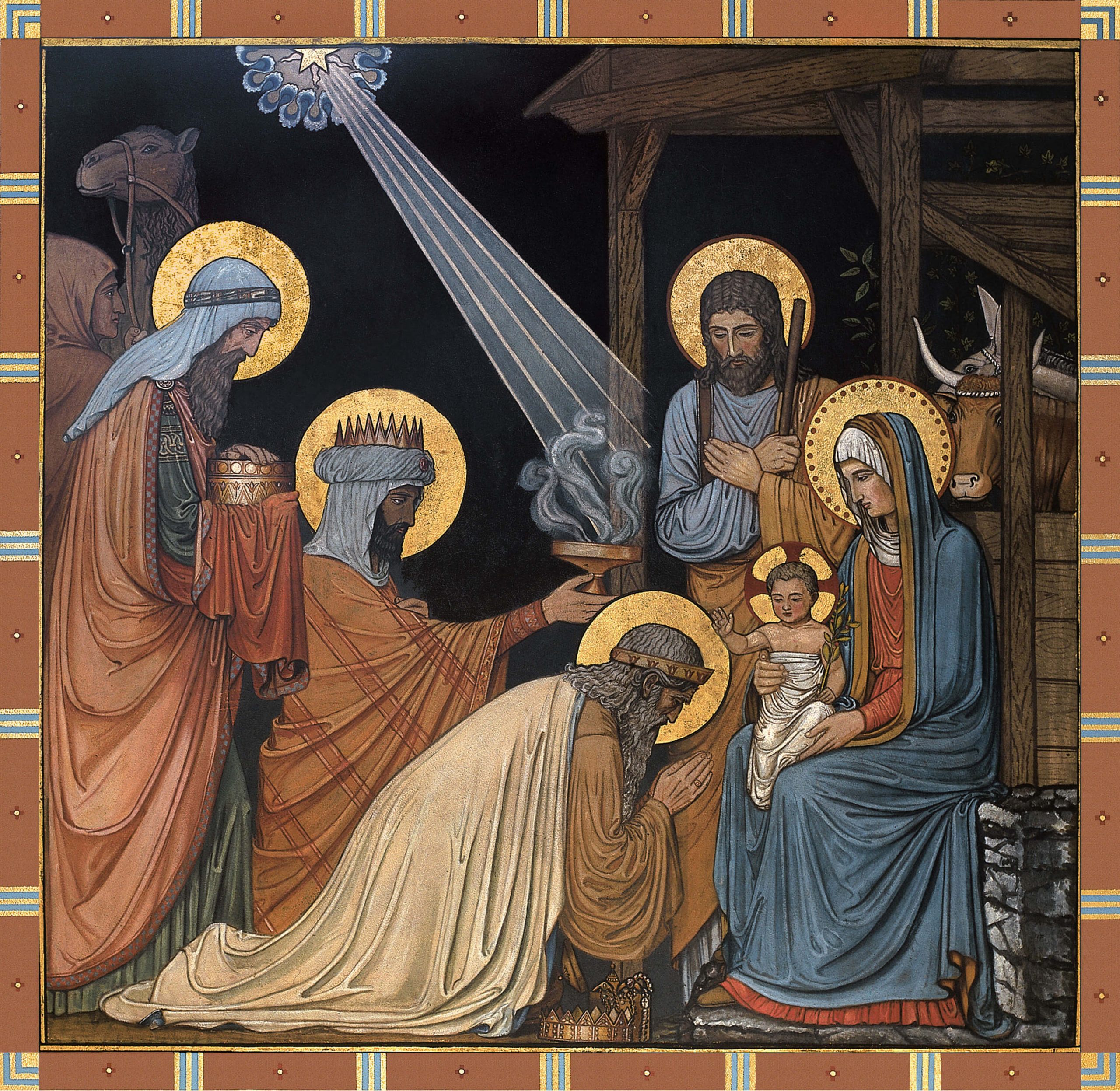
As With Gladness Men of Old specifically refers to the Magi, the first verse using many of the common images of Epiphany such as 'guiding star' and 'light' 'beaming bright' for example. The first three verses begin with the word 'As', following the story of the Magi visiting the birthplace of the Lord. The fourth and fifth verse walk away from the story to give a general state of being at the result of the Birth of the Lord, travailing the topics of sin and death. The final verse reinforces the Epiphany images of 'light', 'bright', and the 'Sun which does not go down'.
The words were set to a chorale composed by Conrad Kocher and compiled by William Henry Monk. Of the first four hymns I have chose for this series, As With Gladness Men of Old is an actual four-part chorale, a genre of the Protestants, and in this hymn particular, here taken up by the Church of England. All three, Dix, Kocher, and Monk were 19th Century figures, so we are not dealing with ancient sources as we sometimes do in hymnody. Even though Dix apparently didn't care for the tune his words were attached to, DIX was chosen as the tune name of this hymn, in honor of his words.
I am most taken with this hymn set in the key of G Major, although the few times I have seen it in A-flat Major, I have appreciated the particular sonority of that key. As an organist, five verses allows some variety of registration options if one so chooses, especially as the final verse is a little more triumphant compared to the inner ones. If a choir is used, it is nice to have them sing through each four-bar phrase without a breath, as the start/stop aspect of a chorale can get a little old after a while. Connecting the phrase across the second and third measures of each phrase can be difficult due to that downward jump, though.
The metrical index of this hymn is 7.7.7.7.7.7 allowing plenty of other texts to be used with this tune. The one I have seen most often is For the Beauty of the Earth, although its application is not a favorite of mine, mainly due to my affection of these words tied to this chorale.
Find more Hymns HERE!
Comments
Post a Comment