Mozart: Symphony 19 - 21
While the development section in Mozart's symphonies have not changed much, the transitional music between motives has become substantial. I always marvel at how Mozart was able to make transitional material just as captivating as the main portions, places which are often winsomely melodic in the hands of Mozart and intelligently cement rhythmic motives introduced earlier in the movement.
Ádám Fischer plays all of the repeats in K. 133, making it the first 25-minute symphony in this series. The Hungarian conductor does not always choose to observe second-section repeats, thus some of the others in on this volume might have timed longer as well. Certainly, the choice to repeat makes a work sound more substantial to my ears, but also balances the symphony as a whole. On the other hand, if the music is less than effective, which can happen in early-aged composing, I can appreciate the choice to not repeat.
For those looking for my generalized thoughts, skip to the bottom. Otherwise, I will do a movement-by-movement breakdown of each symphony for those who wish to listen along. I have provided videos, both beneath each symphony description and at the very bottom of this entire post, of the same performers I am reviewing to make it easier to follow along with my thoughts.
Symphony no. 19 in E-flat Major, K. 132
Movement 1
Key: E-flat Major
Meter: Common time
Tempo: Allegro; Fischer:
 = 154
= 154Winds: oboe, horn (4)

Perhaps it helps to have a stunning opening musical gesture. Again, this is a simple E-flat Major arpeggio with a little musical decoration added, but the pomp it assumes is quite confident. The second theme later on is lighter and gentler comparatively, with the violas providing a constant pedal of sorts.
While there are no inner repeats here, I do not feel short changed at all. As a matter of fact, the development is a little girthier than normal, although not unduly so, and the recapitulation is complete with both themes played through their entirety. Really, this is a solid opening movement.
Key: B-flat Major
Meter: 3/8
Tempo: Andante; Fischer:
. = 36Winds: oboe, horn (2)
I enjoy Fischer's delicate handling of this movement. The movement sounds at times as if etched on mere lace. That said, after the gentle opening six bars, the confident fullness which follows is such a surprise, yet unusually satisfying. No such moment quite equates this feeling afterwards, but it certainly grabs the attention of the listener.
Mozart does give the winds, here with only two horns alongside oboes, some short linking passages between phrases. Otherwise, this is a string-centered movement with winds adding color to the proceedings.
Also, Fischer does not repeat the second half of this movement.
Movement 3
Key: E-flat Major & C minor (Trio)
Meter: 3/4
Tempo: Menuetto; Fischer:
= 166Winds: oboe, horn (4)
I could probably count on one hand the number of times I remember a Mozart Minuet movement, or for that matter Haydn, which didn't start with the full ensemble playing. Here, 1st and 2nd violins trade patterns back and forth by themselves, eventually adding violas and cellos, and later on yet, winds.
The Trio is of two faces. The first is spare sounding and in minor, as if played by a Medieval or Renaissance consort. When the second half moves to Major in chugging rhythms, the sun lights up immediately, with the final tag returning to the original Trio qualities.
Movement 4
Key: E-flat Major
Meter: Cut time
Tempo: Allegro; Fischer: 𝅗𝅥 = 132
Winds: oboe, horn (4)
The last movement is an extensive Rondo with many, many repeats. While the mood is generally sunny, I have the feeling of an overriding seriousness, particularly among the 'B' and 'C' sections. The 'D' section is given over to solo string players making for a chamber music-like sound, so it avoids any undue sternness.
I do like how Fischer imbues the opening rising pick-up figure a halting quality, as if he is holding the band back for a folksy effect. It works on me, at least.

Movement 1
Key: D Major
Meter: Common time
Tempo: Allegro; Fischer:
= 152Winds: oboe, horn, trumpet
I do like when Mozart chooses to voice his opening melody in a low tessitura, as he does here decorated with trills. There is something less flashy and more earthy in setting the first theme in a lower violin range. As mentioned at the top, the transition between first and second motives is pretty long in the scheme of things. Just when you think it is done, there comes along another deceptive cadence and the whole things goes on a bit longer. There is no pause before the second motivic section either, so everything flows well together musically.
The second theme is made of skipping violin snaps, with the trumpets and horns heralding the final section of the exposition. However, before Mozart is done with this section, a lyrical section of violins and violas appears, as if beginning yet another musical section, although it is eventually broken up by winds heralding the finish once again, as if reminding the strings more insistently that it is time to move on.
A four-minute repeated exposition would normally be nothing to sniff at, but as the previous symphony from Mozart was not even four minutes total, the musical argument here is gaining quite a bit of weight. The development isn't particularly lengthy though, a section where I enjoy the trumpets paired with the oboes opposite the horns recalling their fanfare figures.
Oddly, the development transitions back to the second thematic area first, playing through its entirety, extended transition and all, only to come upon the first thematic area afterwards. There are two things to notice about the segue from the second motivic area to the first: The final scale before the first theme finally appears is played by oboe, dangling over into the opening theme as if a mistake; a wonderful moment for that wind instrument. The second thing to notice comes from Fischer and the Danish National Chamber Orchestra - I think the accompanying strings (2nd violins, viola, and cello) are playing col legno here! What a hoot, although this only happens upon the repeat of the entire development and recapitulation sections.
Wowzers, what an opening movement from a young Mozart, most likely aided by these performers throwing themselves at this music with skill and joy alike. If symphonies are going to be opening up like this from now on, I am going to have to pace my self. Outstanding!
Movement 2
Key: A Major
Meter: 2/4
Tempo: Andante; Fischer:
= 72Winds: flute
Here, Mozart swaps out oboes and horns for flute. Because the strings are muted, the flute really becomes a primary voice in this movement.
The composer does an odd thing at the end of this first section just before the repeat. He has the flute play the very opening part of the melody, as if the flute came in too early. Once the repeat occurs a measure or two later, there is the flute having to play the exact same thing over again. It is a curious moment which must be purposeful on the part of Mozart.
Fischer does indeed take the second section repeat here, making for another rather lengthy movement. Instead of the odd early flute entrance finishing off the movement, Mozart adds a Coda to properly dispense with the music, although surprisingly with an aggressive last three arpeggios.
Fischer also inserts little pauses into the music. I am not comparing recordings, so I can't say if this is typical performance practice, but I don't see any fermatas, luftpauses, or other signifiers to explain his short breaks. They don't upset me, yet I am curious to see if they are his choice or not.
Movement 3
Key: D Major & G Major (Trio)
Meter: 3/4
Tempo: Menuetto; Fischer:
= 140Winds: oboe, horn, trumpet
Here is the strong, sturdy Minuet we are used to, emboldened by trumpets. Only the second section of the Minuet pares back the orchestration for a moment of intimacy amongst the tutti ensemble.
I enjoy the warmth of the Trio, here handed to solo strings and oboes. I could handle chamber music like this any time of the day. Listen to all of the rhythmic variety Mozart gives to each string part, each popping out with their particular note or moment for the listener to enjoy.
Movement 4
Key: D Major
Meter: 12/8
Tempo: Allegro; Fischer:
. = 148Winds: oboe, horn, trumpet
Instead of riding out on a raucous, rough finale, Mozart treats us to a rather measured, light delicacy to end on. I can't say it is a favorite of mine, but it carries the mood well enough, plus the 12/8 meter adds a significant difference in this long work.
Fischer puts a little extra pause in the final section rests, but really pushes the ending tremolos and chords in exchange for the borrowed time.
Hoo-boy, what a symphony! The work has a lot going for it, and certainly many elements to raise its music from mere pedestrian status. It has been a good long while since I last visited the early symphonies of Mozart, but I don't remember many popping out like this. Perhaps that is the benefit of having Ádám Fischer and the Danish National Chamber Orchestra on hand. They might not compete as strongly in the oft-recorded late symphonies, but in the early symphonies they make their mark.
Symphony 21 in A Major, K. 134
Movement 1
Key: A Major
Meter: 3/4
Tempo: Allegro; Fischer:
= 158Winds: flute, horn
A quick arpeggio up A Major, with a demisemiquaver in its middle, followed by another on a downward trajectory with the same rhythmic feature, informs much of this opening movement. While this musical idea leaves during the second thematic area, Mozart is deft enough to bring it back to finish up the exposition, making the opening musical idea the centerpiece of the movement. Even the transitional sequencing goes up and down and up and down on this rhythmic figuration.It isn't the main secondary motive which grabs my attention, but the four short violin notes which follow that I find much more enjoyable. If these later four-notes are transitional, Mozart somehow makes it catchier than the actual theme in this second section. Should I also mention how unusual it is for the composer to end the exposition on a 'question-mark' chord? How strange...
Similarly to K. 133, the development leads back into the second thematic area first, obviously taking some joy at bucking conventions. While the opening motive returns afterwards, it is never complete and not in the same form as it initially appeared. I suppose that makes this recapitulation a bit more developmental, including a surprise minor-key interlude after the recapitulation has already started.
As if taking a cue from the previous symphony, Mozart adds a Coda to finish off this movement, I assume to avoid the question mark from the end of the exposition.
Movement 2
Key: D Major
Meter: 2/4
Tempo: Andante; Fischer:
= 44Winds: flute, horn
For me, it is the swirling demisemiquavers which underlines this movement as its finest feature. The effect is nearly a non-stop, but for one or two short instances where Mozart takes a break from these rhythms.
Otherwise, this is a delicate enough movement with some bold chords to surprise the listener. The flutes and horns take a more forward role in the opening of the second half, and continue to make their presence known in small ways until the finish.
Again, Mozart adds a little Coda to this end of this movement as well.
Movement 3
Key: A Major & D Major (Trio)
Meter: 3/4
Tempo: Menuetto; Fischer:
= 140Winds: flute, horn
There is a sprung freshness in this Minuet, perhaps due to the bright A-Major key.
The first half of the Trio is relatively unadorned. The second half, however, features menacing horns opposite plucked strings before returning to a feeling of bucolic calm. While this abrupt change doesn't last for long, Fischer does allow the horn to slightly blat out before the final section of the Minuet in reminder of the Trio; a nice little musical performance call back, methinks.
Movement 4
Key: A Major
Meter: Cut time
Tempo: Allegro; Fischer: 𝅗𝅥 = 120
Winds: flute, horn
The final movement is another sunny, yet gentle movement, perhaps due to only the violins taking the music for themselves. Only a brief minor interlude disrupts any bright spirits in this music.
I never commented on the orchestration choice of having flutes with horns instead of oboes throughout this symphony. This pairing doesn't bother me per se, yet I think I prefer having oboes with horns if I must make a choice of personal preference.
Again, Mozart adds a Coda at the end of the movement. Is this becoming a common trait, or is this merely an exercise for the young composer. Listen to the Danish National Chamber Orchestra on the repeat of the second section a bit before the final Coda. I think I hear col legno again!
Symphony 26 in E-flat Major, K. 161a
Movement 1
Key: E-flat Major
Meter: Common time
Tempo: Molto Presto; Fischer:
= 204Winds: flute, oboe, bassoon, horn, trumpet
Also, why the skip to Symphony no. 26?
Well, both Symphony no. 26 and no. 27 have been re-catalogued as K. 161a and K. 161b respectively. This simply means, someone found out these two symphonies were actually composed somewhere between Symphony no. 21 and no. 22. I guess everyone was already used to the main symphony numbering system for Mozart, thus an update in the catalogue numbering was probably the least intrusive to show the change. I know some listeners however, who swear by the Köchel catalogue numbers too, so I am sure they aren't happy either.
There is certainly an Italianate dramatic quality to this opening movement. Instead of establishing key centers through setup and elaboration, the music merely slides up by half step to the next tonal center. Mozart is also more willing to slide in and out of minor as well, making the mood of this symphony a little more tense than normal.
Perhaps the dread is compounded by a full wind section as well, here utilizing flutes, oboes, bassoons, horns, and trumpets, notably without timpani once again. Having all of these winds on hand certainly makes a distinctly different sound compared to the symphonies proper.
Movement 2
Key: C Minor
Meter: 2/4
Tempo: Andante; Fischer:
= 50Winds: flute, oboe, bassoon, horn
The second movement opens with much gloom, reveling in its C-minor key. The incessant lead-in of three semiquavers simply adds to the thematic mood established by Mozart.
Movement 3
Key: E-flat Major
Meter: 3/8
Tempo: Allegro; Fischer:
. = 116Winds: flute, oboe, bassoon, horn, trumpet
A rollicking 3/8 promises a good time for the last movement. Still, Mozart does not let the music go by without some gruff stormy sequences, making for some of the most numerous modal shifts by the composer to date.
Short and sweet, but rather lightweight as a symphonic creation. Yet, genres need to be established and transitioned from somewhere, and this is still relatively early in the genesis of the symphony, even if Haydn had written around 50 of them by now.
Final Thoughts
I would say, on the whole, this volume of symphonies was a promising and enjoyable endeavor.
As I understand it, Leopold Mozart did have a hand in tempo markings and other such editorial interference, but I imagine by now, Mozart is probably left to his own devices with minor fatherly overview. After all, his father was a professional musician.
As has been the case in this series, Ádám Fischer and the Danish National Chamber Orchestra inject great élan into their playing of Mozart's symphonies. Certainly, I caught little choices from Fischer here and there, but nothing to ruin the ballgame. If anything, these works are full of personality due to the conductor and the players.
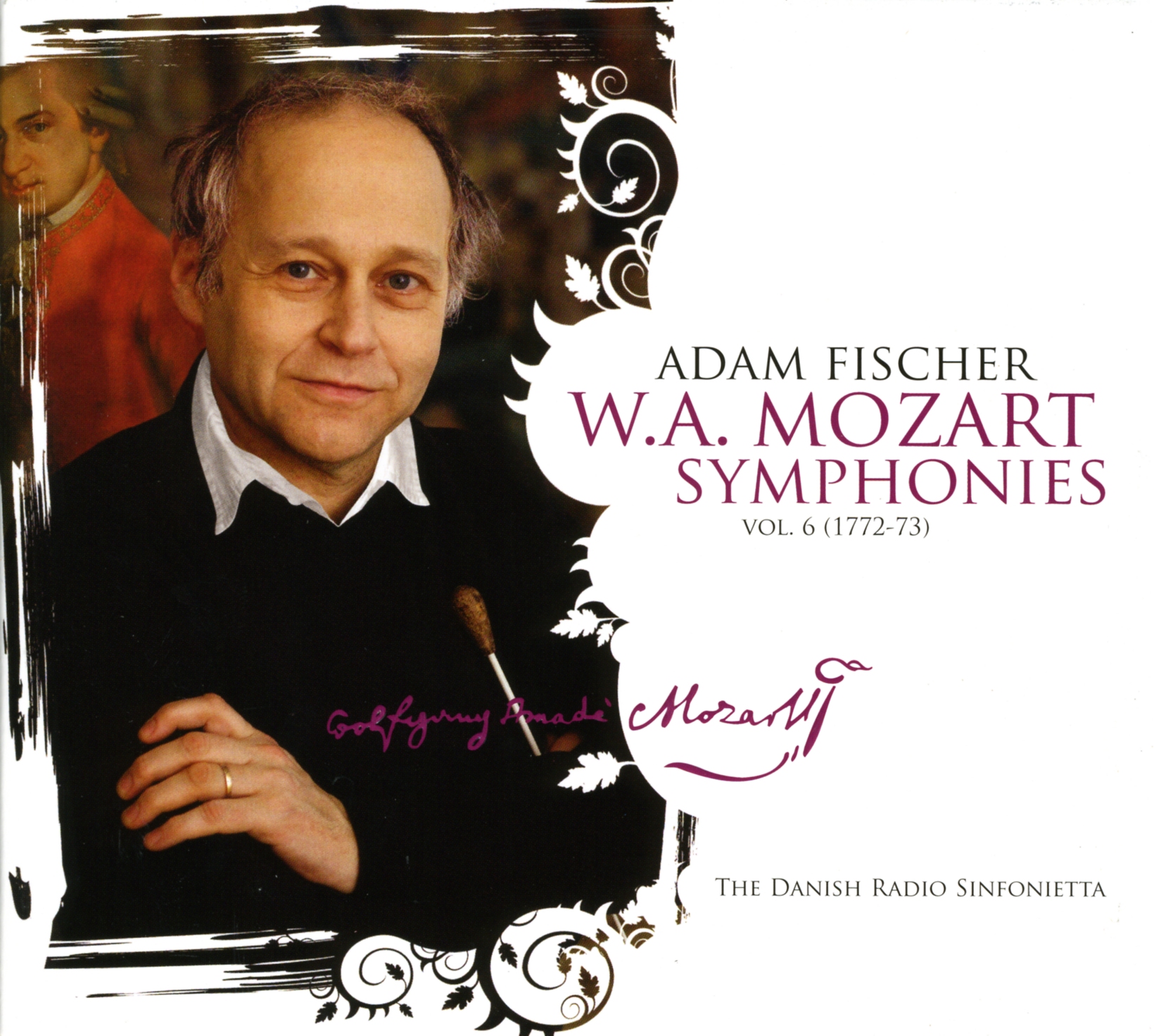
As an aside, I noticed on the front cover that the orchestra is listed as the Danish Radio Sinfonietta. I haven't seen this before, but I am not always the most observant of details such as this, and I only caught the change by chance. I remember hearing the Danish NCO disbanded as a public ensemble to move forward as a privately funded group at some point. Perhaps the renaming is a part of this change for the orchestra? Perhaps a rebranding effort? I assume these are the same players Fischer has been working with either way. Just an observation.

Work Series
Vol. 6 from Mozart Symphonies on Da Capo
Works
Symphony 19 in E-flat Major, K. 132 (17.36)
Symphony 20 in D Major, K. 133 (25.00)
Symphony 21 in A Major, K. 134 (17.10)
Symphony 26 in E-flat Major, K. 161a (7.58)
Performers
Danish National Chamber Orchestra
Ádám Fischer, conductor
Label: Da Capo
Year: 2013
Total Timing: 67.55
Comments
Post a Comment