Mozart: Symphony 12 - 14
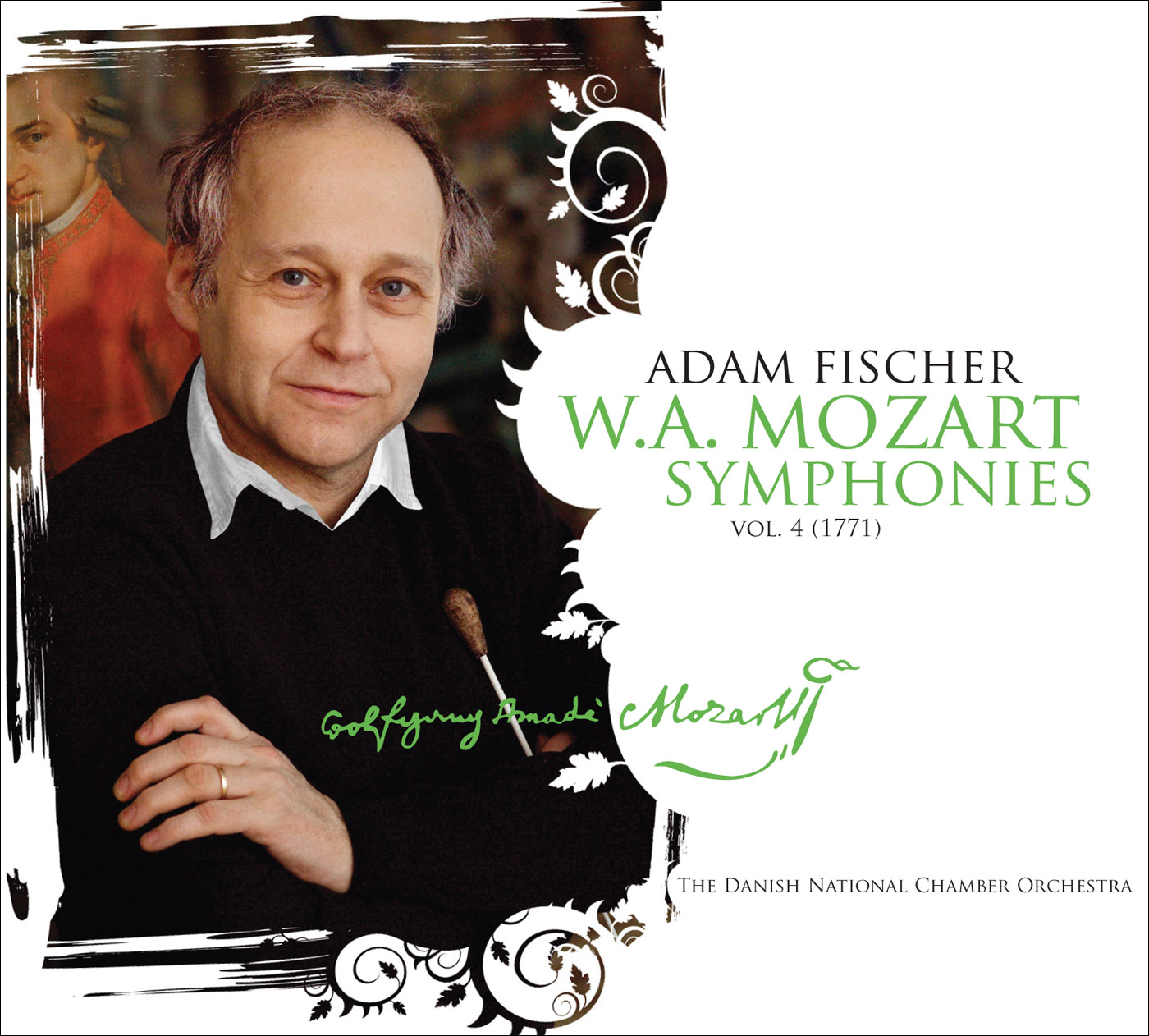
Of course, we begin seeing some longer movements in this volume, particularly in K. 75b and K. 114. Hopefully this portends more fleshed out motivic work in the future, yet the composer is still a wee lad at this point, so there is certainly time for growth from Mozart at this point.
In this quartet of symphonies, a few aspects change compared to the previous Volume 3 works. First, these are all four-movement symphonies. As I said before, it took a long time for Haydn to settle into a four-movement structure, so I expect the same from Mozart, especially with his many visits to Italy. Second, the inner-movement repeats of the Sonata-Allegro form are back in a more consistent pattern amongst these works. None will have dramatically longer development sections yet though, but it is nice to see that element shaping up.
For those looking for my generalized thoughts, skip to the bottom. Otherwise, I will do a movement-by-movement breakdown of each symphony for those who wish to listen along. I provided videos at the very bottom of this post of these same performers in the numbered symphonies to make it easier to follow along with my thoughts.
Symphony no. 12 in G Major, K. 110 (75b)
Movement 1
Key: G Major
Meter: 3/4
Tempo: Allegro; Fischer:
 = 174
= 174Winds: oboe, horn

I say second motivic section, but the contrasting expositional 'B' section is based on the opening melodic material. Truth be told, the start of the development contrasts the opening more than the 'B' section does, although it is this latter part which will come back in force to herald the recapitulation.
Mozart nearly gives the listener a false recapitulation, where the main idea comes back in the home key. But then, the falling four semiquavers circle around and around again antiphonally amongst the 1st and 2nd violins, much more so than occurred in the exposition. Only in the return of the 'B' section material does the music finally drive home.
These aspects show a more secure formal and structural approach to the symphony than I have noticed in the last two volumes of symphonies from Mozart. Hopefully, this is a sign of things to come.
Key: C Major
Meter: Cut time
Tempo: Andante; Fischer: 𝅗𝅥 = 64
Winds: flute, bassoon
Notice how Mozart does away completely with the oboes and horns and replaces them not only with flutes, but also two written-out bassoon parts, neither instrument to return again in this symphony.
The only item which stands out to me harmonically in this movement is a sort of humorous sliding into a cadence at some point. I would call it a Neapolitan, but it has been so long since I have done any music-theory analysis, I fear such a label would be folly on my part. Either way, this harmonic motion stands out amongst a rather genial movement.
Movement 3
Key: G Major & E minor (Trio)
Meter: 3/4
Tempo: Menuetto; Fischer:
= 156Winds: oboe, horn
Speaking of genial, usually the Minuet comes out swinging with heavy stamps and utterances. This one has a gentle singing quality instead. This could be due to the fact many of the Minuets Mozart wrote were composed separately from the symphony proper, only to be added later.
The E-minor Trio is made all the better through a little vibrato here. The Danish National Chamber Orchestra string soloists provide wonderful phrasings and inflections, making for a movement with a little more grace than normal.
Movement 4
Key: G Major & G minor
Meter: 2/4
Tempo: Allegro; Fischer:
= 218Winds: oboe, horn
Despite Ádám Fischer taking off like a shot in this final movement, he retains a rustic quality by adding grace notes at the top of the arpeggio in the main melody, reminding me over and over again of chickens.
I think this is the first time Mozart adds a key change in the middle of a movement, and if I am remembering incorrectly, at least the first time in a final movement. Haydn would do this too; when covering Haydn's symphonies, at first I would notate mid-movement key changes in my typings, but their occurrence became so regular, I stopped pointing it out. Perhaps that will happen with Mozart after a while? Here, Mozart moves to the parallel minor for a brief stint, eventually dashing back into G Major happily.
All in all, I was happy with this symphony. K. 75b has a little more meat stuck to its bones, even if the Minuet movement is still a rather trivial part of the symphony and the second movement hasn't found the heart of the work yet.

Movement 1
Key: C Major
Meter: Common time
Tempo: Allegro; Fischer:
= 166Winds: oboe, horn, trumpet, timpani
As this isn't a numbered symphony, there are no inner repeats, creating its form as it goes along. At only a minute and forty seconds, this must be the shortest opening movement I have heard thus far.
Movement 2
Key: C minor
Meter: 6/8
Tempo: Andante; Fischer:
. = 44Winds: oboe, horn
I like how Mozart emphasizes the offbeats in the main melody here, one which develops at it goes on too. The first utterances of the melody emphasize beats 3 and 6 in the 6/8 meter. Later the emphasis changes to the second dotted crotchet as receiving the stress, and eventually the strong beat pops up where it belongs on beat 1. This provides much interest for the listener, as the melodic content is not content to remain the same, but instead, evolves over the course of its path.
Mozart allows both oboes and horns to stick around in this movement. While there is none here, I could imagine the orchestral texture benefiting from harpsichord in my mind, something I don't often say. Something about the C-minor key and the rocking 6/8 meter leads my imagination this way.
Movement 3
Key: C Major & F Major (Trio)
Meter: 3/4
Tempo: Menuetto; Fischer:
= 152Winds: oboe, horn, trumpet, timpani
With the addition of trumpets and timpani, the larger Minuet sound returns. Only some little half-step decorations add some humor to the music.
I love the warm tone the solo strings apply to the Trio, here set in a lovely F Major, and also joined by the oboes and horns in the tutti portions. Otherwise, this is another brief Minuet and Trio movement.
Movement 4
Key: C Major
Meter: 2/4
Tempo: Molto Allegro; Fischer:
= 174Winds: oboe, horn, trumpet, timpani
The rising 1 - 3 - 5 melody could be a direct copy of the first movement's opening, although Mozart offsets this last movement's motive by an octave upon its restatement. Is this Mozart looking at cyclical motivic ideas or am I reading to much into the similarities?
I like that Ádám Fischer allows the winds, particularly the brass, to punch out in the ensemble texture here, for it adds colored excitement to a movement which could become overly repetitive. It is a subtle punch too, not a blatant one to disrupt the attention of the listener.
Symphony 13 in F Major, K. 112
Movement 1
Key: F Major
Meter: 3/4
Tempo: Allegro; Fischer:
= 156Winds: oboe, horn
Where Mozart usually prefers a rising motive, occasionally he will use a downward moving one, as here. This change in melodic motion at least mixes up his use of simple arpeggios as melodies.I should also note that the young composer isn't afraid to use triple meter to open his symphonies, as he has done it already a few times. I find 3/4 an odd choice, but again, it varies his works nicely.
Fischer makes the 'B' section motivic melody sound a little strange here. Either he instructs the players to execute the idea extremely short or staccato, or they play closer to the bridge, sul ponticello. Whatever the culprit is, at first listening, I thought there was some col legno going on, which would be really weird. Again, I think in these early symphonies, these stylistic choices do allow for some variety for the listener, so generally I appreciate them. If the choices draw themselves to the listener too much, though, it may be too much. That could be here, but I haven't yet decided.
The development jumps right into its relative A minor, making for an abrupt change, but as with the others, this portion of the Sonata-Allegro form is rather brief.
Movement 2
Key: B-flat Major
Meter: 2/4
Tempo: Andante; Fischer:
= 64Winds: none
At the start of the second movement, I was afraid of another tick-tock accompaniment, but Mozart varies the accompaniment as the music goes along. At first, the aforementioned tick-tock pattern merrily bounces underneath. That is followed by an echo, imitative texture, where finally the accompaniment becomes a smoother syncopated underlay, one which eventually has the strings move with the violin melody.
There are no winds in this movement either, which allows me hear the strings a little clearer. The 2nd violins and violas play similarly to the idea I mentioned in the first movement, where the strings may have simply played extremely short and light as they do here in the tick-tock background.
Otherwise, this is a rather lightweight movement with no lack of charm.
Movement 3
Key: F Major & C Major (Trio)
Meter: 3/4
Tempo: Menuetto; Fischer:
= 146Winds: oboe, horn
Here is another unusually graceful sounding Minuet movement, one which seems to enjoy its dance-like qualities more than making a loud statement. Even though the Trio changes to strings only, the music gladly continues the same style of the preceding Minuet, but here with solo strings.
Movement 4
Key: F Major
Meter: 3/8
Tempo: Molto allegro; Fischer:
. = 102Winds: oboe, horn
Boy, does Fischer allow the horns to sound out here! Too much? It does draw the listener's attention unduly, but would the music be lesser without their added thrust. Hard to tell at this point.
Mozart writes a sizeable D-minor middle section into this final movement, where Fischer bandies between solo strings and tutti ensemble effectively. When the open section returns, there are those horns again. It certainly recalls the hunting quality attached to this 3/8 compound meter.
Symphony 14 in A Major, K. 114
Movement 1
Key: A Major
Meter: Cut time
Tempo: Allegro moderato; Fischer:
= 168Winds: flute, horn
The first movement is only one of a few so far which have opened quietly. In this case, the main idea is presented by only the two violin sections, and upon its restatement is handed over to the entire ensemble. The effectiveness of this quality is compounded by the gentle 'two' feel in the music here as well, methinks.
Also, Mozart breaks the normal partnership of oboes and horns in the wind section, and substitutes in flutes playing with the horns instead. Notable too since the composer gives the flutes a fair number of important moments in this rather lengthy opening movement, one nearly timing to seven minutes, the longest as of yet.
The 'B' expositional section is given to strings alone and is set in an imitative texture, offsetting the main idea nicely. I actually find this 'B' theme quite beautiful in its initial statement, although it doesn't take long for Mozart to chug along again vigorously.
At the opening of the development, Mozart really allows the sections of the orchestra to have their own moments in the limelight before continuing on again as normal. I like the deference given to the various members of an ensemble, showing the composer caring for the contributions across the group. Having the two sections repeated adds a little substance to the work as well.
Movement 2
Key: D Major
Meter: 3/4
Tempo: Andante; Fischer:
= 88Winds: oboe
Fischer intuitively takes the second movement at about half the speed (at the crotchet) of the prior movement. This at least shows the Hungarian conductor is conscious of tempo relationships.
Here is a rather lovely slow movement in a rare triple-time setting, at least at this second position in the symphony. In a reversal, the flutes are swapped out for oboes here. Is there a method to Mozart's orchestration choices across movements? It seems so.
Movement 3
Key: A Major & A minor (Trio)
Meter: 3/4
Tempo: Menuetto; Fischer:
= 146Winds: flute, horn
Here we are back to a foot-stamping Minuet, although Fischer and crew take a gentler approach than normal. It is the unexpected appearance of a C-natural in the fourth measure (which leads to a secondary dominant), a somewhat distant note coming from the opening A Major, thus providing the surprise.
Mozart chooses the relative minor for the Trio, again given over to solo strings. Here, they play with a more spare tone, although the tone warms up when the second section transitions back to C Major. The rhythmic change from subdivided triplets to duples is notable as well.
Movement 4
Key: A Major
Meter: 2/4
Tempo: Molto Allegro; Fischer:
= 188Winds: flute, horn
One almost misses the more pointed sound of oboes over the smooth tone of flutes in this final movement. Oboes provide a little more rhythmic stability in the wind section, as well as a more insistent tone for a symphonic send off. Luckily, the little jabs of horn are still present.
And if one has forgotten, the Danish National Chamber Orchestra add such joy and impetus to these early symphonies.
Final Thoughts
Well, I was certainly more delighted in this Volume 4 compared to the last two. Here, we are back to the development of the Austrian symphonic form instead of the Italiante qualities I heard in some of the preceding works. Although I suppose, with Mozart's many European travels as a youth, the composer's music could be considered an amalgam of many influences.
Equally, I was delighted by these performances. On the other hand, there were one or two choices from Ádám Fischer which turned my attention to the performers over the music. I think at this point I don't mind intervention from the conductor, for the early works from Mozart may need a little extra dash of color, but I could see such choices becoming divisive.
No qualms, however, regarding the playing or sonics on this recording. Superlative!

Work Series
Vol. 4 from Symphonies on Da Capo
Works
Symphony 12 in G Major, K. 75b (14.21)
Symphony in C Major, K. 111b (11.27)
Symphony 13 in F Major, K. 112 (10.39)
Symphony 14 in A Major, K. 114 (17.48)
Performers
Danish National Chamber Orchestra
Ádám Fischer, conductor
Label: Da Capo
Year: 2013
Total Timing: 54.12
Comments
Post a Comment