Rautavaara: String Concertos
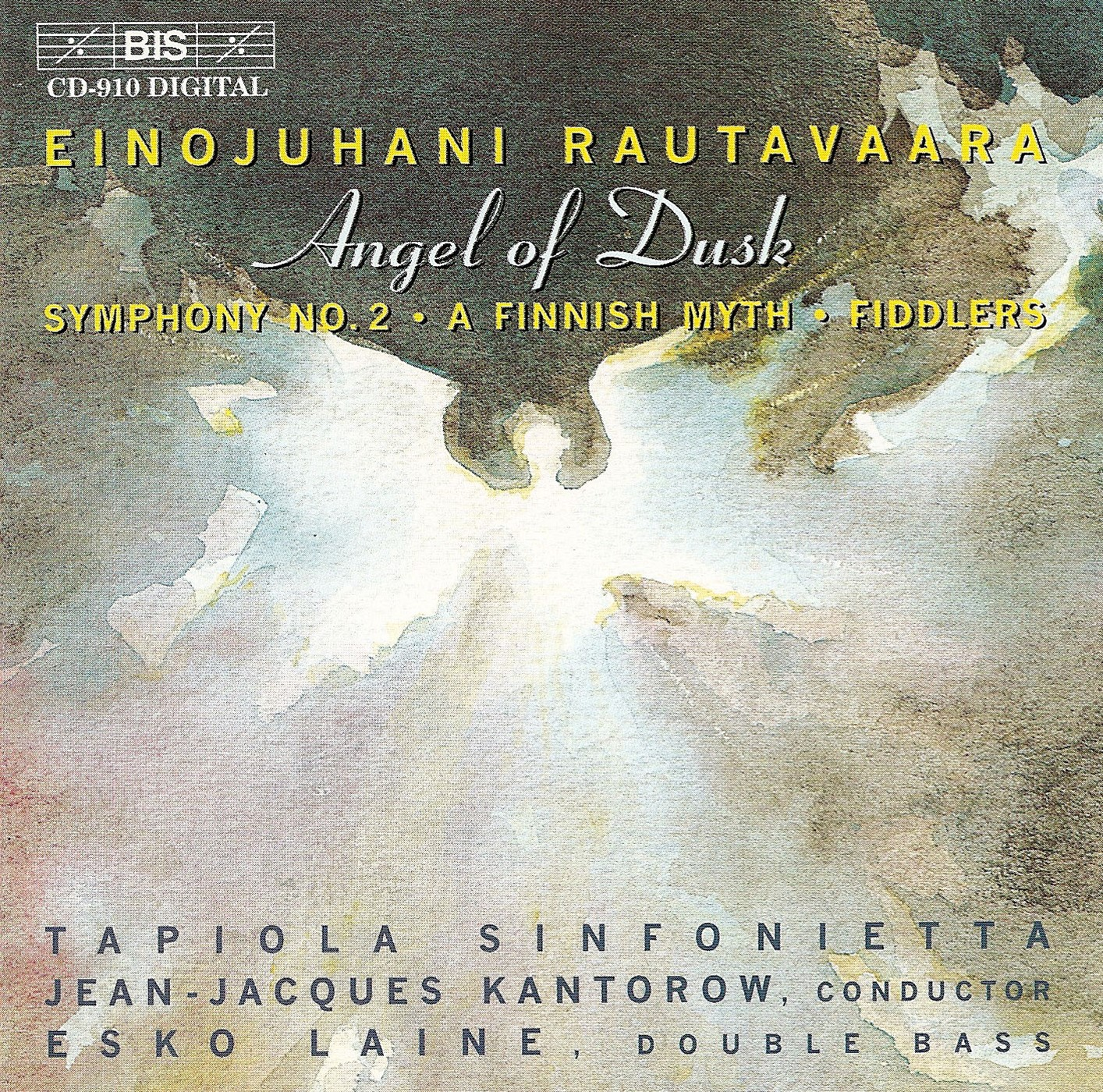
Let me begin with Angel of Dusk, a Double Bass concerto from Finnish composer Einojuhani Rautavaara. Akin to Rautavaara's other 'angel' themed works, the orchestra features heavily divided strings and a fair number of pitched percussion instruments, mostly of the bell and bar variety. A special nod must be made to the flexatone, which also makes an appearance.
The big difference from the composer's symphonies is the focus on the solo double bass. Rautavaara goes to extremes to feature the wide range of what the double bass is capable of, including exploring many extra string techniques in addition to showcasing the sheer range of the instrument. The composer does a good job of creating an alien landscape in this music as well, relying on some avant-garde compositional techniques as well, including players blowing through their wind instruments to create an unusual atmosphere.
The double bass is less melodic than the other instruments I am covering in this works series entry below, although the instrument is given plenty of time to itself away from the orchestra. When set in its lowest range, Rautavaara makes the double bass more rhythmical or percussive, whereas in its highest reaches, the composer utilizes the instrument's lyrical abilities, as well as plenty of harmonics.
Of the three concertos I am covering here, Angel of Dusk is the strangest sounding of the triad. I don't know if I understand everything that is going on in the work, but Rautavaara's harmonies and sounds never put me off of the music. Listening to the Violin and Cello Concerto before this one, eases the listener into Rautavaara's soundworld, a must for those unfamiliar with this literature.
I am not familiar with the soloist Esko Laine, but boy does the Double Bass Concerto sound difficult. The instrument rarely gets a concerto outing, and in this case, it doesn't sound as if Rautavaara makes it easy going for the soloist. Kudos to Laine!

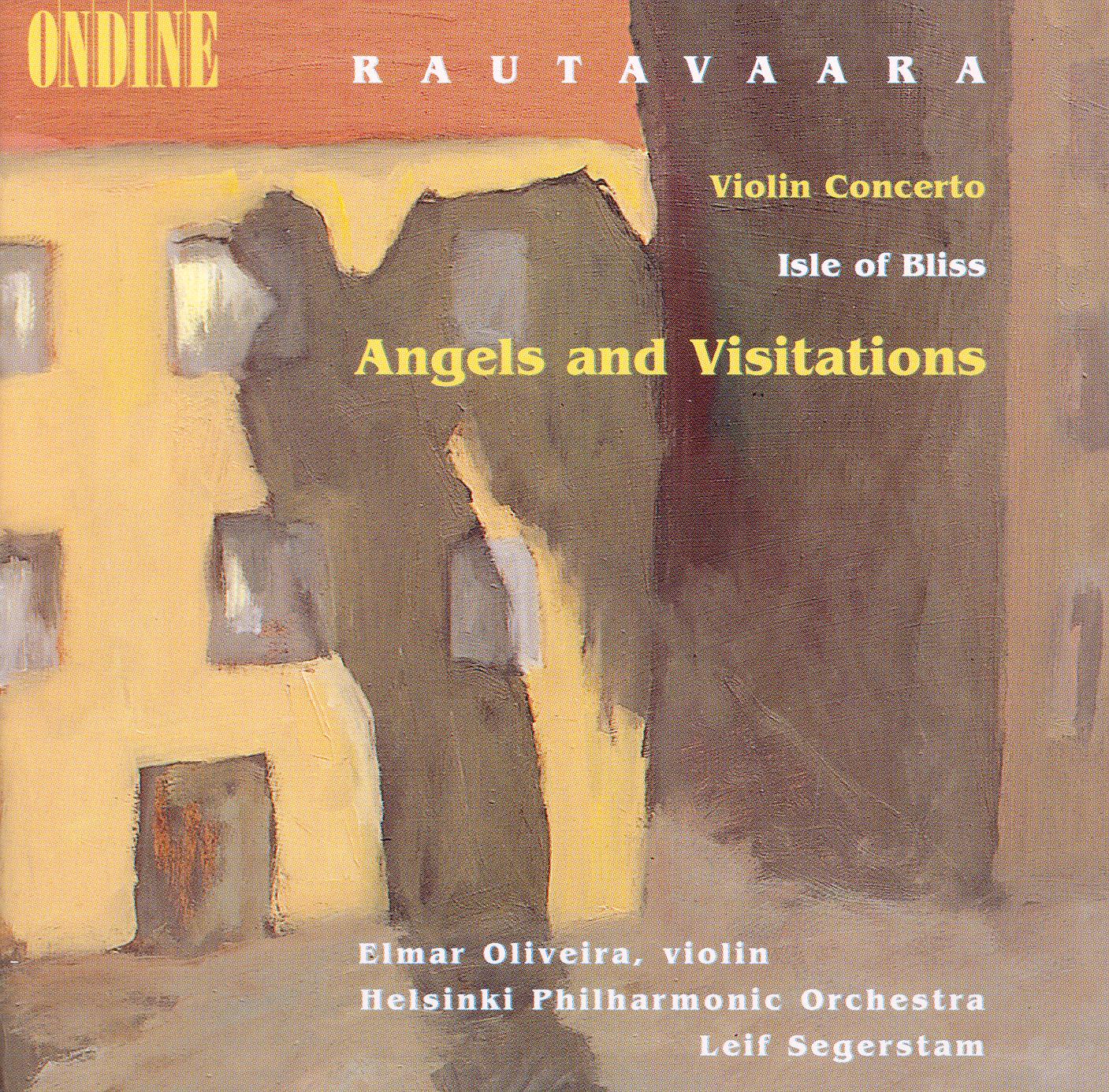
Even if we could hardly call them straight forward, it is so nice to hear melodic lines from Rautavaara. The composer loves shifting chords in the ensemble, ones which also feature here, easily heard right at the beginning; but rarely is there a dedicated melody rising out of his orchestral harmonies, at least as they do here in the Violin Concerto.
Rautavaara's harmonies are completely tonal, yet somehow he makes the music sound modern, advanced, and complex nevertheless, all the while never driving away the listener with the sound of the music. I found myself unexpectedly taken with this Violin Concerto, where I could see it having a life of popularity in the concert hall.
I am not familiar with him, but I love the playing from US violinist Elmar Oliveira. Somehow, he manages to portray his solo strongly, but without an acidic edge to his tone, often the case in modern works. The Violin Concerto features less adventurous string techniques compared to Angel of Dusk, preferring instead to let the violin and orchestra contrast each other in dramatic ways. So too, the avant-garde aspects are kept to a minimum, yet Rautavaara is able to create really imaginative atmospheric colors throughout the work nonetheless, best when violin and orchestra combine together.
The Violin Concerto is only set in two movements, which really seems to work for Rautavaara. Since the composer's music moves at its own pace, the bipartite structure suits this concerto rather nicely.
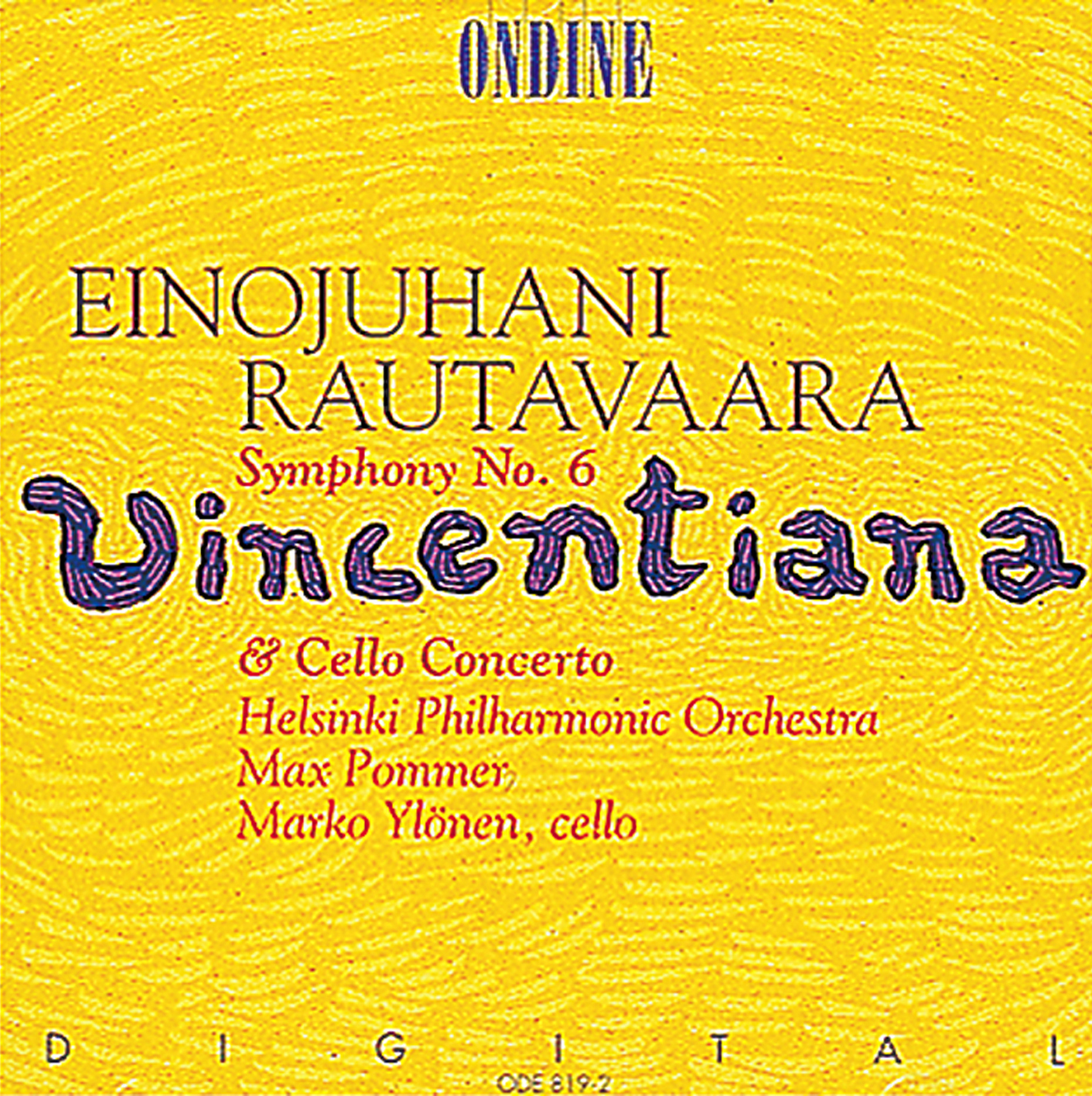
If I unexpectedly enjoyed the Violin Concerto, the same holds true in Rautavaara's Cello Concerto. I sense more grandiose music making in the Cello Concerto compared to its violin compatriot, with the composer writing for solo cello right at the outset, with a oodles of double stopping required of the soloist.
The presence of brass give the opening a muscular energy quite different from the other two concertos in this works series edition, although the harp and winds aid in Rautavaara's atmospheric tendencies as well. Such descriptions could continue into the second movement, but the cello is allowed to flower in a lyrical manner not as easily found in the first movement. Of course, the crazy harmonics, I assume paired with a sul ponticello or some such technique, make the music sound otherworldly, used in a rather effective way.
The manner in which Rautavaara brings back thematic material is essential to the success of the Cello Concerto, I think. There are distinct motives which return, both rhythmic and harmonic, and the fact that I can identify it in this music makes the conversation from composer to listener all the more sublime for this set of ears. Also, this work is briefer than the rest, an aspect I think better suits the music of Rautavaara.
I wasn't sure what to expect from Rautavaara's concertos coming off of his symphonies and purely orchestral works. I daresay, as of this first volume at least, his writing for solo instruments and orchestra is more convincing than what I have heard previously. Something about the presence of a soloist allows the orchestral aspect some added depth missing from the purely orchestral music. On the other hand, maybe I am simply getting used to Rautavaara's musical idiom.
It holds no surprises for this listener that both the Violin Concerto and Cello Concerto have multiple recordings to their name. I am not doing a comparative listening and am unfamiliar with competing recordings, but this one with Leif Segerstam and Max Pommer leading the Helsinki Philharmonic Orchestra sound perfectly idiomatic to Rautavaara's sensibilities. Having the Tapiola Sinfonietta led by Jean-Jacques Kantorow from a BIS recording ported over to an Ondine concerto set is a boon, for sure.
Vol. 1 from Rautavaara Concertos on Ondine
Works
Violin Concerto (24.11)
Cello Concerto (17.33)
Double Bass Concerto 'Angel of Dusk' (26.19)
Soloist
Elmar Oliveira, violin
Marko Ylönen, cello
Esko Laine, double bass
Ensembles
Helsinki Philharmonic Orchestra
Max Pommer, conductor (CC)
Tapiola Sinfonietta
Jean-Jacques Kantorow, conductor
Label: Ondine
Year: 1994 (CC), 1997 (VC), 1998 (DB); 2017
Total Timing: 68.21
Comments
Post a Comment