Beethoven: Symphonies
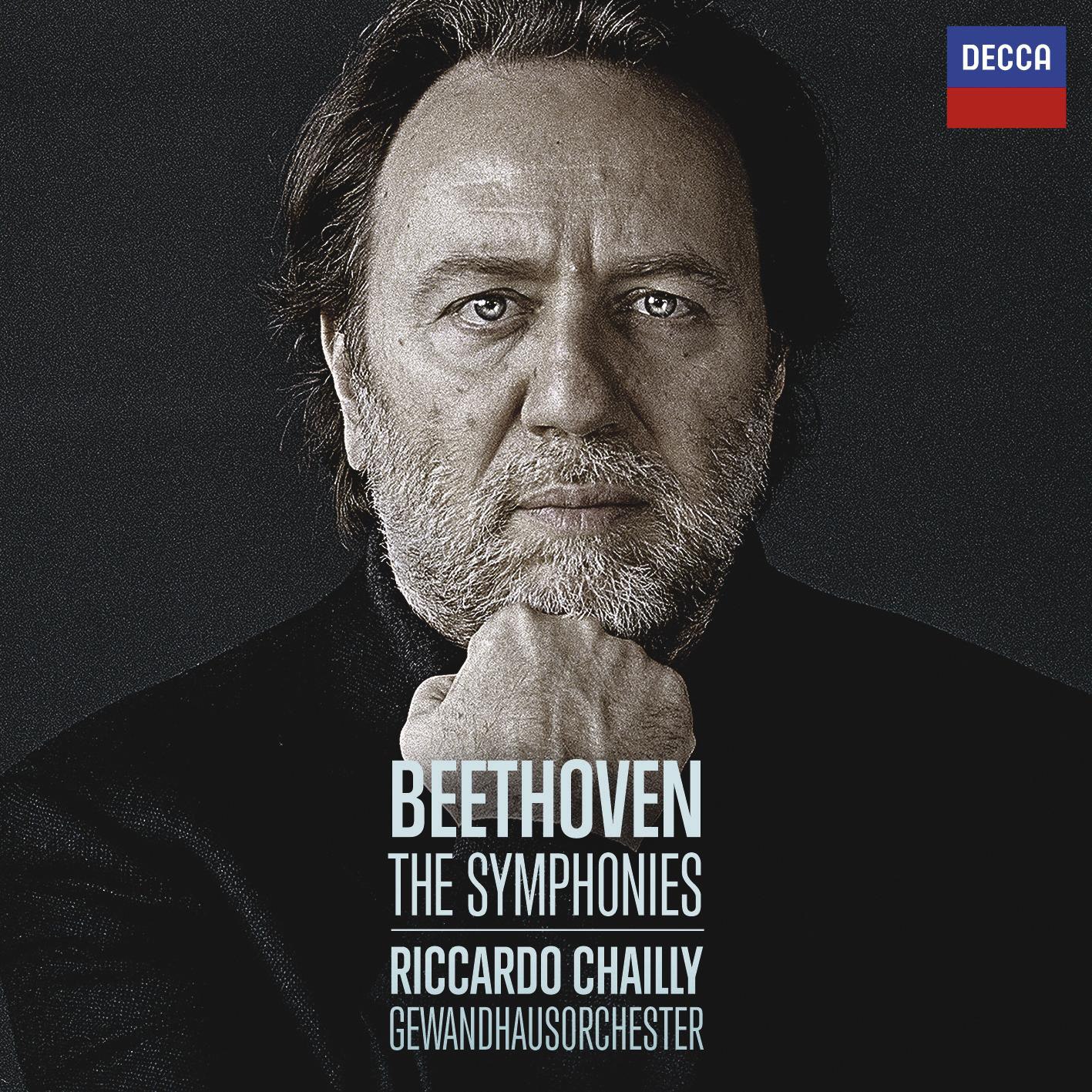
In what was water-cooler talk around 2011, Italian conductor Riccardo Chailly sold the Gewandhaus Orchestra musicians, one of the world's oldest and most revered orchestral ensembles, on his idea of combining the thick, lush sound of a modern orchestra with the performance practice of Classical Era music in the symphonies of Beethoven.
In other words, take the surging tempos and minimized vibrato of the HIP movement and marry it with modern instruments instead of period ones. At one point in time, Chailly referred to this as his 'Third Way', a style he gave to Bach and Brahms while at the head of the Gewandhaus.
Truth be told, for the most part, it works for me. I love the tone of the Gewandhaus here and elsewhere from this period. They have a depth to their sound which is full and luscious, an aspect I don't regret in the music of Beethoven. Others might abjure to such a statement in music of the Classical Era, but with the modern trend of sapping the body of an instrumental ensemble in numbers, tone, and style, this type of performing is becoming rarer on record.
In general, I find Chailly cleaves closely to Beethoven's metronome markings and dynamic gradations most of all, without inserting much of a personal interpretation. From time to time, I wish Chailly would have adopted interpretive phrasings, for a hands-off approach can sometimes only get you so far in communicating Beethoven's music. That said, Chailly doesn't play to the metronome as gospel, allowing the music to blossom in his own way, so there is a give and take on this set.
For me, the easiest successes of this set are notably Symphony nos. 1 & 2, plus Symphony no. 7. I would probably put Symphony nos. 3, 4, and 8 as equally enjoyable, with small hits and misses within them. Symphony nos. 5 & 9 do the job well enough, although I don't enjoy Symphony no. 6 here much at all.
As a bonus, eight overtures are included amongst the symphonies. Best yet, Decca has programmed the overtures chronologically so as to come close to the opus numbers of the symphonies they are paired with, a nice bit of thoughtfulness not often seen. With the exception of a complete set of Leonore Overtures, all the major ones are here.
I really enjoy the Decca sound here. They don't shy away from the core Gewandhaus sound, all to the good of the listener. Chailly is sprightly in tempo throughout, but retains the sheer weight of the Gewandhaus string sound, while the winds are wonderfully balanced. The liner notes not only go into a background of the symphonies and its composer, but also why Chailly makes the choices he does.
Really this is a fine product from start to finish, not to mention 5 very full discs. Of course, if a modern-instrument orchestra or a modern-instrument orchestra using HIP techniques and tempos in Beethoven sounds off-putting, there will be no convincing. On the other hand, those who believe there are many ways to perform Beethoven might find much to enjoy here. I suppose, the latter is me!

Find my thoughts on the individual volumes from this set on the blog HERE!
Performers
Gewandhaus Orchestra
Riccardo Chailly, conductor
Label: Decca
Year: 2011
Total Timing: 6.12.21
No, not every Beethoven Symphony is a success in the hands of Riccardo Chailly leading the Gewandhaus Orchestra.
Yet, what a joy to hear these works played by this German orchestra, all the while bucking tradition!

For those who own Chailly's Beethoven Symphonies set, each CD sleeve features a picture of Max Klinger's sculpture entitled Beethoven from 1902, housed in the Leipzig Museum of Fine Art. It is an unusual piece of modern sculpture, featuring a nude, be-sandled, and not all together happy, Beethoven sitting on a throne with children's heads lined across the top of the wing-back chair. The seat is raised up on a sizeable stone plinth with an eagle perched on a jutting outcrop, staring intently at Beethoven.
Humorously, on the cardboard CD sleeves, Chailly is pictured standing, most seriously I might add, around various sides of the sculpture, although one really realizes the sheer size of the artwork with Chailly posing around it. I thought I would include a picture of it here.
.jpg/1280px-Beethovenskulptur%2C_1902_(03).jpg "Beethoven (1902) by Max Klinger")
Comments
Post a Comment