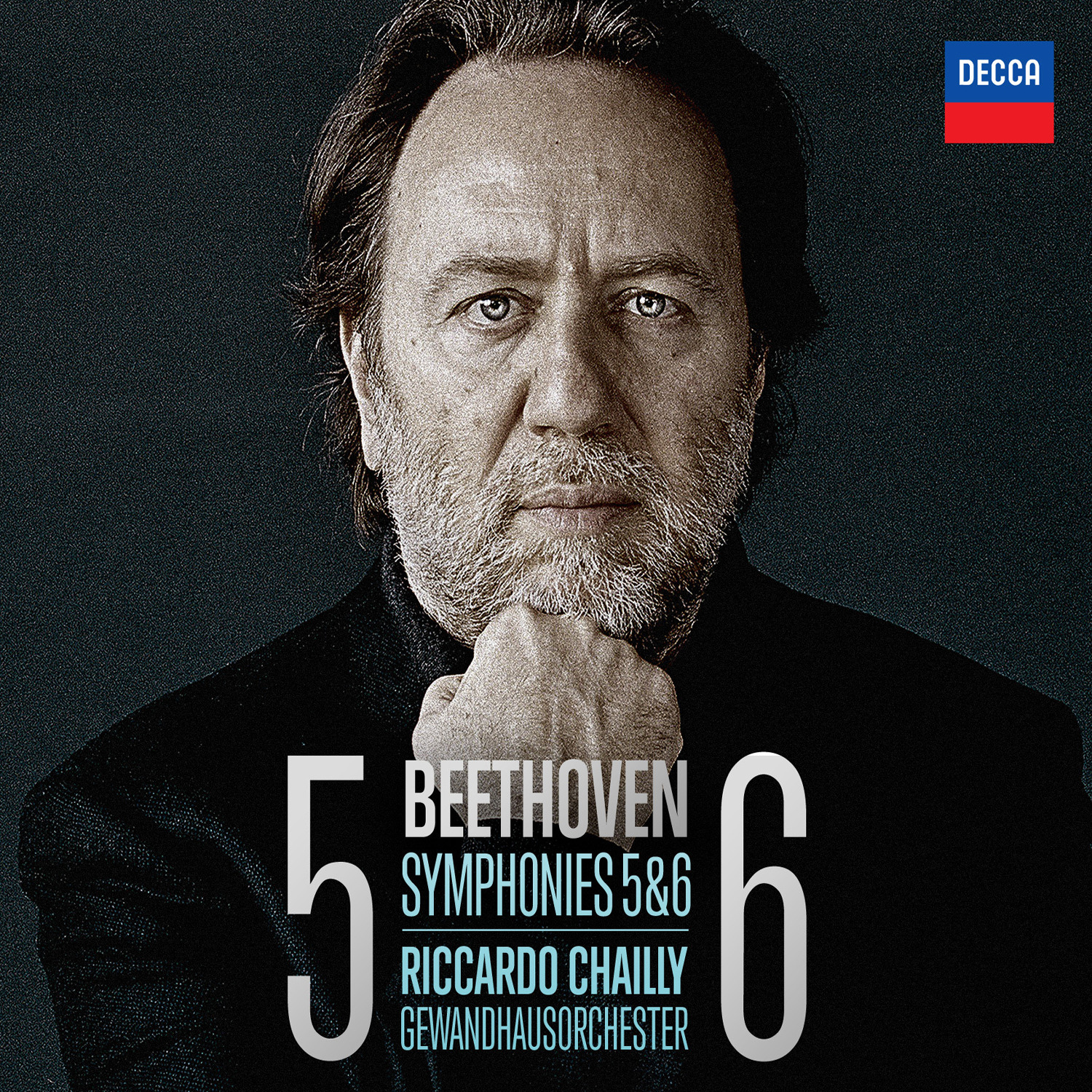
Beethoven: Symphony 5 & 6
Preface
If I had a concern covering the famous Eroica Symphony from Beethoven, Symphony no. 5 is probably more daunting. Yet, comparatively, the Fifth Symphony bears a tighter, more efficient structure than the Third Symphony. Beethoven's overall concept is easier heard by the layman too, where Beethoven wastes not a single moment of music.
The Pastoral Symphony is one which has a harder path of success for this listener. All of the musical elements across its lengthy five movements, sections of the symphony which sometimes pour into each other without pause, need to come together coherently, or else the entire piece falls apart. The addition of programmatic content attached to Symphony no. 6 only takes the listener so far, yet the ensemble and conductor cannot forget its ability to showcase musical visualizations as well.
Those looking for my generalized thoughts alone should skip to the bottom to read my final thoughts. Otherwise, I will do a movement-by-movement breakdown of each symphony for those who wish to listen along. I will provide a video of these same performers I am listening to in order to make it easier to follow along with my thoughts. That YouTube playlist can be found at the very bottom of this blog post.
Movement 1
Key: C minor
Meter: 2/4
Tempo: Allegro con brio
BPM Chailly: 𝅗𝅥 = 108

In just the first movement, though, the four-note motive is found everywhere, whether upfront for the listener or in the background, whether rhythmic or pitched. I am sure someone has counted every time the motive appears in the movement, and the number must be daunting, so prevalent the four notes finds their way into every corner of the music. The primary motive is incessant in a way I haven't heard from other composers, nor Beethoven, before this.
As to the first two statements of the first movement, Chailly is of the school where the motive is played metrically and connected. No grand pauses exist between the two utterances, and there is no prolonging of the fermatas more than necessary. To my mind, this approach seems a little hasty, but once the music gets going, everything is on the up and up.
The horn heralds the start of the second motivic area (bassoon later), which is more lyrical in attitude. Even here, the bass line continues the four-note motive, adding urgency as the music passes.
The development unfurls as expected, with plenty of the four-note motive, although Beethoven plays with its ending a bit as well. I really enjoy the area of the development which develops into minims, a section where it seems as if we are patiently waiting for something to occur, an unexpected way for Beethoven to tease the listener before the angry outbursts of the recapitulation.
At Chailly's tempo, the opening movement seems unusually short. This is why I use the phrases efficient structure and tight construction, for compared to the previous symphonies, Beethoven wastes no time getting down to business. Even Beethoven's beloved Coda sounds relatively blunt and to the point.
I actually don't mind the forward-moving tempo of this first movement. As played here, this is very reminiscent of John Eliot Gardiner in the 90s. Of course, if you didn't like it there, you probably won't like it here, yet I wouldn't categorize this performance as inflexible. Plus, if Chailly has a foot up in comparison to Gardiner, it is the solid bass and thick ensemble sound of the Gewandhaus.
Movement 2
Key: A-flat Major
Meter: 3/8
Tempo: Andante con moto
BPM Chailly: ♪ = 90
Movement 2 is set in a Theme and Variations form, where Beethoven composes perhaps his very friendliest melody of all time. Knowing my preferences, it should come as no surprise I particularly enjoy that the theme's primary statement is put in the lower-tessitura violas and cellos. The wind-section response is almost rhapsodical in answer, certainly forlorn and slightly droopy.
The second theme is a brash fanfare, one which almost comes as a surprise considering the affability of the opening. Its C-Major key is quite unexpected as well, at least in considering the A-flat Major key of the opening theme. Suffice to say, Beethoven makes it very easy on the listener to distinguish what musical idea he is varying, one of the very highest hallmarks for a successful theme and variations. There is nothing more frustrating when you lose the theme in such a movement.
Before the final section, Beethoven marks a più moto which moves into a short-lived country dance. See if you can catch it! The best thing about this Theme and Variations from Beethoven is, with his wealth of musical ideas, the variations never feel rote or repetitive, as can often happen in such a form. Each progression of the themes feel fresh and different, not just a laundry list of motivic applications.
Again, Chailly is not playing by the metronome here. Instead, he is fully willing to pull back the more contemplative moments, while pushing forward with the more brash ones. I love the Gewandhaus strings here too, providing a lush cushion of loveliness throughout this movement.
Movement 3
Key: C minor & C Major
Meter: 3/4
Tempo: Allegro
BPM Chailly: 𝅗𝅥. = 88 - 104
Beethoven unexpectedly lays both of the Scherzo-section melodic duties upon the Double Bass. Again, I am reminded of Gardiner in Chailly's tempo choice in movement 3. I only bring this up because at a certain speed, the articulation of the double bass can become a muddle. I can hear each pitch on headphones, but on speakers, each bass note is not as demarcated for the listener.
After the first theme, essentially a Mannheim Rocket of sorts from the Double Basses, the horns bellow out. Here is a return of the first movement's four-note motive, composed here without a pitch change as in the opening, instead all played on the same note. Unfortunately, the Gewandhaus horns do not play this motive as if St. Michael is announcing the coming of The Last Judgement. This one is Terra based.
You will also find the four-note rhythm of short-short-short-long hidden in the background instruments once more, one which overlaps with the third-movement long-short, long-short rhythm.
The second theme, or Trio, gets sawed away at by the Double Basses and is set in counterpoint as the other instruments enter in on the same material, but overlapping. The intricacies really become complicated as Beethoven throws in some off-beat syncopations and hemiolas to the motivic line.
Chailly never does repeat the very beginning material again as come conductors do. Instead, the return of the Scherzo features a pizzicato version of the opening Scherzo with little wind twitterings on the four-note motive. The dainty variation leads into a segue of sorts, bridging the Scherzo to the fourth movement without pause. He does this a with a 1-2-3-4 rhythmic motive in the timpani, raising the expectations of the listener through a prolonged pedal point.
In many ways, the third movement is not just a reminder of the opening, but also existing as a transitory state leading to the finale. The movement both exists on its own, yet serves a purpose for the whole work. In this way, the third movement might be the most essential of all.
Movement 4
Key: C Major
Meter: Common Time, 3/4, & Cut time
Tempo: Allegro & Presto
BPM Chailly: 𝅗𝅥 = 88 & 𝅗𝅥. = 92 & 𝅗𝅥 = 224
It is not unusual for a minor-keyed symphony to end in the parallel major key, in this case C major. Haydn did it plenty of times, much to my chagrin. Here, Beethoven imbues this finale with plenty of purpose, as if the listener has arrived after an arduous musical journey.
Surprisingly, after taking cues from Gardiner, Chailly chooses a rather moderate pace for the fourth movement. It sounds a little poky considering the pace of the opening movement and the lead-in from the third movement.
Beethoven uses a rising fanfare motive for this last movement, one which is gilded in pure revelry. This theme is underlined with some dotted rhythms, adding a militaristic attitude as well. In addition, contrabassoon, trombones, and piccolo appear, and in Chailly's performance for some reason, the piccolo sounds unusually prominent.
The second and third themes are equally ecstatic, although neither are played tutti as the first motive. Maybe it is the prominence of the horns, but I have a special place in my heart for the second theme. Something about the winds on melody while the double basses rise and fall underneath yanks on my musical imagination. Plus, the transitional material following sounds so cinematic. The third theme is identifiable by its triplets, bringing to mind that four-note motive, but in a completely different feeling. There is even a droopy fourth section, reminding me of the last time I used that adjective in the second movement.
The development is just as epic as one might expect, overlapping themes left and right, particularly relishing in the fast triplets over the slower-moving opening fanfare motive. Unexpectedly, Beethoven nearly stops the development in order to reprise the third movement all of a sudden, using the timpani and pizzicato ideas of the Scherzo reprise conjoined with musical snatches of ideas given to the winds. It is this interruption which leads back to the recapitulation.
While the recapitulation is pretty true to its initial expositional statements, with just a few new twists and turns added in, Beethoven's Coda is a behemoth, and really, this entire last movement seems gargantuan compared to everything which came before. It is as if the tight construction is pent up compositional energy, and once in the final movement, Beethoven is free to compose as he wishes. A few pedal points, harmonic elongations, and deceptive cadences still give the listener a few surprises, even at the end.
Too much? My apologies if my descriptions are simply too long and thick for proper reading. While I try to point out a few important ideas which catch my attention, there simply is so much packed into this symphony, it is hard for me to hold back. Best wishes on listening!
As far as entire symphonies from Beethoven, this one may be my very favorite, at least as a whole.

Symphony 6 in F Major 'Pastoral', op. 68
Movement 1
Key: F Major
Meter: 2/4
Tempo: Allegro ma non troppo
BPM Chailly:
 = 124 - 132Dear reader, I do not enjoy a fast tempo in the first movement of the Pastoral Symphony. I prefer to bask in the beauty of nature's bounty rather than view it from a window seat within a Greyhound bus bound for Albuquerque. Chailly's performance, my friends, is simply too frenetic for my enjoyment.
One element this recording has going for it is the Gewandhaus Orchestra, who provides a thick, deep bass. Luckily, they are not asked to sap this aspect from the music.
What Chailly and the Gewandhaus are unwilling to hide in this music, is the sheer joy on hand. All of the themes add to the pervasive nature of the abounding joy regarding the countryside. After too much talk in Symphony no. 5, I will leave my thoughts here, for this is a wonderful movement which speaks directly to my soul.
Movement 2
Key: B-flat Major
Meter: 12/8
Tempo: Andante molto mosso
BPM Chailly:
. = 50Some feel Chailly too fast in this movement as well. I, on the other hand, am fine with it here, as I generally believe this movement to be rather lacking in the melody department and excelling in the atmosphere area. A bunch of babbling brooks, bird calls, distant horns, flora and fauna, the whole gamut of nature. Although, if flora doesn't make noise, surely the light zephyrs create eddies surrounding them.
All of these ideas are depicted musically, but to my mind, hardly melodically. Towards the end of the movement, Beethoven pauses for a fowl cadenza, letting the birds twitter unshackled from the confines of musical accompaniment.
If I sound a bit snarky, the second movement is probably my least favorite moment from Beethoven in a symphony. The musical destination seems waylaid by atmosphere and description, something I haven't yet come to terms with in this symphony. I am a meat and potatoes fella, thus this diversion sounds unnecessary to my ears.
Movement 3
Key: F Major
Meter: 3/4 & 2/4 (Trio)
Tempo: Allegro
BPM Chailly: 𝅗𝅥. = 106 & 𝅗𝅥 = 136
I do enjoy the rustic nature of the third movement, with an extended solo given over to the oboe. The opening Scherzo is at once light and forward-moving, while also bearing a mystical quality all the same. The duple Trio section is given even more propulsion by Chailly, which ends up being a real Salt-of-the-Earth country dance in the hands of the Gewandhaus.
Akin to the Fifth Symphony, the final statement of the Scherzo is modified to connect directly to the fourth movement.
Movement 4
Key: F minor
Meter: Common Time
Tempo: Allegro
BPM Chailly:
= 172Really, the third and fourth movements could be taken in as a piece of a whole, so well do the two work together.
This is a 'Storm' movement, where a bunch of weather affects are depicted musically. Like the second movement, there is not much in the way of melodic content rather than mood. Hearing the thunder and lightning through an orchestra is rather effective in Beethoven's hands. If this movement works better for me than the second movement, length is probably a notable factor.
Like the third movement, the fourth connects directly into the fifth movement with the subsiding of the storm.
Movement 5
Key: F Major
Meter: 6/8
Tempo: Allegretto
BPM Chailly:
. = 62The birds return in the clarinet at the opening of the fifth and final movement, echoed by the horns. I enjoy the sweet lilting tune which is carried across this movement, although the rather gentle nature of the music is odd for a symphonic conclusion. I suppose if your rustic country dance is broken up by a devastating storm, the village is going to come back out tentatively and get to work picking up in the aftermath thanking the Good Lord for the protection of life.
It is odd that I don't get as wrapped up in thematic devices when I listen to this symphony. I guess I am swayed by Beethoven's programmatic material; perhaps if I latched onto the music more technically, I might appreciate other aspects than what I composed here.
As it is, the Sixth Symphony is one which creates the most problems for me as a listener, both as a picture postcard and a symphonic conception. Chailly does nothing to bring me closer to the work, although I greatly enjoy the sound of the Gewandhaus.
Overtures
The Coriolan Overture is a stormy affair, following the exploits of the Roman General Coriolanus. As much as the hard-hit, ever-moving drama is at the fore, I equally enjoy the lyrical pleading melody which offsets the grim nature of this chugging music.
Final Thoughts
Well, I think I spewed too much blathering onto Symphony no. 5 and didn't offer enough detail regarding Symphony no. 6. I knew I might have difficulties breaking down these better known symphonies from Beethoven, but one must try, mustn't they?
In any case, I don't think this is as a successful volume as the previous ones from Chailly. In the Fifth Symphony, I often made comparisons to John Eliot Gardiner's pioneering original instrument performance on Archiv. While the overall jury is still out on that one for this listener, the diverse sounds attacked full on by Gardiner and his period band made much more of an impact on me than Chailly does here.
The Sixth Symphony was a work not even Karajan ever got right, and so it is here with Chailly. This one is such an imbalanced symphony anyways, but when you speed through the first two movements, and lay a more moderate pace on for the rest, the music isn't going to add up correctly. The Sixth has enough trouble with that all on its own.
As I constantly mentioned above, the Gewandhaus follow Chailly willingly, and it is their sound which is the best element of this third volume. On to the next!

Work Series
Vol. 3 from Beethoven Symphonies on Decca
Works
Symphony 5 in C minor, op. 67 (30.06)
Symphony 6 in F Major 'Pastoral', op. 68 (38.28)
Corliolan, op. 62: Overture (7.00)
Performers
Gewandhaus Orchestra
Riccardo Chailly, conductor
Label: Decca
Year: 2011
Total Timing: 75.34
Comments
Post a Comment