Rautavaara: Before the Icons & Tapestry of Life
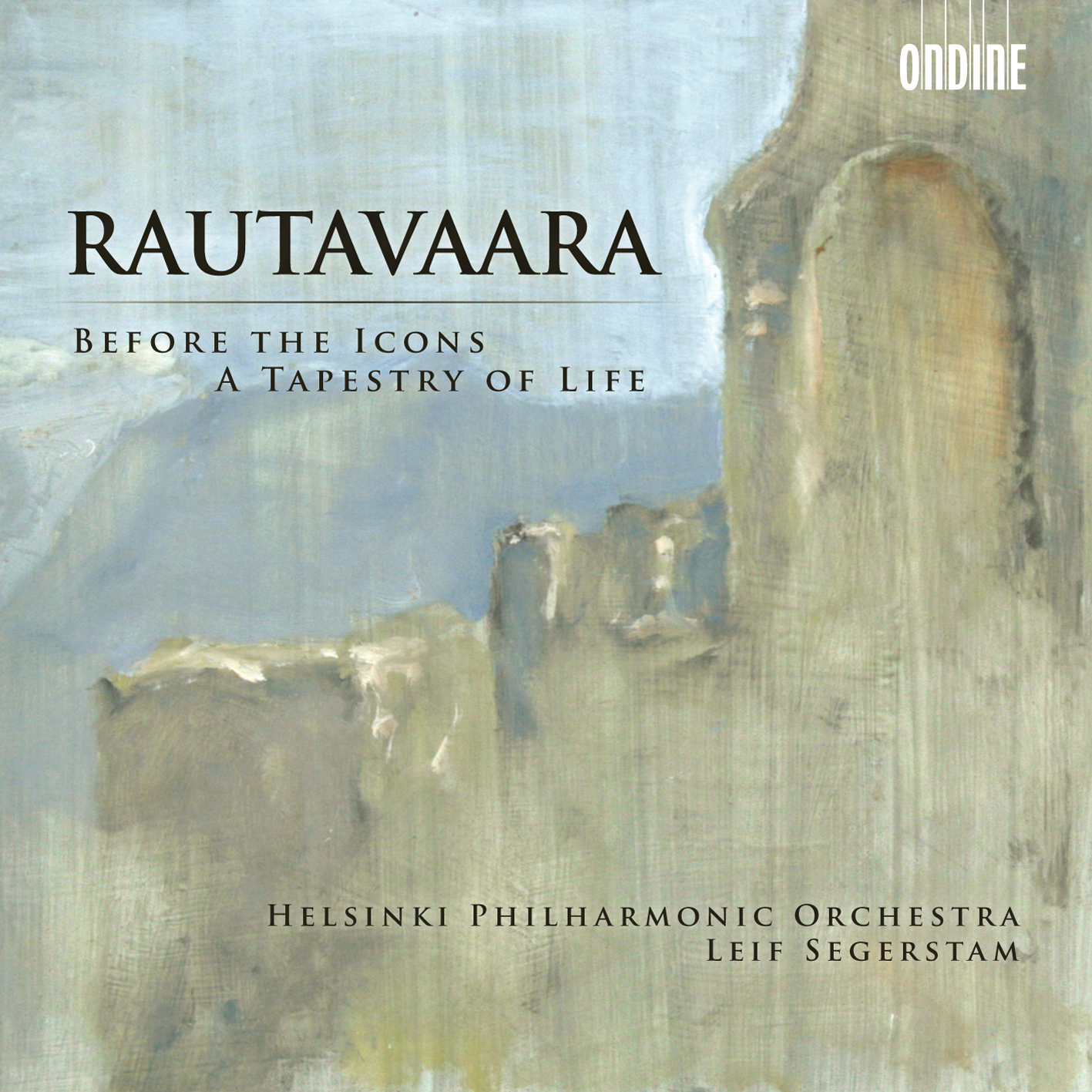
I have not heard Einojuhani Rautavaara's Icons, the piano suite Before the Icons was orchestrated from, but I imagine the two would sound quite different. Perhaps if the Finnish composer had orchestrated them around their conception in 1955, the results would have been different, but it took between 1955 to 2005 for his orchestrated vision to finally be completed, thus a modern vision is given to the 50-year old composition.
Luckily for those who do know the original work, Rautavaara adds new intersecting movements, allowing this orchestral work the ability to stand on its own without much need of comparison.
Essentially, the composer takes six religious iconography and sets his own musical portraits for each. Only the three Prayers come with Rautavaara's trademark slow, smooth orchestral style. The concluding Amen does the same, although he sends the listener off with nobility and triumph rather than a prayerful quietude. The Ikon movements themselves are much more characterful and varied though, sometimes surprising the listener with his musical takes compared to the visual artistic images.
For those more familiar with Rautavaara's later-in-life output, A Tapestry of Life should sound more familiar. The opening Stars Swarming has some of the best orchestral effects, with bells and harps and such, while Halcyon Days finds a sweeping tune bringing the hints of nostalgia the composer is conveying. The last three movements all bear the intrusive interval of a second in the highest strings and sometimes upper winds or brass, a later-age musical stamp I notice Rautavaara reveling in. It is not my favorite technique from him, although it does prevent this music from becoming overly cinematic or sweet sounding.
Surprisingly, Rautavaara takes a 'Do not go gently into that goodnight' approach to The Last Polonaise, the final short strand to his Tapestry of Life. Apparently, at the end of life the composer isn't going down without a fight, something I would not have guessed having heard his symphonies and other orchestral music. Otherwise, this orchestral suite finds Rautavaara at his most impressionistic and Ravel-ian, evoking a unique atmospheric color palette from the orchestra.
This Ondine recording only amounts to just shy of 50 minutes worth of music, which in my book, is just about right for a seating with Rautavaara's music. Any more, and his music can become samey-sounding with the mind beginning to wander. Maybe not the worst attribute from a composer who leans towards a certain brand of musical spirituality.
What doesn't allow my mind to wander is the phenomenal playing of the Helsinki Philharmonic Orchestra. Leif Segerstam imbues enough love into these works for a great appreciation from any listener, this one included. While Rautavaara had a very specific style for his orchestral music, Helsinki's full, lush portrayal is simply beautiful throughout, with Ondine ideally placing the harp and percussion against a firm bass.

Works
Before the Icons (25.15)
A Tapestry of Life (24.10)
Ensembles
Helsinki Philharmonic Orchestra
Before the Icons (25.15)
A Tapestry of Life (24.10)
Ensembles
Helsinki Philharmonic Orchestra
Leif Segerstam, conductor
Label: Ondine
Year: 2010
Total Timing: 49.37
Label: Ondine
Year: 2010
Total Timing: 49.37
I really enjoyed both of these orchestral works, which form a lovely program together despite a span of 50 years betwixt them.
Plus, to hear Segerstam and the Helsinki Philharmonic Orchestra in Rautavaara's music is pure heaven!

Find more Rautavaara recordings HERE!
Comments
Post a Comment