Rautavaara: Wind Concertos
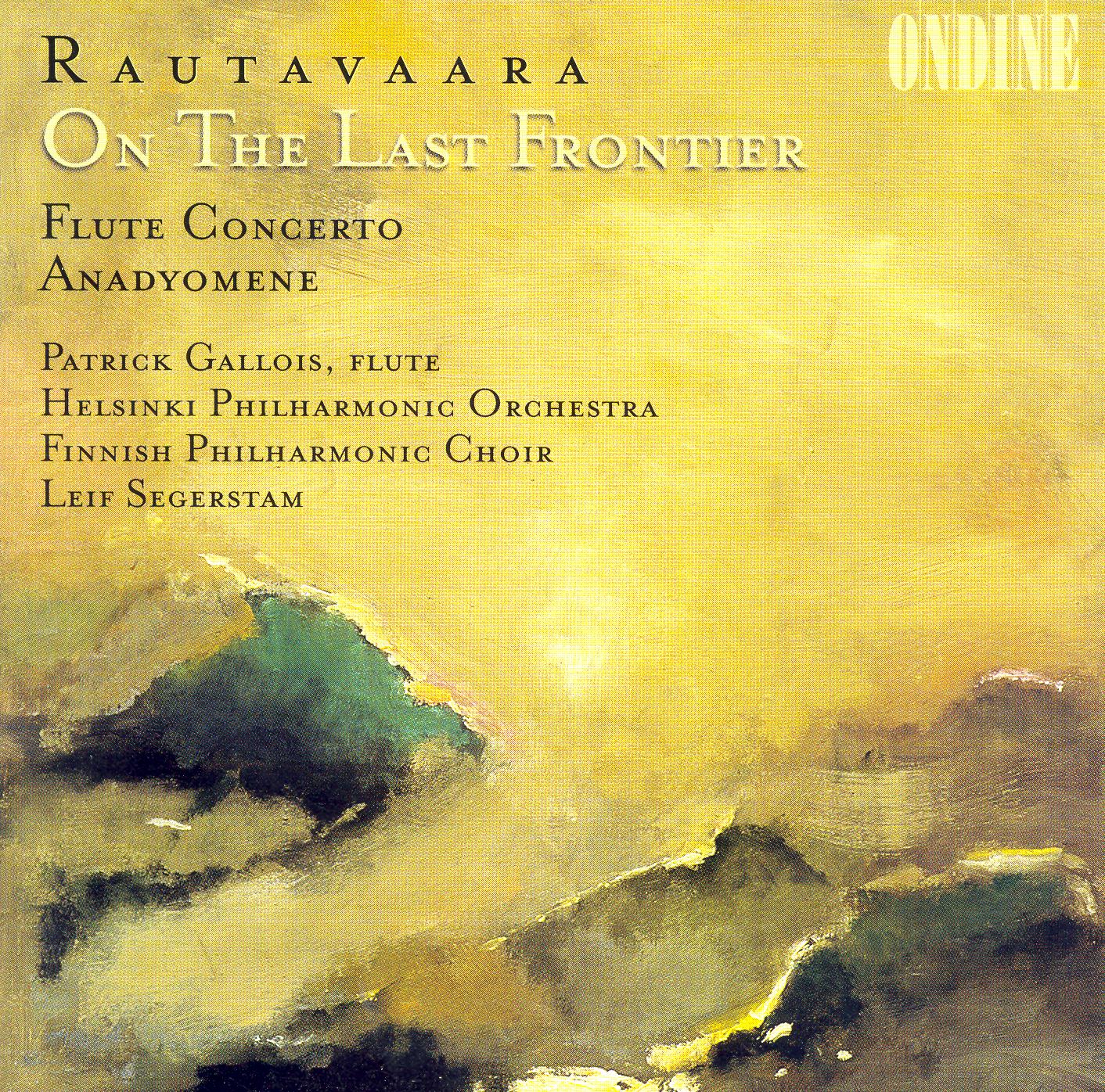
The delight of Dances with the Winds, Finnish composer Einojuhani Rautavaara's Flute Concerto, is each movement comes with a different instrument from the flute family. We hear from the piccolo, alto, bass, and concert flutes across the four movements. This isn't a new idea for a concerto, but neither is such a device seen all that terribly often.
The opening movement sounds almost ancient in its flutings, with influences of a time long past. Of course, the slow moving chords from Rautavaara probably aid in such feelings. On the other hand, the composer is not afraid of gruff or dissonant material here either, a surliness heard at the starts in each of the movements, plus the entirety of the extremely short second movement with piccolo.
The third movement could be confused with the first, as they are both rather slow in tempo, however Rautavaara scores for bells and chamber strings as well as solo alto flute to differentiate the two. I daresay the orchestra is allowed a little more time to itself as well, with the harmonic motion a little faster than its first-movement sister.
The trenchant bassoons promise a romp of an allegro in the final movement, but Rautavaara can never stay away from the slow tempos he is known for, and quickly changes gears to the floaty, atmospheric airiness prevalent across the work. Too bad!
I think this concerto lacks variety, carrying an unfortunate sameness across its 23 minutes. Patrick Gallois performs beautifully on the flute (or flutes), and as ever, the Helsinki Philharmonic Orchestra is a gorgeous-sounding ensemble.

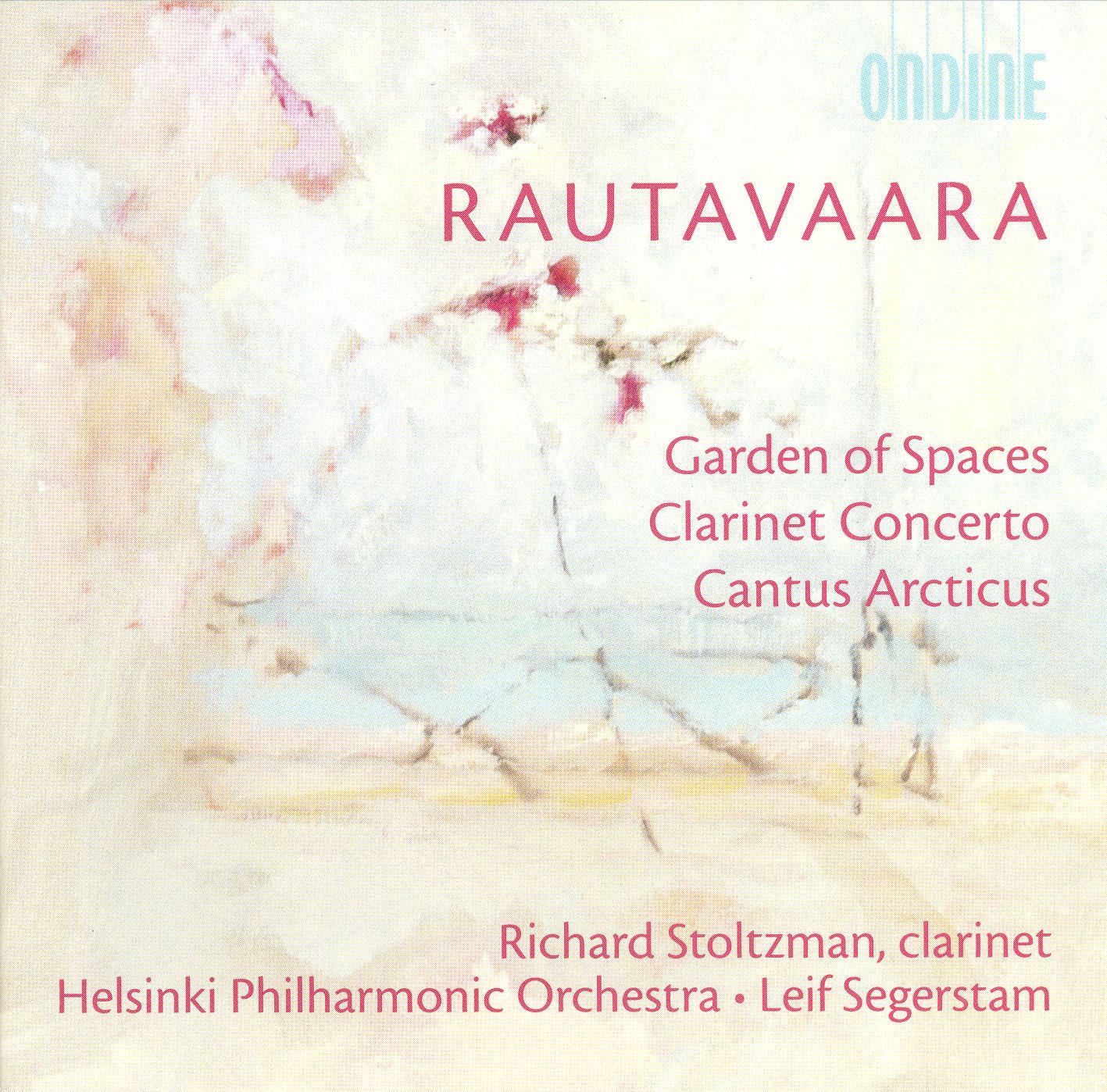
Really, the 13+ minute first movement of Rautavaara's Clarinet Concerto could be a work unto its own, and perhaps it should have been. The composer puts the clarinet through its paces, both relishing in its highest range as well as its meaty lower range. In addition, Rautavaara adds some smears and bends, putting this work solidly in a modern world, despite the composer's friendly realm of tonality.
Again, there is a gruffness to the starts of these movements, yet the majority of what is here is slowly moving orchestral support with endless melody from the clarinetist. The chords are lush, vacillating back and forth as if planing in a French style, but also putting the focus clearly on the soloist throughout.
The second movement Adagio is slightly less dreamy and more straightforward texturally, the melodic line the center of attention, with some exquisite harmonies to lay beneath it. Yet one wishes for something different here, which Rautavaara doesn't necessarily provide this listener. A concluding Vivace promises a stark contrast, announced by toms at the start of the movement. This time Rautavaara carries through on his promise, where the fleet music ends the work on a splashy note.
Richard Stoltzman, the dedicatee performer, is excellent throughout, and as mentioned earlier, Helsinki and Segerstam deliver in spades. I would not suggest listening to Rautavaara's Flute and Clarinet Concertos back to back, however, for they may induce sameness exhaustion on the ears.
Annunciations is written for pipe organ, brass quintet, and wind ensemble. The 27+ minute work relies on aleatoric and avant-garde techniques, putting more emphasis on atmosphere and color rather than a solo melodic line.
I was captivated by how Rautavaara treated the pipe organ, where I was often reminded of another 20th Century composer Olivier Messiaen. I love how the composer changes the organ registrations like a kaleidoscope, where the stops purposefully shift as the music is being played; I don't think I have ever heard it done in quite this way. So too, there is a moment where the organist shuts down the blower motor while holding onto notes, leaving the listener hearing the slowing falling of an instrument shutting down.
But Annunciations is also the 'toughest' work on the program as well. Usually a composer will shear winds from the orchestration to make way for the pipe organ's wind-instrument quality, but not here. I can't say this aspect of ensemble instrumentation made its effect on me, although I am glad percussion was included. A special shout-out to the crazy flexatone, whose short appearance was most unexpected.
Overall, I think this piece is simply too long for its content. I greatly enjoy how 'different' it is, plus the music isn't just a series of bleep-bloops either, something I feared at this music's start. Instead, Rautavaara is firmly set in tonality, yet somehow sounds eccentrically modern all the same. I could see some having trouble with this piece, citing a horror-movie ambiance, but I think there is more to the music than such a obtuse (or myopic?) reaction.
While I was greatly taken with the previous volume of concertos, mostly from the harp, this one swings the other way. I don't hate what is here, and I think the Flute Concerto and the Clarinet Concerto will benefit being heard on their own without the other preceding it, but one tires of endless melody and endless waves of harmonic motion and endless slow tempos. At least Annunciations offers a stark contrast, even if it too shares many of the same descriptors.
Work Series
Vol. 3 from Rautavaara Concertos on Ondine
Works
Flute Concerto 'Dances with the Winds' (22.54)
Clarinet Concerto (25.54)
Annunciations (27.23)
Soloist
Patrick Gallois, flute
Richard Stoltzman, clarinet
Kari Jussila, organ
Ensembles
Helsinki Philharmonic Orchestra
Label: Ondine
Year: 1996 (An), 1999 (FC), 2005 (CC); 2017
Total Timing: 76.30
Comments
Post a Comment