Rautavaara: Harp & Bird Concertos
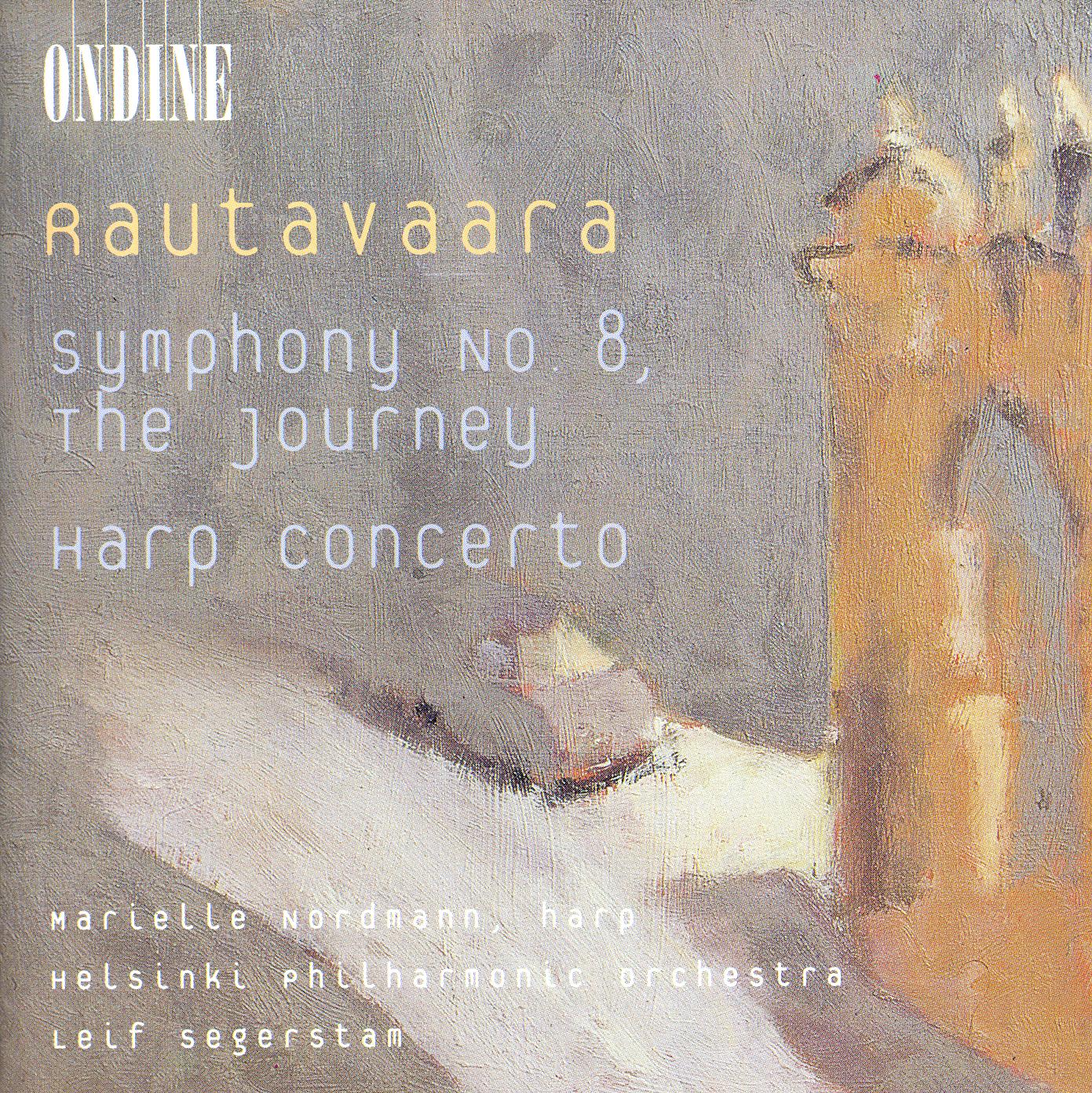
The whole program I am covering on this work series entry would be an excellent introduction to the music of Finnish composer Einojuhani Rautavaara.
His Harp Concerto is an immediately beautiful work, yet the music is never expected nor contrite. The orchestra is cinematically lush at times, whereas at other moments the music moves in most curious ways, with odd, yet colorful sounds coming and going across its three movements.
The harp as a solo instrument itself is well heard on this recording, amplified by even more harps added within the orchestra for dramatic effect. I can't say the music is particularly melodic, but more on the side of colorful and atmospheric, with slow waves of harmonic movement.
Speaking of slow, each of the three movements are moderately paced, Rautavaara never in any particular hurry. Whereas the first two movements use the orchestra sparingly, the composer is more apt to use the whole ensemble in the final movement, including a host of bell-like instruments, the latter matched well with the harp.
As in Ondine's full series of recorded Rautavaara works, Leif Segerstam leading the Helsinki Philharmonic Orchestra is both musically cogent and gorgeous sounding, two important attributes in the music of Rautavaara. Flock to this recording!

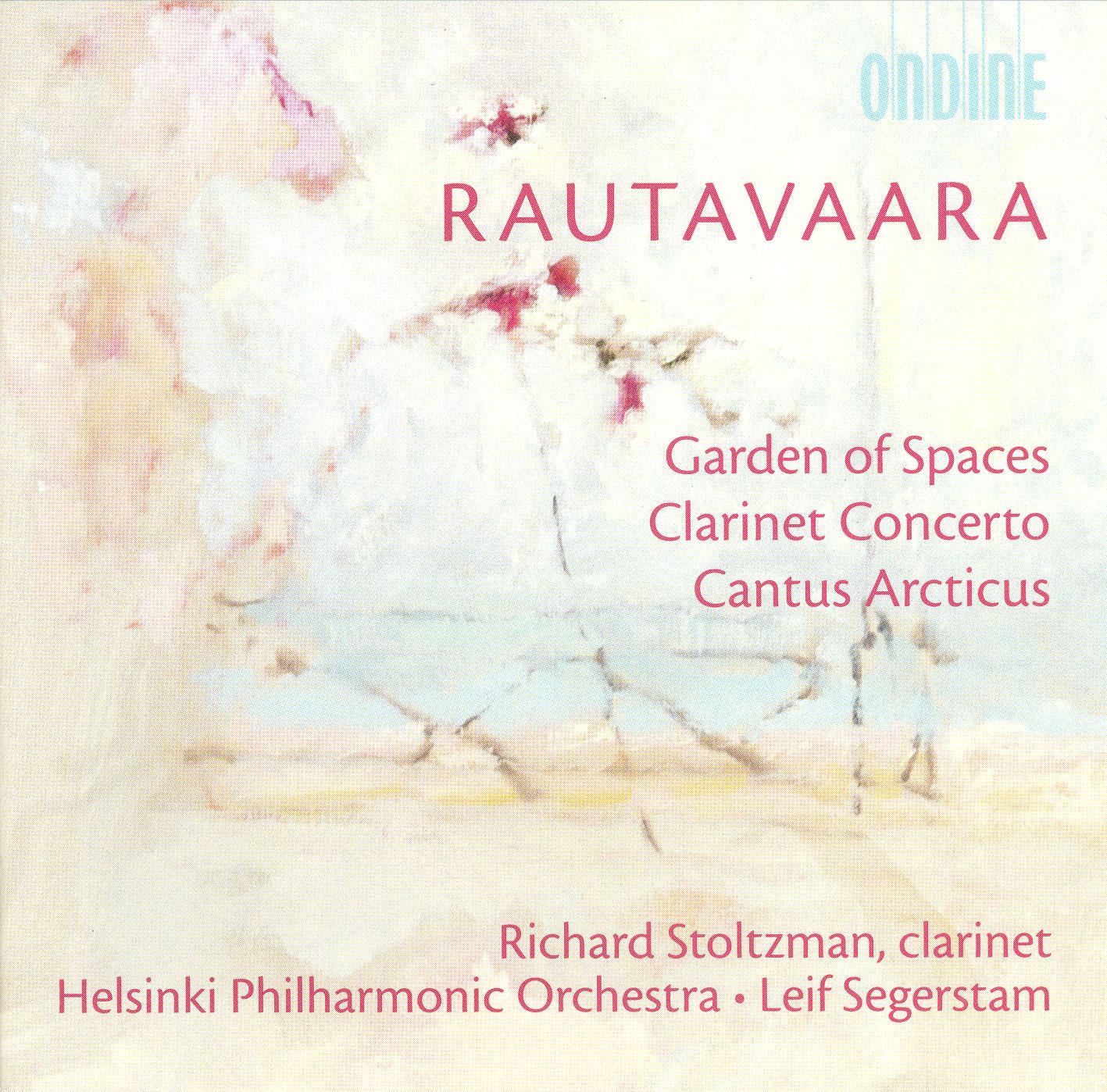
Cantus Arcticus is subtitled a Concerto for Birds, and that is exactly what you get in this music. Rautavaara recorded the birdsong of Northern Finland, took his tapes back to the studio, tinkered with them a little, and spaced them out into a three movement work to play alongside orchestral instruments.
The concept of having concrete, pre-recorded media playing alongside live players is not new; after all, Alan Hovhaness did something similar a few years earlier in his And God Created Great Whales. Yet, the idea continues to feel not only fresh, but also inspired in Rautavaara's hands. Cantus Arcticus is by and far the composer's most popular composition still today.
The three movement titles, The Bog, Melancholy, and Swans Migrating, allow Rautavaara not only a varied mix of musical styles, but also types of bird calls to follow along with the music. For example, in Swans Migrating, the woodwinds rise to meet the sound of flying swans, where it becomes difficult to distinguish between instrument and avian sound, whereas in Melancholy, the music sets the mood to which the appropriate birds are included to meet the atmosphere. In The Bog, it is obvious the instruments are joining the birdsong in imitation or at least sharing qualities of the natural world.
The music itself is rather grand in the first movement, peaceful and gentle in the second, and more of a cinematic cacophony in the last. Performances of the work are easily enjoyable, especially if you like music which depicts nature so vividly and imaginatively.

Even though it appears first in the 2nd Volume program of this work series, I placed the Ballad for Harp last to discuss since I already covered its original recording earlier in the year (BLOG).
The music moves similarly to the Harp Concerto, but Rautavaara adds small instances of dissonance to the composition's character. I was more keen on the music this time, simply because, having listened to its music on and off again over a month or so for the previous review, I have grown to appreciate and identify its musical patterns. It was like coming back to an old friend.
As stated before, the Ostrobothnian Chamber Orchestra is a fine Finnish ensemble, and I believe this is the only recorded performance of the particular piece.
Vol. 2 from Rautavaara Concertos on Ondine
Works
Ballad for Harp and Strings (10.05)
Harp Concerto (23.11)
Cantus Arcticus (19.23)
Soloist
Reija Bister, harp (Ballad)
Marielle Nordmann, harp (Concerto)
Ensembles
Ostrobothnian Chamber Orchestra (Ballad)
Juha Kangas, conductor
Helsinki Philharmonic Orchestra
Label: Ondine
Year: 1995 (BfH), 2001 (HC), 2005 (CA); 2017
Total Timing: 52.59
Comments
Post a Comment