Mozart: Symphony 35 & 36
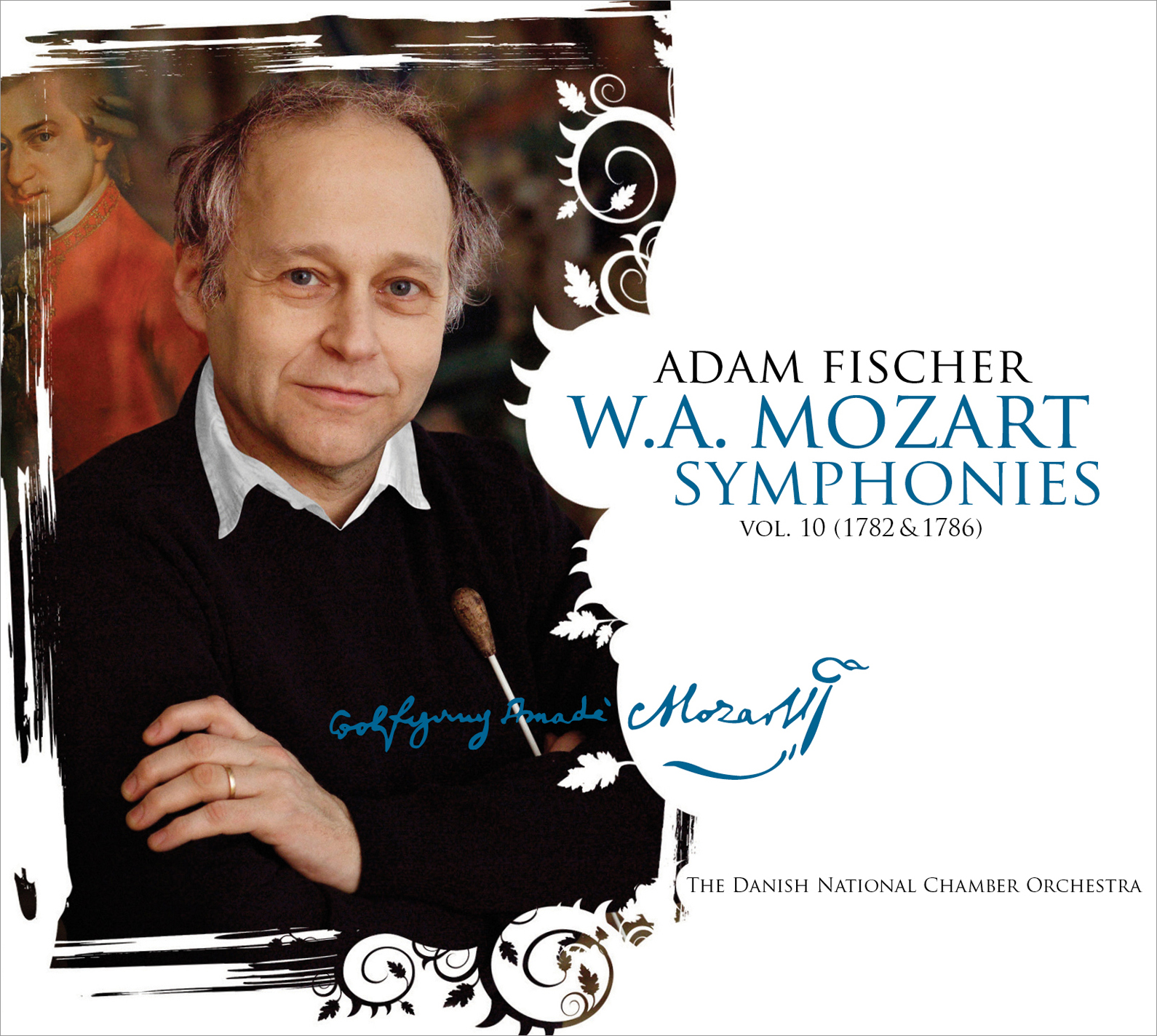
In order to listen chronologically to Mozart's symphonies, I will break my normal pattern and take one symphony from both Vol. 10 and Vol. 11. This means I will most likely post the following symphonies at the same time.
For those looking for my generalized thoughts, skip to the bottom. Otherwise, I will do a movement-by-movement breakdown of each symphony for those who wish to listen along. I will provide a video of these same performers I am listening to in order to make it easier to follow along with my thoughts.
Movement 1
Key: D Major
Meter: Common time
Tempo: Allegro con spirito; Fischer:
 = 158
= 158Winds: flute, oboe, clarinet, bassoon, horn, trumpet, timpani

Aside from this, there is a little dotted rhythmic figure carried across the movement stated at the outset, and usually played on the same note.
There are no inner repeats, yet Mozart still revels in the developmental aspect of this music, never shy to work in and out of minor-keyed areas, nor afraid to integrate developmental ideas into the recapitulation.
Is it me, or is the timpani rather hard hit all of a sudden? Granted it has been a while since the composer used timpani in a symphony, but here, along with trumpets, the timpani really seems to come out of the texture more than I remember. Also, Fischer is a little more elastic with the tempo.
Movement 2
Key: G Major
Meter: 2/4
Tempo: Andante; Fischer:
= 40Winds: oboe, bassoon, horn
There was a short sequence in the first movement which reminded me of Beethoven, and again, I find a similar situation here. Near the beginning, the use of oboe and bassoon with certain harmonies brought that other Classical Era composer to mind.
I don't know if the listener ever receives the feeling of a magical suspension of time in Mozart's slow movements with Fischer and Co. This could simply be due to the geniality of Mozart coming through, as well.
Movement 3
Key: D Major & A Major (Trio)
Meter: 3/4
Tempo: Menuetto; Fischer:
= 148Winds: oboe, bassoon, horn, trumpet, timpani
I like the sort of rise and fall in this Minuet, where the upswing is musically strong and the fall off is more delicate. Solo strings and winds mark contrast in the following Trio, one with dance-like propriety without a care in the world.
Movement 4
Key: D Major
Meter: Cut time
Tempo: Presto; Fischer: 𝅗𝅥 = 156
Winds: flute, oboe, clarinet, bassoon, horn, trumpet, timpani
If Mozart teased his listener at the outset of this work, he does no such thing in this last movement, roundly canvassing D Major in all of its bright glory. Curious syncopated rhythms and pounding timpani accompany Fischer's athletic tempo. I didn't even mention the addition of clarinets, mostly because they are used primarily for orchestral color.
Should I also mention the short moment of col legno. This must be a quirk of the conductor and orchestra, for this has appeared somewhat regularly across these volumes of Mozart symphonies. Also, this is an unexpected short work, considering the direction Mozart is heading as a mature composer.


Symphony 36 in C Major 'Linz', K. 425
Movement 1
Key: C Major
Meter: 3/4 & Common time
Tempo: Adagio & Allegro spiritoso; Fischer:
= 40 & 180Winds: oboe, bassoon, horn, trumpet, timpani
There is a Handel-ian grandeur to this opening movement once it reaches the main Allegro. One can almost hear the familiar strains from that composer's famous Hallelujah Chorus. In the second motivic section, I love how Mozart spotlights the winds in between phrases, with Fischer really digging in to each return of the louder strains, whether in minor or major.
Speaking of Fischer, he really pulls back when the strings play on their own, taking the music well out of tempo. But I can forgive such things when the winds sound as succulent as they do here. Even so, this must irk some listeners.
Movement 2
Key: F Major
Meter: 6/8
Tempo: Andante; Fischer:
. = 38Winds: oboe, bassoon, horn, trumpet, timpani
Again, I don't feel Fischer truly captures the magical potential of the second movement yet. He really plays into the dynamic exaggerations here, which shuns the lovely lilting F Major.
Some of this lays on Mozart who makes sure the trumpet and timpani are pounding out during the most intimate portion of the symphony. Certainly, there is more drama amidst the beauty here, with the second half reaching developmental proportions before the return of the main musical ideas.
Movement 3
Key: C Major & C Major (Trio)
Meter: 3/4
Tempo: Menuetto; Fischer:
= 140Winds: oboe, bassoon, horn, trumpet, timpani
Fischer takes a sturdier tempo, with a heavier tread across the Minuet. I love the halting pickup beat the Danish National Chamber Orchestra employs throughout, giving the music a folksy bent. I think I also detected a tiny bit of string portamento in the second half of the Minuet.
The oboe and bassoon really are in a world of their own int he Trio. Mozart doesn't change the key either, making the two sections all of a piece as well.
Movement 4
Key: C Major
Meter: 2/4
Tempo: Presto; Fischer:
= 154Winds: oboe, bassoon, horn, trumpet, timpani
It is amazing to me how well Mozart has integrated all of the instruments of the ensemble into a cohesive whole, while each instrumental section has action all to themselves, yet each contributes equally. The composer has come such a long way; it is too bad we don't get to spend more time with Mozart as a mature symphonist.
The IV - I cadence is heard in this movement as well, reminiscent of Handel once again, although it is a small moment here. The pounding timpani certainly emphasize sections such as these.
Final Thoughts
While I was interested in the return of trumpet and timpani to the symphonic texture, I daresay the timpani may have been too much in these performances. I find such an approach rather hard and cold to the ear, rather than percussive and exciting. A personal feeling, I am sure.
I felt Fischer was more temperate with the tempos as well, rather than racing away with the trophy. I can appreciate this, for exaggerated speeds and dynamics are only one small aspect in the choice of musicality.
As these works grow in proportions, I will probably have less to say, for describing every musical twist and turn will become burdensome. Instead, I will probably pick and choose what stood out to me. Consider this a prelude to the next two symphonies, as I size up these four works across Volumes 10 & 11.
Work Series
Vol. 10 & 11 from Mozart Symphonies on Da Capo
Works
Symphony 35 in D Major 'Haffner', K. 385 (18.14)
Symphony 36 in C Major 'Linz', K. 425 (28.15)
Performers
Danish National Chamber Orchestra
Ádám Fischer, conductor
Label: Da Capo
Year: 2013
Comments
Post a Comment