Mozart: Symphony 28 - 30
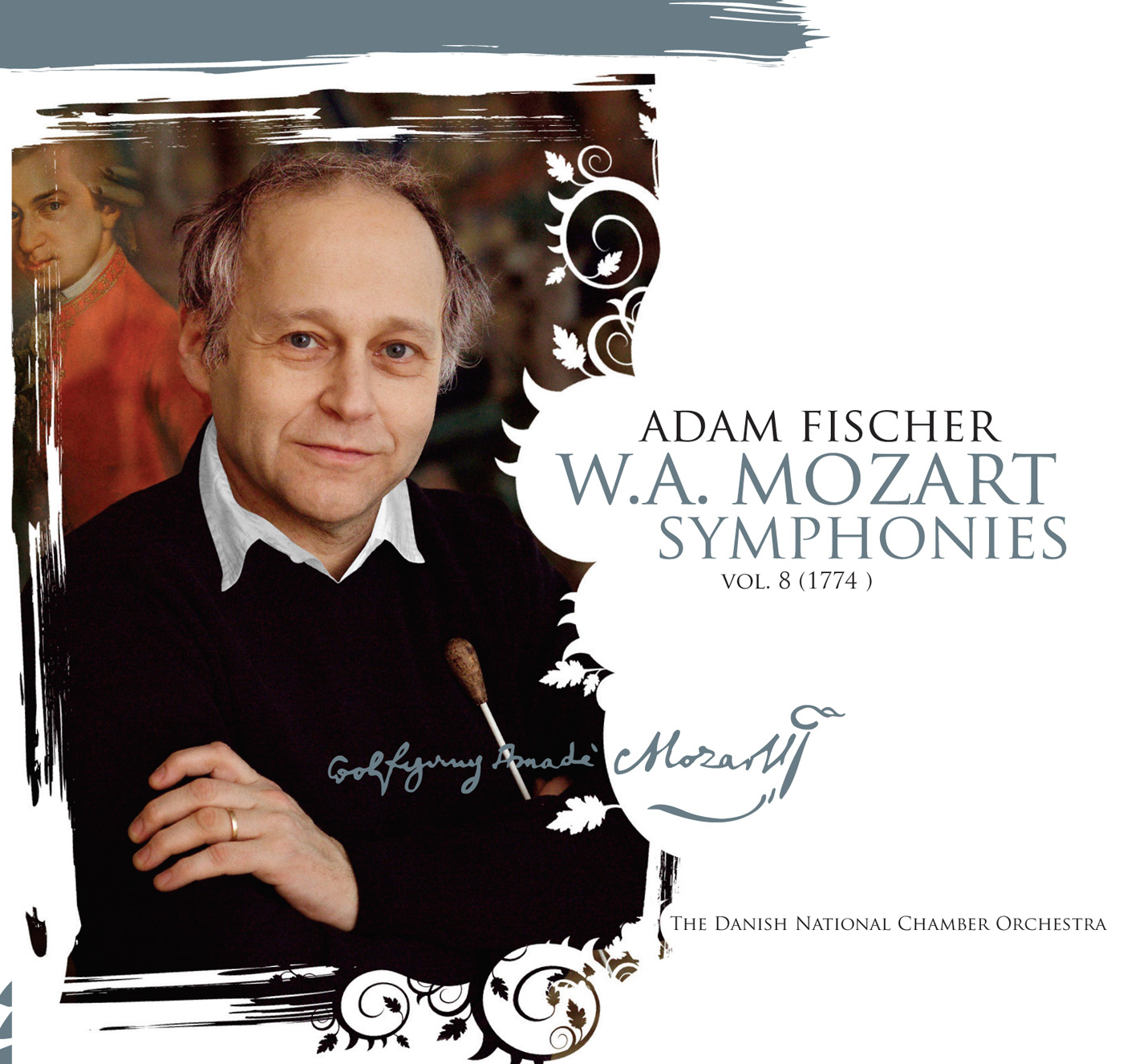
For those looking for my generalized thoughts, skip to the bottom. Otherwise, I will do a movement-by-movement breakdown of each symphony for those who wish to listen along. I provided a YouTube playlist at the very bottom of this blog post of the same performers I am listening to in order to make it easier to follow along with my thoughts.
Symphony no. 29 in A Major, K. 201 (186a)
Movement 1
Key: A Major
Meter: Cut time
Tempo: Allegro moderato; Fischer: 𝅗𝅥 = 88
Winds: oboe, horn

And Mozart does a wonderful thing upon the main melodic restatement. First, there is the gentlest of transitions to the restatement, lightly touched by the 1st and 2nd violins only. Once it arrives, Mozart does not merely restate, or contrast simply by dynamic. Instead, the winds hold a prolonged note, the violins restate up an octave, and the lower strings are set in imitation. All of these elements tell me Mozart is interested in making music rather than blindly following a musical blueprint. Magnificent!
Oddly, the second thematic area is equally calm, with strings only in a lower register once again. This overriding sense of calm almost seems out of place for the composer, but welcome, I think. Also, Mozart doesn't really make anything out of the half-step opening theme, something I anticipated across the movement.
The short transition from the exposition to the development is given to 1st violins only, music which is hardly definitive as an ending point. This becomes important at the end of the movement, for Mozart has to add a Coda at the finish in order to give the listener finality. The recapitulation section is a mirror of sorts of the exposition, so if the recapitulation ended as the exposition did, the movement would end up anti-climactic and on a musical question mark. This Coda is a bit longer than previous ones from the composer, plus the horn gets a little stinger towards the end.
Key: D Major
Meter: 2/4
Tempo: Andante; Fischer:
 = 42
= 42Winds: oboe, horn
While a slow walk informs the very start of the second movement, one with a high violin obbligato, this is delicate filigree music. At one part, the oboes remind me terribly of Rossini, positioned towards the end of the first and second sections.
I purposefully mentioned the Coda of the first movement, for it seems to be becoming a trend. I started making remarks about them in previous symphonies, but thought I should deal with them now. Here once again, the short transition between the first and second sections do not have a feeling of finality, thus Mozart needs to add a Coda to finish off the musical statement of the movement. If the composer had been doing this the whole time, I would not remark upon it, but its common appearance seems important to mention now.
Movement 3
Key: A Major & E Major (Trio)
Meter: 3/4
Tempo: Menuetto; Fischer:
= 130Winds: oboe, horn
Well, well, well... another gentle opening to a Minuet movement, here given to the 1st and 2nd violins only. This has happened once before, and this time, the Minuet continues the theme of gentle calm which has appeared across the work thus far.
The Trio continues the feeling from the Minuet, except shedding the dotted rhythms which make up most of the Minuet.
Movement 4
Key: A Major
Meter: 6/8
Tempo: Allegro con spirito; Fischer:
. = 108Winds: oboe, horn
A gamboling 6/8 meter is the most 'fun' Mozart has allowed in this particular symphony. And yet, I don't feel wild abandon, perhaps not surprising in this composer, but there is restraint on the part of Mozart, I think.
With a very strange semiquaver scale finishing off the first section, it should come as no surprise that a Coda is used to finish off the symphony. That said, the string scale in question returns in the final moments, followed by the shortest of musical buttons.
The general tenor and texture of Symphony no. 29 really does wonders for this listener. The ending isn't a mad galop, but still full of joyous bounce, and the opening isn't a constant discourse between loud and soft, while the middle movements complement the outer ones nicely. Call me entranced by this one.

Movement 1
Key: D Major
Meter: 3/4
Tempo: Molto Allegro; Fischer:
= 148Winds: oboe, horn, trumpet
I like the rather perfunctory opening melody of the first four bars, yet Mozart doesn't really allow it a restatement. Instead, he gives the following four measures a repeat, with some variation to make the portion sound slightly different on its reappearance.
The second theme, however, is allowed a restatement, plus some witty grace notes and gently leaping arpeggiated figures surrounding it. The transition section following this area is most interesting. The first thing one hears is a heartily swinging idea between string and brass, and then the music suddenly becomes nearly static, only to finish the exposition on a decidedly final-sounding cadence. You guessed it... no Coda this time!
As far as development sections go, this one is pretty jolly, circling around and around on dotted rhythms. Mozart does some neat things with the transitional material in the following recapitulation, ones mentioned earlier, but here sounded more developmental. Perhaps it is the changed tonality, but there seems more emphasis on the musical quirks from Ádám Fischer here.
Movement 2
Key: A Major
Meter: 2/4
Tempo: Andantino con moto; Fischer:
= 64Winds: none
Mozart uses an additive effect to open this movement, starting with 1st violins only, followed later by adding 2nd violins, and eventually violas and cellos. This also sets the rather pointed rhythmic profile of the opening as well.
What sounds like demisemiquaver bird calls appear at various points of this movement, and while notable to my ears, are not a prevailing theme. It should be noted that winds are not scored for in this movement, making this portion of the symphony sound a little bland. I can't quite place this effect, but that is what I am left with as of now.
Movement 3
Key: D Major & G Major (Trio)
Meter: 3/4
Tempo: Menuetto; Fischer:
= 138Winds: oboe, horn, trumpet
The smallest of musical echos is given to solo strings, foreshadowing the strings-only Trio, which Fischer also has solo strings play.
A rather stormy four measures open the second section of the Minuet, but is not really developed in any sort of meaningful way, although the opening of the second-half of the Trio does sound slightly heavier.
Movement 4
Key: D Major
Meter: 2/4
Tempo: Presto; Fischer:
= 190Winds: oboe, horn, trumpet
If there is something that stands out in this Presto movement, it is an outward-moving tremolo crescendo towards the end of both sections which really reminds me as a 'Mozart' sound, if such a thing could be identified. I thought I heard shadows of the same thing in the first movement, but I definitely detect it here.
Mozart adds a short Coda here despite having a solid 'loud' ending already. Instead, the composer makes the unusual choice to end this movement quietly and on an unsure musical footing. Surely, an oddity on his part.
While I was not as entranced by this work as a whole, I think Symphony no. 30 has a lot going for it. If nothing else, than Mozart securing his hallmark sound.
Symphony 28 in C Major, K. 200 (189k)
Movement 1
Key: C Major
Meter: 3/4
Tempo: Allegro spiritoso; Fischer:
= 140Winds: oboe, horn, trumpet
Symphony no. 28 seems to have some dating issues. No, not the relationship kind, but what I have read, some believe it earlier than those who think it a later work. Thus, here it is following Symphony no. 30.While I am not intimately familiar with each Mozart symphony, I have strolled through them many times, although mostly the later ones. The opening to this one sounds very familiar to my ears. The theme, moving downward goes 1 - 5 pause... 3 - 1 pause... followed by light, decorative violin, only to be restated again. Perhaps this is a common Classical Era thematic device, but it rings in my head as mightily familiar. For a typical unison C-Major broken-chord theme, it is effectively done here by Mozart.
The second motive receives some lovely wind burbles in answer to the strings, a wonderful bit of musical character. Best yet, upon their restatement, the winds initiate the melody, leaving the string to burble after. An inconclusive, short linking phrase ends the exposition to transition into the developing, leaving the end of the movement needing a Coda. You can play this game too; simply listen for the repeat of the exposition.
This link bit leads into four measure afforded the bass line, a nice focus on a little focused-on section of the orchestra lately.
Movement 2
Key: F Major
Meter: 2/4
Tempo: Andante; Fischer:
= 42Winds: oboe, horn
There is something about this movement which scream heart. Is it the strings by themselves on mutes, the rising melody and descending bass line, or the slow, wonderful harmonic motion? Perhaps it is a combination of these and other aspects I haven't thought of.
However, I had commented on the strings-only second movement of Symphony no. 30 needing winds for a greater feeling of warmth. Here, Mozart does indeed use winds, but extremely sparingly, most effectively heralding the minor transition at the start of the second section. Otherwise, this is a primarily string-centered movement with nothing but heart.
Movement 3
Key: C Major & F Major (Trio)
Meter: 3/4
Tempo: Allegretto; Fischer:
= 140Winds: oboe, horn, trumpet
The horn is allowed a little swagger all to itself near the start of the Minuet. I don't know if its presence portends anything, but I enjoy the horn ringing out all on its own.
Solo strings open the Trio, although the louder, more chromatic second half begins with the entire string section, making way for the solo strings again to end the Trio.
Should I mention the Minuet is marked Allegretto? I don't believe I have seen this before, but I have come to not trust print sources, as the editors often put in their guesstimates as well. So too, I read somewhere Leopold Mozart often wrote in tempo markings for the youth. Who to trust?
Movement 4
Key: C Major
Meter: Cut time
Tempo: Presto; Fischer: 𝅗𝅥 = 140
Winds: oboe, horn, trumpet
Some blatant 1 - 5 - 1- 5 statements from the winds remind the listener of the first movement, although this one is surrounded by light, yet furiously moving semiquavers throughout, with constant motion a feature of this last movement.
Did anyone hear the bird calls before the main theme comes back in the second section? Also, notice the necessity of the Coda once again!
A delightful symphony, one full of springtime freshness.
Final Thoughts
Symphonies 1 - 30 were written across every year of Mozart's youth between 1764 through 1774, a decade which leaves the composer at the age of 18. When Symphony no. 31 picks up, there will have been a break of four years. The next ten symphonies will then lead Mozart another decade from the age of 22 to 32, still a few years away before the composer's death. When next we pick up with Mozart, he will have broken off with Salzburg and set sights on bigger fish.
But that is yet to come. These are delightful symphonies, all three. Certainly, they are longer. We will see, though, how they hold up to the ones which follow. The maturing of Mozart as a composer will undoubtedly leave these early compositions behind, no matter whether or not I heralded them as successful to my ears.
I only hope Fischer and the Danish National Symphony Orchestra can hold up against more and more respected recordings in the catalog. The team has certainly made their mark in how they want to approach Mozart. The question is will it carry over into the later works, and if so, will it carry over well?
I am onboard thus far and am receptive. My time spent with this crew has made me comfortable with their sound profile and their approach to Mozart, so I wish them the very best going forward.

Work Series
Vol. 8 from Mozart Symphonies on Da Capo
Works
Symphony 29 in A Major, K. 186a (26.15)
Symphony 30 in D Major, K. 186b (18.58)
Symphony 28 in C Major, K. 189k (22.04)
Performers
Danish National Chamber Orchestra
Ádám Fischer, conductor
Label: Da Capo
Year: 2013
Total Timing: 67.16
Comments
Post a Comment