Rautavaara: Symphony 1 & 2
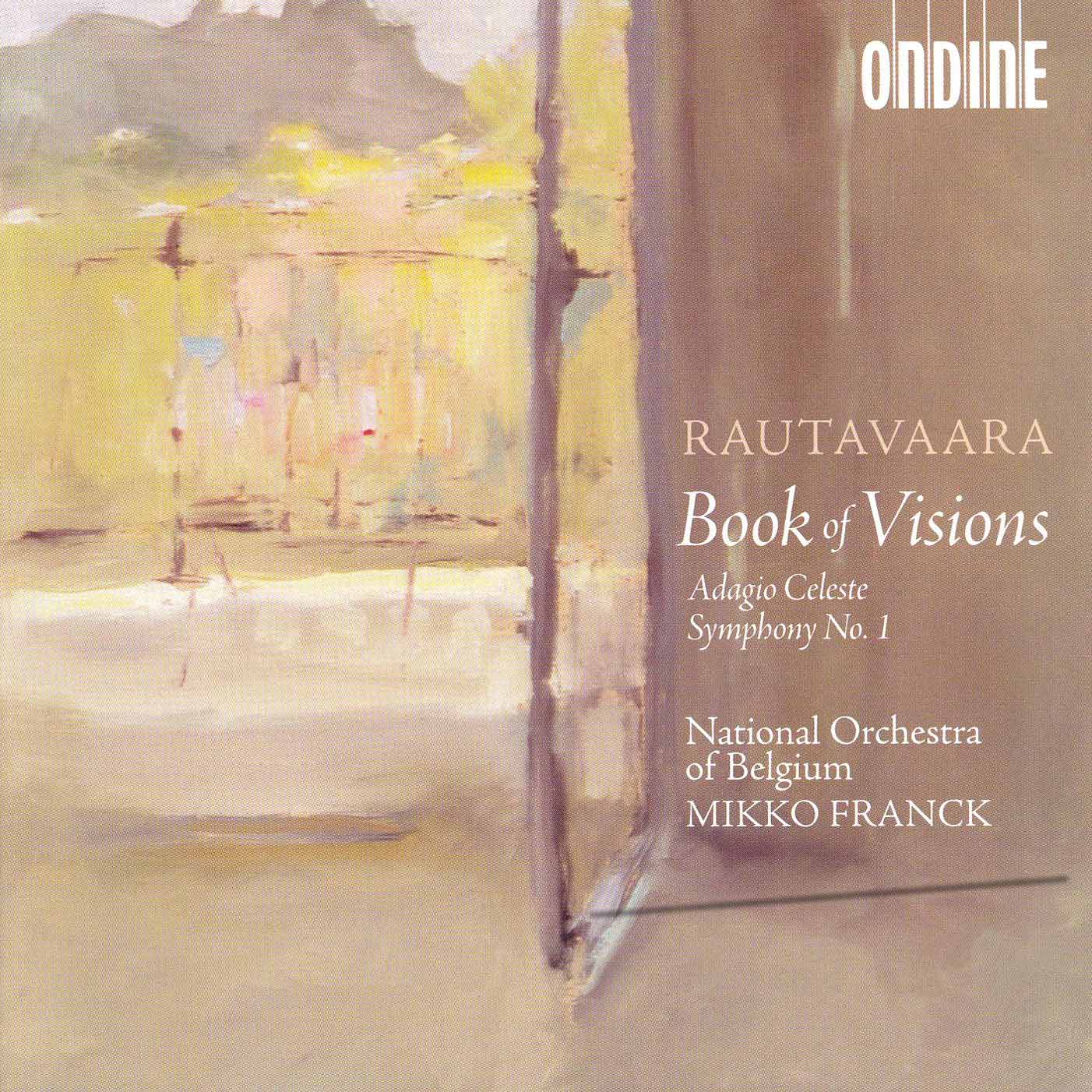
If I had no idea what the music of Finnish composer Einojuhani Rautavaara sounded like, but was given a general description, Symphony no. 1 is exactly what I would expect.
It sounds as if the composer's first entry into the symphonic genre was problematic. Written in the 1950s, revised in the 1980s, and again further tinkered with in the early 2000s, this recording with the National Orchestral of Belgium under Mikko Franck features his final revision. I had wondered why Max Pommer's performance wasn't attached to Ondine's set of Rautavaara symphonies, since he recorded the first three symphonies together, and I guess I now know why. Apparently, the second version is played by Pommer and still remains full of issues. I will probably give that recording a shot too.
In any case, why does the music of Symphony no. 1 sound like it might come from Rautavaara with little knowledge of the composer? Well, for this listener, it is the unhurried, spiritual nature of the first two movements, which take up 23 of the 27-minute runtime. Granted, the first movement is surprisingly more cinematic than expected, but the second movement feels spiritually grounded, nearly in a minimalist manner. I guess this shouldn't be surprising since the composer inserted the middle movement in the 2000s to create a new three-movement work. Thus, I suppose, this symphony is as much of Rautavaara's 1950s as it is 2000s.
The final movement is completely different than the rest of the work, with a fast tempo, a highly rhythmic profile, lots of strange percussion, instrumental colors, and harmonies, finally showcasing the Neo-Classicism early Rautavaara was known for. If I was reminded of Shostakovich here, so too do the colors of Stravinsky's Petroushka shine through. This last movement is very short however, intimating to this listener the composer preferring slow-moving spiritual content over anything virtuosic or flashy.
Overall, I was delighted by this First Symphony, no matter which era it comes from, where both young and old hands have been touched upon it. Rautavaara in slow mode moves in mainly step-wise, conjunct fashion, sometimes simply moving one note from chord to chord, shifting the harmonies unexpectedly, but not radically. I can really get behind this soundworld, for the music is kaleidoscopic and colorful, but full of meaning and import as well.

So now that we know why Max Pommer's reading of Rautavaara's First Symphony was selected for Ondine's symphony set, we move on to the latter's performance of Symphony no. 2 with the Leipzig Radio Symphony Orchestra.
The Second Symphony was not devoid of revision by older Rautavaara either. Written in the 50s not long after the first, the composer came back to expand the work from its chamber orchestra proportions into a large orchestral setting. As I understand it, no music was cut or expanded, but instead it was merely reorchestrated. Think of the last movement from Symphony no. 1, and place that across this symphony's four movements.
Well, at some point, I knew I was going to be stepping into Rautavaara's harsher, modernist style. I can't say we have slipped into atonality, for that is not the case, but dissonance is at an all time high, at least compared to where we just came from. So too, I don't always capture the structural and motivic development of this music while listening, so my guess is he is fiddling with a different modern symphonic approach as well. Nor do I sense that Rautavaara has stepped away from emotional content, for there are striking musical motions going on here.
So yes, it is going to take me some time to come to terms with the Mid-Century modernism in Symphony no. 2. On the other hand, there is a riot of color coming from the expanded orchestra, including quite the array of percussion, plus lots of instrumental slidings, all of which which carry me along the work's 20 minutes to some degree. For the time being, I can't say this will become a favorite anytime soon, yet I recognize qualities here and there to latch onto for listening. I suspect the more I recognize the patterns of this music, the more I will come to appreciate it.
Suffice to say, I have no problem with either of the orchestras on this Work Series entry, and both conductors seem to lead the music confidently. Of course, I have little to compare, but I may at some point in the future explore further to add some bearing on my part.
As to the future, I fear what musical avenue the composer goes down musically as I move from these two symphonies of the 1950s to the next two in the 1960s. Always with my mind open, yet I know composers must develop and ripen over time.
Work Series
Vol. 1 from Rautavaara Symphonies on Ondine
Works
Symphony 1 (27.31)
Symphony 2 (21.21)
Ensembles
National Orchestra of Belgium
Mikko Franck, conductor
Leipzig Radio Symphony Orchestra
Label: Ondine
Year: 1990 (2), 2005 (1); 2009 (set)
Total Timing: 49.04
Comments
Post a Comment