Bach: Keyboard Concertos

The catalog is filled with performances, many recent, using modern orchestras and concert hall grand pianos. These are well liked too, when most of Bach-era music is duly served by period instruments only nowadays. What gives?
I don't know, but Bach's Keyboard Concertos are an instance where I really like hearing the harpsichord. If you look across this blog, you will find remarks about how much I loathe the presence of harpsichord, especially in basso continuo, but here in this music, the harpsichord works really well.
So does the piano. Italian conductor Riccardo Chailly and Iranian pianist Ramin Bahrami work the recorded balanced really well here. Instead of having the soloist way out front, they take the warmth of a modern grand piano and match it to the modern orchestral strings to make for a very fluid sound. Instead of harpsichord, whose piercing timbre can cut across the orchestra competitively, as a concerto is ought to do, here piano and orchestra work together amongst Bach's motoric compositions, blending their sound cohesively. That doesn't mean nothing stands out, for Bahrami chooses notes to punctuate, often playfully so with the orchestra, trading to expose motivic ideas between the two.
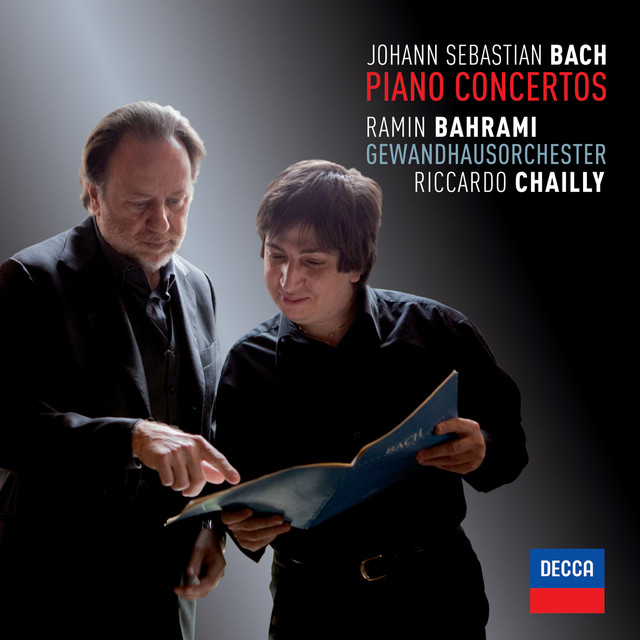
Of course, this means we don't get the other two Keyboard Concertos from Bach, which other sets include over two CDs, as Murray Perahia and Andras Schiff famously do. However, Ramin Bahrami excitingly traverses the endless motoric nature of Bach's music. The keyboard part may only exist in two single lines, but golly Bach doesn't make it easy for the soloist. I found that out quickly in the composer's Inventions.
So how does the Gewandhaus Orchestra sound? They certainly have a full low end, and when the lower strings double the left hand of the piano, sometimes it is hard to distinguish between the two, although the percussiveness of the piano tends to win out. While Chailly pares down the orchestra and asks them to play without vibrato, ably heard whenever the strings hold notes for any length of time, the German orchestra leaps at this music furiously. You really sense the joy abounding in major keys, but you also get the sparseness of the slow, minor movements. The modern instruments, however, is never in hiding, providing a warm glow throughout.
I have enjoyed Chailly's series of Bach with the Gewandhaus, even if they are terribly out of date with modern trends in Baroque music performance, but that makes me love them all the more. Luckily in the Keyboard Concertos, such a presentation is not all that unusual for some reason. This is easy to tell on recording covers, for the titles tend to either say Bach: Harpsichord Concertos or Bach: Piano Concertos. Of course, you can find these for guitars, mandolins, and accordions too. I'll stick to harpsichord and piano, I think.

Works
Keyboard Concerto 1 in D minor, BWV 1052 (19.37)
Keyboard Concerto 2 in E Major, BWV 1053 (17.38)
Keyboard Concerto 3 in D Major, BWV 1054 (15.47)
Keyboard Concerto 4 in A Major, BWV 1055 (13.11)
Keyboard Concerto 5 in F minor, BWV 1056 (8.29)
Performers
Ramin Bahrami, piano
Gewandhaus Orchestra
Riccardo Chailly, conductor
Label: Decca
Year: 2011
Total Timing: 74.42
I am going to go ahead and say I love this recording of Bach Keyboard Concertos.
Chailly and Bahrami take the time to make music amongst their forward-moving impetus, as well as work together rather than in two opposing elements in a concerto format.
Best yet, modern instruments, although these are works where I actually don't mind the harpsichord.

Comments
Post a Comment