Bruckner: Symphony 8

The work is of massive proportions, taking around 80 minutes to perform, although there are recordings which reach towards 90 - 100 minutes in length.
The two most common editions are from Haas and Nowak. Nowak actually restores cuts which Haas admitted, so there are some differences here. Of course, one can always go back to the Schalk versions too.
Either way, Bruckner's Eighth Symphony is a monumental edifice in symphonic form. Because the Scherzo is placed in the second-movement position, the first half of the symphony is shorter than the second half, adding some 20 minutes or so to the work.
After exploring some major keys with sharps in his most recent past symphonies, here Bruckner is back to C minor. The opening of the first movement creates harmonic ambiguousness aside short bass figures, until the full ensemble reigns in the musical wanderings. This is certainly ill-tempered music too. A more pleasant second theme consists of crotchet duples followed by crotchet triples which forms a rhythmic motive seen across the movement most strongly. The last theme group builds off of the second by using consistent crotchet triplets throughout the bar, creating a stronger '2' feel in the meter and less of a cross-rhythm feeling. This portion also sounds like a method for creating anticipation towards some future musical goal, giving this last motivic idea purpose structurally.
I enjoy how the beginning of the development presents instrumental sections in a sort of call and response form, the composer ably using the orchestra in smaller, but still creative ways. At the first climax of the development, Bruckner inserts minim triplets, another rhythmic disparity set against the quick semiquavers of this section. I once complained regarding the 'Bruckner Rhythm', but it does not bother me here.
One item I also notice in this first movement, and across the entire work as well, is how there are musical 'hang-over' sections; that is when, for example, a climactic section is finished and cut off, there seems to be a group of instruments or instrumental sections who continue on after the ensemble is done, hanging onto some rhythmic idea which should have finished with the whole ensemble. I can't remember this feature occurring as pointedly as it does here in Symphony no. 8.
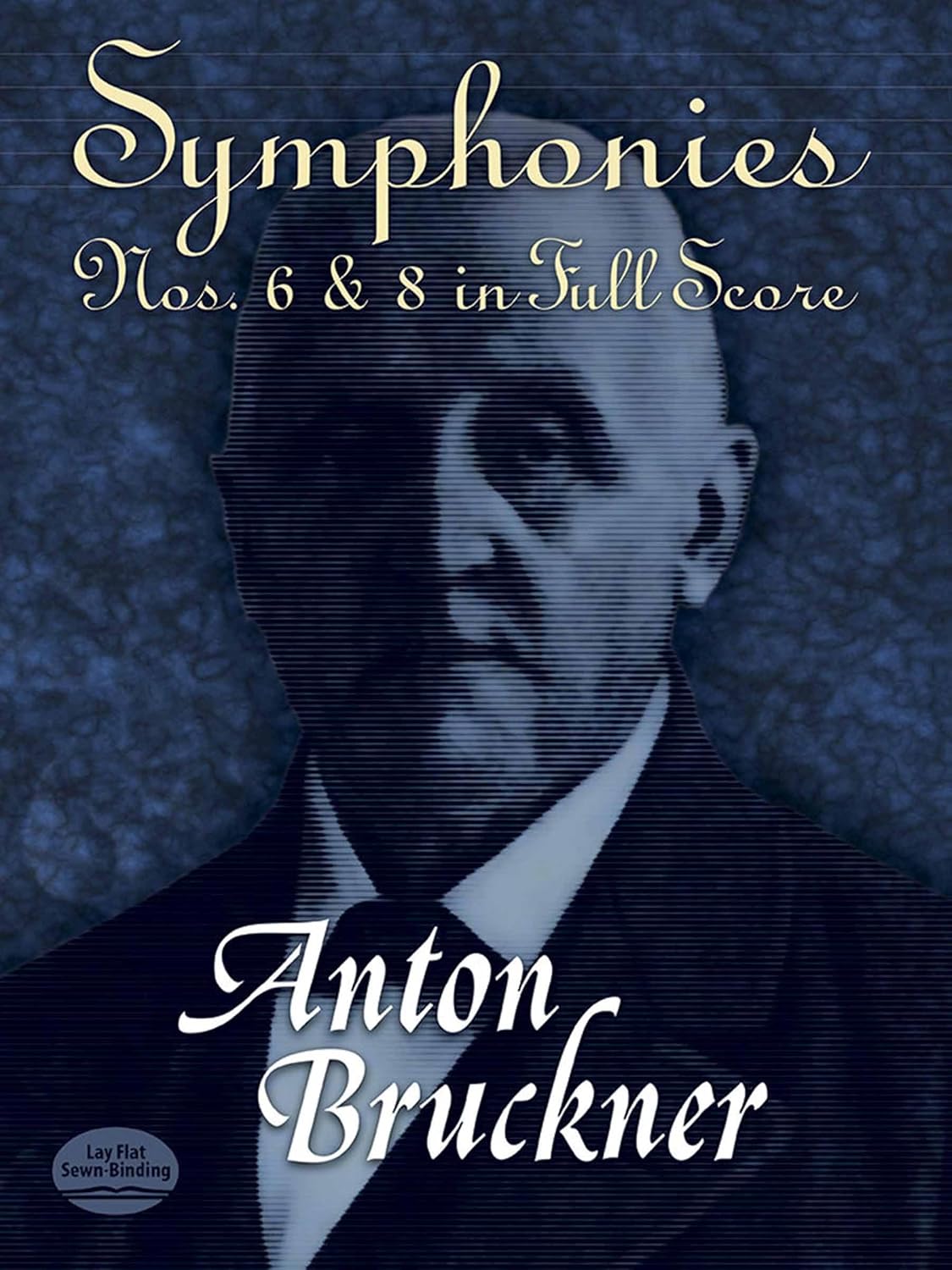
Per usual, the composer sets a sturdy tempo, one which never feels out of control, a signature from the composer. This one features a very strong down beat, with the rhythmic motion given over to beats two and three. If I am reminded of the Game of Thrones theme, excuse my banalities here. Before the slower Trio begins, Bruckner repeats his joyful Scherzo idea twice, making this one of the longer such Scherzos from the composer.
The aforementioned Trio is set in 2/4 contrasting the 3/4 of the Scherzo even more strongly. A lyrical Romantic idea leads into a noble climax with a lovely tag featuring horn and harp. As this portion plays on, you realize Bruckner is really trying to make this Trio section rather substantial, and indeed I feel it could almost stand on its own, but of course, Bruckner segues back to the opening material.
Speaking of standing on their own, I could easily imagine the final two movements each being 25-minute standalone works all on their own as well. If Bruckner didn't tie everything together so well across the symphony, I would say this would be an easy way to digest such a long work and take in the music in smaller, more manageable portions.
While the third movement features an odd rhythmic choice on the part of Bruckner, yet it is actually the persistent, throbbing bass which directs my attention, making the music both intense and plaintive to these ears. The first string chorale with harp easily takes one's breath away, aided by the composer's strange harmonic motion, a feature which will appear, but differently, in the brass in the last movement. These musical ideas are stunning every time they appears, and never too often for this listener.
If all of this weren't enough, the cellos receive the spotlight in yet another wonderful moment from Bruckner. When he segues back to the opening material, the listener realizes they are going to hear everything again in some form or another, and by this point, I am fully on board even though there is still 2/3rds of the movement left to go. Usually I am lost in these large gangling late-Romantic meanderings, but Bruckner does it all so gorgeously and coherently I am never lost nor bored amidst his chromatic developments; perhaps his ample melodic gifts are some of the success. I should also make special mention of the composer's special use of bassoon, horn, and trombone, not only in this movement, but across the symphony. Did you here the harp hang-over from the last climax? Delicious!
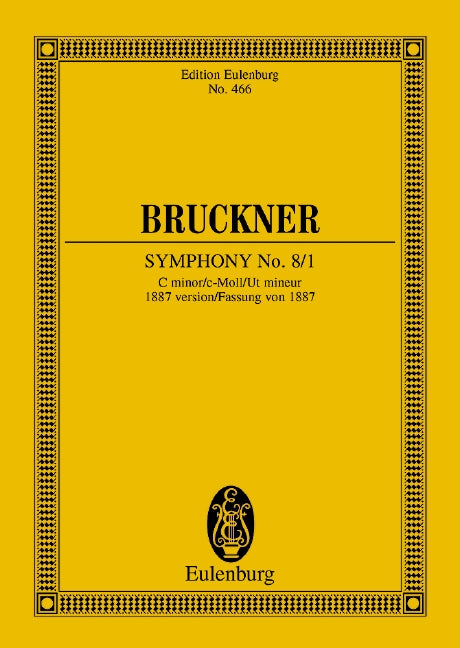
The last brass statement of the opening idea is set as firmly in C minor as we are going to get, a good reminder for the listener regarding where the symphony started.
A lyrically contrasting theme is first stated in strings, but is given over to brass as well, the two sections sharing the love. The winds are allowed some bird warblings as well, bring to mind Mahler, as is the next section's minor-keyed march doubled by clarinet. I try to avoid any comparisons of Bruckner with Mahler, but I am reminded of the other Teutonic composer here.
And as in Bruckner fashion, the composer brings everything together most effectively and dramatically, ending the work in stunning form. It is difficult to be both specific and general when discussing such a long work, so excuse any too-long ramblings or excessive deletions on my part. The urge to describe every little twist and turn from the composer is great, but I will pass on the minutiae covering the development and coda for now.
Is this my favorite symphony from Bruckner? It is certainly one of my favorites, but I am hard to pin down when it comes to categorizing music I enjoy. I would simply prefer to enjoy it all, yet my enjoyment lies in each individual work's qualities rather than ranking the volume and quantity of said qualities. Life is just too short for such choosiness. The journey of the Eighth Symphony is one to behold, however.
As far as recordings are concerned, Haas and Nowak do afford some differences for the listener, so take that into consideration; I personally prefer Haas. Since late-Romanticism isn't a favorite genre of mine, I generally don't like unnecessary dawdlers in this music. It is already long enough as it is, but if a deliberate pace aids in creating a magical musical landscape, I won't be against it.
1951: Knappertsbusch
1976: Karajan
1976: Böhm
1992: Solti
2010: Tennstedt
2024: Maazel
For
now, we will have a
very basic list of Bruckner reviews above. Those recordings I mentioned
as an example in the text above, or performances I have come to respect
which await future reviews, are listed above in greened bold. My actual reviews can be found in the typical Oozy Keep orange. Until we at The Oozy Channel Keep
have gotten ourselves up and running, this should suffice and we can
reorganize the page a little more coherently in the future.