Roussel: Evocations
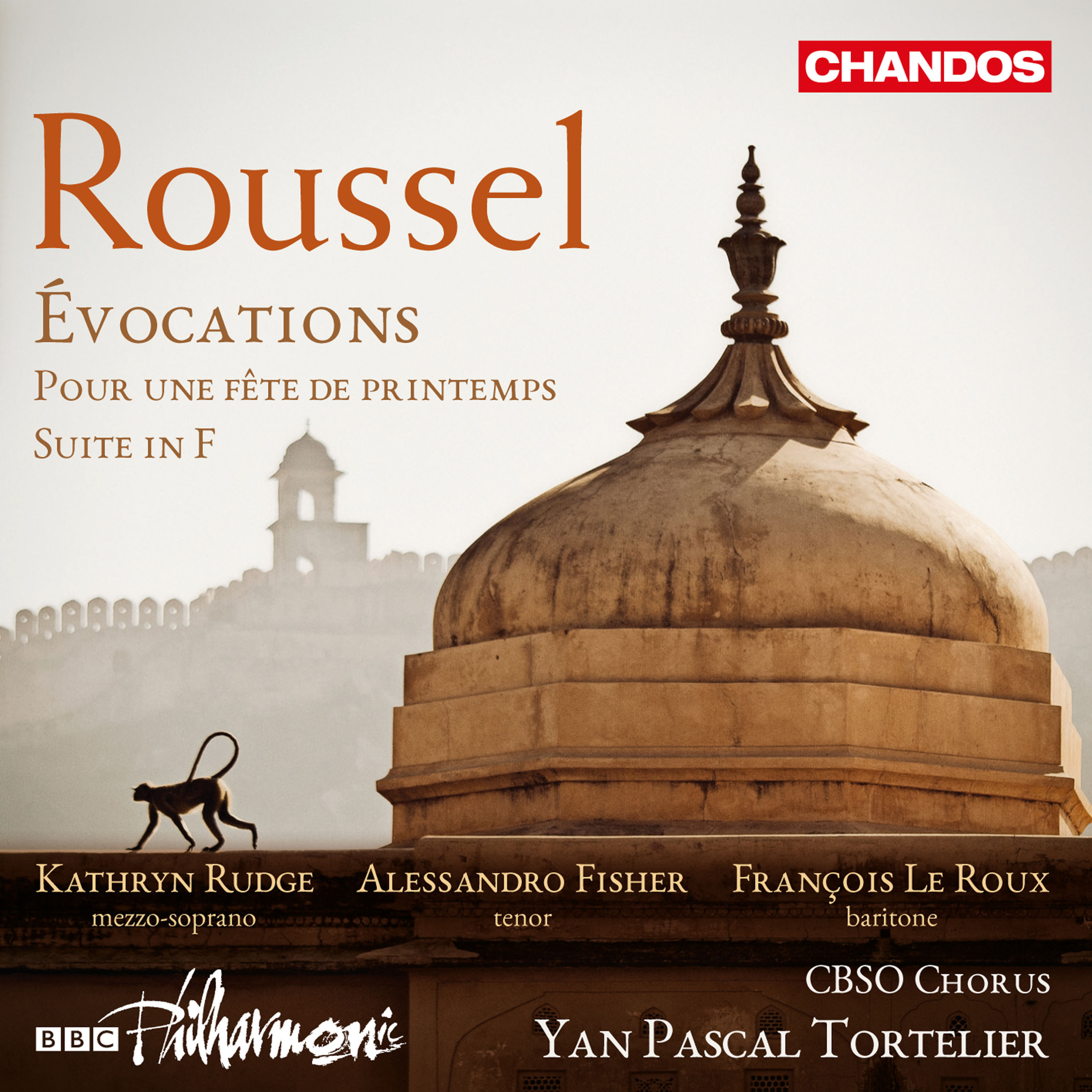
As far as I can judge from my previous review, my only problems with this music and recording lay with my unfamiliarity with the composer, the Impressionism in some parts of the program, and the singing quality of François Le Roux, who only appears in the final movement of the 'symphony'.
Pretty picky gripes on my part, where I have since explored more from the composer. There still remain only three recordings of Roussel's Évocations, and I will be traversing Michel Plasson's for a reappraisal. This recording could probably use that as well, but we will see how the EMI recording goes.
A review from 2020Albert Roussel, a French composer I am not overly familiar with, has done pretty well on record with a fair survey of complete cycles of his four symphonies from the last 15 years getting quality performances from Charles Dutoit on Erato, Christoph Eschenbach on Ondine, Stéphane Denève on Naxos, and Marek Janowski on Newton, and that is discounting famous single releases by Bernstein and Munch among a host of classic French conductors. Chandos presents three orchestral works by Roussel, here led by Yan Pascal Tortelier and the BBC Philharmonic, most notably the rare 45-minute Évocations for vocal soloists and chorus.
Roussel’s musical language is diverse. The 13-minute Suite in F best shows the approachable, straight-forward nature of his writing, but also how he injects a touch of modernism into his musical voice aside his ceaselessly busy inter-workings. The Suite for orchestra is a jaunty, bouncy affair that seems to put dance rhythms and rhythmic energy foremost, reminding me a bit of Darius Milhaud’s Suite Provançale. Conversely, the 10-minute symphonic poem ‘Pour une fête de printemps’ leans more towards Impressionism with wispy colours and less formal and rhythmic impetus. Despite that, Roussel’s music never strays too far from extroversion and a firm rhythmic impulse, and even Printemps’ shimmery style erupts into areas of Ravel-ian grandeur.
The exotic musical travelogue Évocations is the major work here, a composition that depicts landmarks of Roussel’s travels to India. This is pretty cinematic stuff here, that eruption in the middle of the 2nd movement could come straight from a classic film score, for example. We also get the atmospheric Roussel voice again from Printemps, but more of his abilities as a melodist comes to the fore, strikingly at the outset with that magnificent horn and some wonderfully perky wind licks towards the end of the 2nd movement. There is also a strong sense of exoticisms too, from the clanky, gamelan setting and Asian-influenced pentatonic ideas in the middle movement, the modal wind figures and grand dance of the first, and the opening misty orchestral gurglings and hazy French ululations of the finale, although all of this is tastefully draped in Roussel’s European symphonic voice.
Only the finale features chorus and a few brief musings from the soloists. Mezzo Kathryn Rudge and tenor Alessandro Fisher sing well, with Fisher rising satisfyingly from the choral mists, but unfortunately baritone François Le Roux, the only true Gallic performer on the roster, is beset with a terrible wobble, although his athletic, wordy portions don’t allow his tremulous nature to bear forth. The chorus is well-placed alongside the orchestra, and while most of their portions only feature ooh’s and ah’s, it is very much along the lines of the mysterious veil present in Ravel’s Daphnis and Chloe. The BBC Orchestra is in fine form, all of the sections are satisfying in the Chandos sound and the bass is strong; thankfully, the large Chandos sound doesn’t impede as much as it sometimes can. I could imagine the opening movement of Évocations being a little more impassioned in spots, some of the climaxes climbing closer to the summit, and a fair bit more bite in the finale, but this music is rare enough to quibble too much.
The best advocate of this music on Chandos’ recording, though, is French conductor Yan Pascal Tortelier. He is smart enough to make sure this music moves along without dwelling unnecessarily, and yet nothing is lost in rhythmic verve or shimmery atmosphere, and that is why I think this recording rises above the competition. Michael Plasson is too soft-edged and plain-jane on EMI, although he has Jose Van Dam in the baritone role, and Zdeněk Košler luxuriates a bit too much on Supraphon, but does have the Czech Philharmonic. Tortelier provides more variety than Plasson, finer and less boomy sound than Supraphon, but the soloist offerings are much too brief to be concerned with, so my money easily lies with Chandos and Tortelier.
Add to that 70 minutes of excellent orchestral music by Roussel, an excellent, forwardly thrusting Suite in F and the epic Évocations in particular, and this recording is an easy choice. Most of the reviews on Amazon intimate their troubles with playback of this particular disc, an unfortunate happenstance in the current dying physical media world, but I had no such issues, and this isn’t an SACD, so I can’t imagine what the trouble was. For me though, Recommended.

Works
Évocations, op. 15 (17.20)
Pour une fête de printemps, op. 22 (11.12)
Suite in F Major, op. 33 (12.35)
Soloists
Kathryn Rudge, soprano
Alessandro Fisher, tenor
François Le Roux, baritone
Ensembles
CBSO Chorus
BBC Philharmonic Orchestra
Yan Pascal Tortelier, conductor
Label: Chandos
Year: 2018
Total Timing: 70.45
This recording deserves a re-spin from me, perhaps after I revisit Plasson in Évocations shortly in the future.
The rest of the program is lovely, where the Suite in F Major is a must-hear work for n00bs to Roussel's music.

Comments
Post a Comment